The stance of Spain, a recognized colonial power in Western Sahara by the United Nations, has raised questions. Despite being a member of the UN, Spain's approach to decolonizing Western Sahara is considered unusual and unprecedented. Every year, the UN's Decolonization Committee inquires about Spain's actions in Western Sahara. According to the committee's rules, Spain is required to submit an annual report addressing the committee's questions.
Spain's position on Western Sahara is deemed anomalous as it evaded its historical responsibility for decolonization in an unlawful manner. The country failed to apply the necessary procedures, including UN supervision of a process that would allow the local population to determine their own fate. Instead, Spain involved Morocco and stepped back, with no pressure from the international community to comply with the law. The responsibility of Spain, like other colonial powers, does not expire and cannot be dismissed due to time or any other circumstances.
Some may argue that Spain resolved the issue through the 1975 Madrid Agreement. However, this agreement included a crucial point that was not implemented: consulting the Sahrawi people through a group of elders. As this point was not fulfilled, the agreement failed, and the UN did not recognize it. Consequently, Spain's responsibility did not cease and will not cease. In 2002, the UN reaffirmed Spain's responsibility for decolonizing Western Sahara through its special advisor.
The current situation in Western Sahara has changed, with the failure of the autonomy plan and the Russian veto on the MINURSO mission. This has brought Spain back into the spotlight. Spanish Prime Minister's recognition of the autonomy plan, but not the rest of the Spanish government, has created divisions. The Spanish government's official stance is that it relinquished its administrative responsibilities in 1976, but this is disputed by the UN's legal counsel.
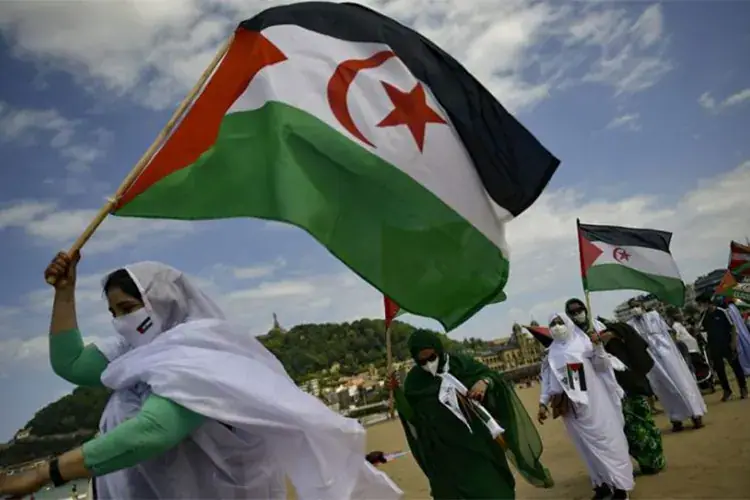
The Polisario Front, officially recognized by the UN in 1979, is contemplating taking Spain to court. As a member of the African Union, the Sahrawi State has access to international courts, including the International Court of Justice. There are various legal avenues for the Polisario Front to pursue, including the European Court of Justice, which has recognized the Front and distinguished Western Sahara from Morocco.
One potential strategy for the Polisario Front is to focus on Spain at the UN and seek assistance from the African Union to file a lawsuit against Spain. Additionally, the Front may consider approaching the International Court of Justice or other courts with jurisdiction over such disputes. The European Court of Justice's 2024 ruling that Western Sahara is a separate entity from Morocco under European law may also support the Polisario Front's case.
The outcome of any potential lawsuit against Spain remains uncertain. Nevertheless, the Polisario Front's efforts to hold Spain accountable for its actions in Western Sahara may lead to increased pressure on the Spanish government to re-examine its stance. The international community will be watching closely as this situation develops, with potential implications for the future of Western Sahara and the Sahrawi people.
Key points
- The Polisario Front is exploring options to take Spain to court over its role in Western Sahara.
Reporting sources
- هل تستطيع “البوليساريو” رفع دعوى قضائية ضد إسبانيا؟ · Echorouk El Yawmi