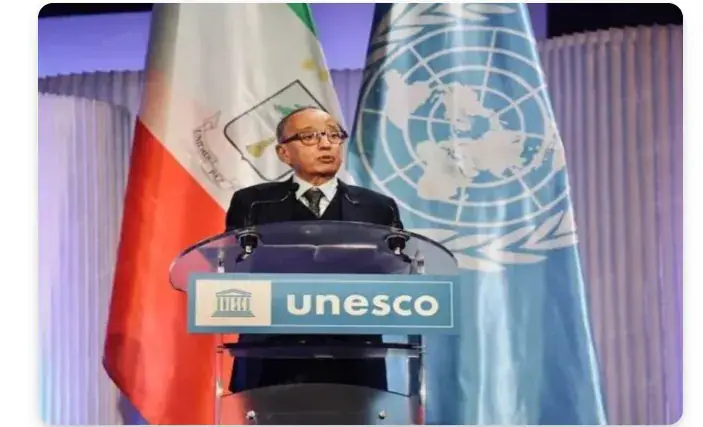
Adnane Remmal, a Moroccan researcher, has been awarded the UNESCO-Guinea Equatorial International Prize for life sciences research. He was recognized for his innovative work against antibiotic resistance, a major global public health concern. Remmal is a professor at the Sidi Mohamed Ben Abdellah University in Fez, Morocco. His research focuses on developing therapeutic solutions to combat infections caused by multi-resistant bacteria.
Remmal's approach involves combining conventional antibiotics with natural molecules, such as essential oils. This aims to restore the effectiveness of existing treatments by neutralizing certain resistance mechanisms developed by bacteria. His work has led to the development of OLIPEN, a treatment that combines an antibiotic with a natural component. OLIPEN has been authorized for clinical use in Morocco and has already benefited hundreds of thousands of patients.
Remmal's strategy focuses on prolonging the effectiveness of available antibiotics rather than relying solely on discovering new molecules. This approach could reduce the costs and time required to develop treatments, making them more accessible to healthcare systems. His research also explores alternatives to antibiotics in animal husbandry, aiming to limit the systematic use of antimicrobials in farming and improve food safety and production sustainability.
Two other researchers were also awarded the UNESCO-Guinea Equatorial International Prize for life sciences research. Nancy Yuk-yu Ip, a Chinese neuroscientist and president of the Hong Kong University of Science and Technology, was recognized for her work on brain mechanisms and Alzheimer's disease. Carlos Martín Montañés, a Spanish researcher and professor at the University of Zaragoza, was honored for his contribution to the clinical development of a live attenuated vaccine against tuberculosis.
The UNESCO-Guinea Equatorial International Prize for life sciences research was awarded to the three scientists in Paris. The prize acknowledges their outstanding contributions to life sciences research and its applications. Remmal's work on antibiotic resistance and alternative solutions has significant implications for global public health.
Remmal's research has far-reaching implications for the development of new treatments and the improvement of existing ones. His approach could also contribute to reducing the environmental impact of antibiotic use in farming and promote more sustainable agricultural practices. The recognition of his work by UNESCO highlights the importance of innovative research in addressing pressing global health challenges.
The award ceremony took place in Paris, and the Gabon Press Agency reported on the event. According to APA-News, the prize was awarded to Remmal and the two other researchers on a Friday evening. The article was first published on the Gabon Press Agency website.
Key points
- Adnane Remmal's innovative approach to combating antibiotic resistance involves combining conventional antibiotics with natural molecules.
- Remmal's work has led to the development of OLIPEN, a treatment that has been authorized for clinical use in Morocco.
- The UNESCO-Guinea Equatorial International Prize for life sciences research also recognized the work of Nancy Yuk-yu Ip and Carlos Martín Montañés.