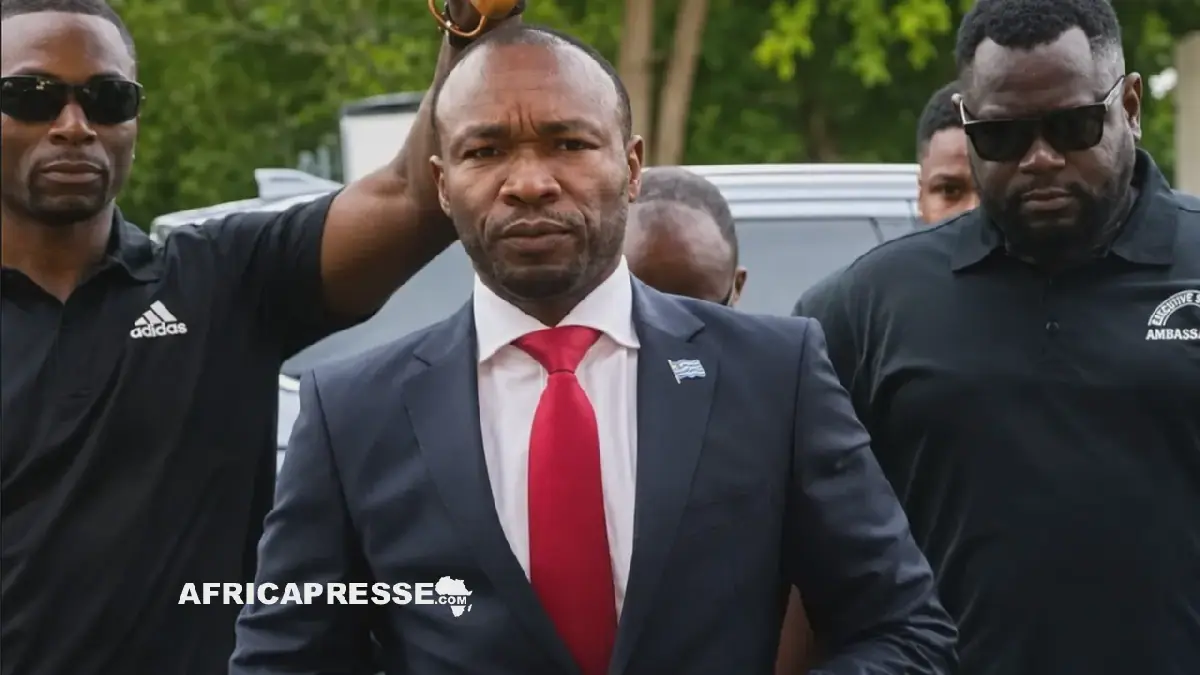
Cameroonian separatist leader Lucas Cho Ayaba, 54, has pleaded not guilty to charges of complicity in war crimes and acts of terrorism in a Norwegian court. Ayaba, who has lived in Norway since 2008, is accused of directing the Ambazonian government council and commanding the armed wing of the separatist movement, the Ambazonia Defence Forces. He faces a possible 30-year prison sentence if convicted.
According to the Norwegian prosecution, Ayaba was involved in planning two attacks in Cameroon, including one in Buea in February 2023 and another in Nkambe in February 2024, which killed two people and injured at least 111 civilians. The prosecution also alleges that Ayaba encouraged or ordered the murder and torture of prisoners and civilians, citing WhatsApp correspondence as evidence.
The trial is linked to the ongoing separatist crisis in Cameroon's English-speaking regions, which has resulted in at least 6,000 civilian deaths and displaced hundreds of thousands of people since 2017. The conflict began as an identity and economic grievance but turned violent after the suppression of 2016 and 2017 protests.
Ayaba's defense team disputes the charges, with his lawyer describing the conflict as a "war of liberation" and a legitimate struggle for independence. This defense strategy aims to reframe the accused's actions as acts of political resistance rather than terrorism, which could influence the legal qualification of the facts.
The trial's outcome is being closely watched by observers of African conflicts, as it may set a precedent for the criminal responsibility of leaders of non-state armed groups operating remotely. The case also raises questions about judicial cooperation between Norway and Cameroon, with Yaoundé not being involved in the proceedings.
In response to the trial, separatists in Bamenda, the largest city in Cameroon's English-speaking region, called for a "ghost town" strike on the first day of the trial, indicating that the event is being closely followed on the ground. The trial is scheduled to continue until March 12.
Beyond the fate of the accused, the trial's verdict is unlikely to resolve the underlying causes of the conflict, which remain unaddressed. The case highlights the complexities of addressing separatist movements and the challenges of holding leaders accountable for actions committed remotely.
Key points
- The trial of Lucas Cho Ayaba may establish a precedent for the criminal responsibility of leaders of non-state armed groups operating remotely.
- The conflict in Cameroon's English-speaking regions has resulted in at least 6,000 civilian deaths and displaced hundreds of thousands of people since 2017.
- Ayaba faces a possible 30-year prison sentence if convicted of complicity in war crimes and acts of terrorism.