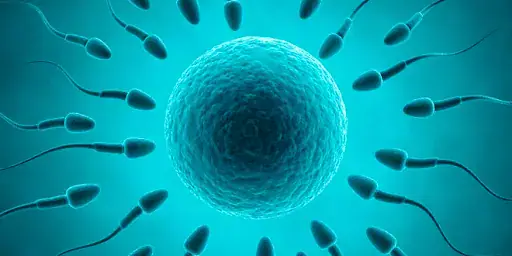
A Facebook post by @Abis Fulani on November 12, 2026, claimed that a new scientific procedure allows men and women to conceive on their own, without an egg and sperm coming together. The post cited a Chinese study, which was actually conducted on zebrafish in 2022. The study, titled "Translational control by maternal Nanog promotes oogenesis and early embryonic development," was published in the journal Development and explains how a gene helps eggs mature and embryos develop in zebrafish. It does not involve humans or describe any way for people to conceive without an egg and a sperm.
The Facebook post had 2,300 likes, 116 comments, 24 shares, and 10,000 views as of November 16, 2026. Respondents condemned the update, saying it would not apply to them, while others saw it as a sign that the world would end soon. DUBAWA, a fact-checking organization, verified the claim and found that conception happens when a sperm fertilizes an egg, whether that follows sexual intercourse or medical assistance. Several methods of conception have been documented, including intrauterine insemination (IUI), in vitro fertilization (IVF), and intracytoplasmic sperm injection (ICSI).
DUBAWA checked the research cited by the Facebook user and found that it was conducted by Sun Yonghua of the Institute of Hydrobiology at the Chinese Academy of Sciences. The study found that a gene called Nanog regulates egg and early embryonic development through translational control of maternal mRNA. The study does not describe any way for people to conceive without an egg and a sperm. Medical experts, including Shuaibu Ahmed, a gynaecologist at Aminu Kano Teaching Hospital, and Hadiza Mustapha, a fertility expert at Abubakar Tafawa Balewa University Teaching Hospital, clarified that conception requires both a man's sperm and a woman's egg.
According to Shuaibu Ahmed, new life still needs both sexes, and every form of help to conceive requires both partners or a third party who steps in. He explained that assisted methods like IUI and IVF involve egg collection, fertilization with sperm in a laboratory, and transfer of the resulting embryo into the uterus. Hadiza Mustapha added that conception requires a man's sperm and a woman's egg, whether it occurs naturally or through medical assistance.
A 2025 study in the journal Human Fertility reviewed 939 posts that used the hashtags #fertility and #infertility on Instagram and X. Only two posts (0.2%) were accurate, credible, high-quality, and easy to read, and many of the rest gave incomplete or misleading information. This highlights the importance of verifying information, especially when it comes to sensitive topics like fertility.
The Facebook post's claim that a man can give birth on his own and a woman can give birth on her own is not supported by scientific evidence. Medical experts stress that reproduction by a single human, especially a man, is not possible. Assisted reproductive technologies like IVF still require both reproductive cells, although either may come from a donor.
In conclusion, the Chinese study cited in the Facebook post does not show that men and women can conceive on their own. Conception requires both a man's sperm and a woman's egg, and assisted reproductive technologies like IVF and IUI do not change this fundamental fact.
Key points
- The Chinese study cited in the Facebook post was conducted on zebrafish and does not involve humans or describe any way for people to conceive without an egg and a sperm.