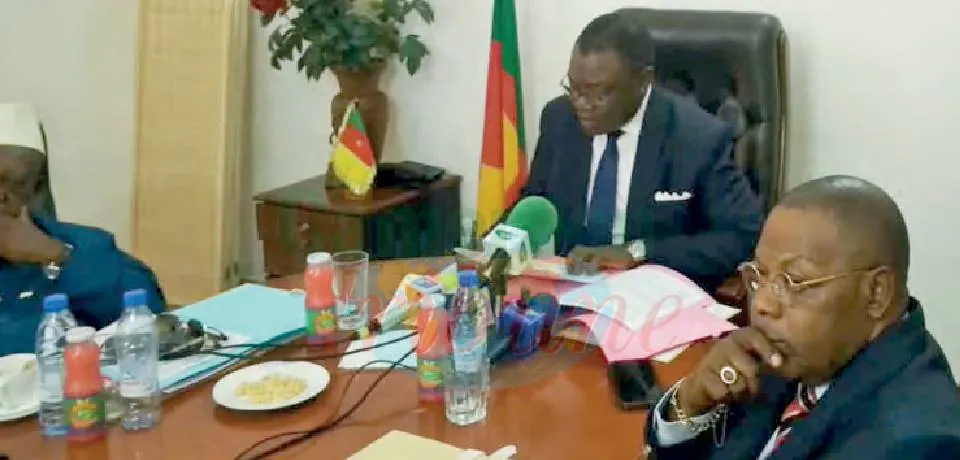
The Cameroon's National Communication Council (CNC) convened an extraordinary session in Yaoundé, resulting in the suspension of private television channel "Vision 4" for one month and sanctions against three press officials. The council, led by its president, examined four cases during its 48th extraordinary session, which was held in accordance with a decree issued on January 23, 2012. The session led to significant decisions regarding media regulation in the country.
One of the key cases involved a report aired by Vision 4 on June 2, 2026, during its 8 pm news broadcast, in the context of the Martinez Zogo trial. The report, signed by journalist Martial Thaddée Owona, was deemed "injurious" towards Félicité Esther Zeifman, a lawyer at the Cameroonian Bar. Following this, the CNC had previously suspended the reporter for three months and warned Philippe Boney, the general director of media for the group L'Anecdote. Boney had expressed readiness to rebroadcast the same allegations, according to the CNC president.
Further actions were taken against Vision 4 and its officials after Philippe Boney, during an August 30 broadcast of the "Club d'Elites" program, questioned the authority of the CNC, stating that the organization was of no consequence. The media outlet was summoned but failed to appear after being granted two postponements. This sequence of events led to the CNC's decision to suspend Vision 4 for a month, as per the legal provisions that obligate audiovisual operators to respond to regulatory requisitions.
The legal basis for the CNC's actions lies in the law of April 20, 2015, specifically Article 41, which mandates that public or private audiovisual operators must comply with requisitions from the regulatory body. Vision 4's non-compliance and previous offenses culminated in the council's decision to enforce a one-month suspension. This move underscores the CNC's role in regulating media content and enforcing compliance with established laws and ethical standards.
The sanctions imposed by the CNC reflect a broader effort to maintain media integrity and accountability in Cameroon. By taking action against Vision 4 and its officials, the council aims to uphold the standards expected of media operators in the country. This incident highlights the challenges and responsibilities faced by media outlets in navigating legal and ethical boundaries in their reporting.
The decision to suspend Vision 4 and sanction its officials has implications for the media landscape in Cameroon. It signals the CNC's commitment to enforcing regulatory measures and ensuring that media outlets operate within the confines of the law. The effectiveness of these measures in promoting responsible journalism and media compliance will be closely watched by stakeholders and the general public.
As the media environment continues to evolve, regulatory bodies like the CNC play a crucial role in balancing freedom of expression with the need for accountability and ethical reporting. The recent sanctions serve as a reminder of the importance of adhering to legal and professional standards in journalism. The impact of these decisions on Vision 4 and the broader media sector will be significant in shaping the future of media regulation in Cameroon.
Key points
- The Cameroon's National Communication Council suspended Vision 4 TV for a month and sanctioned three press officials for violating media regulations.