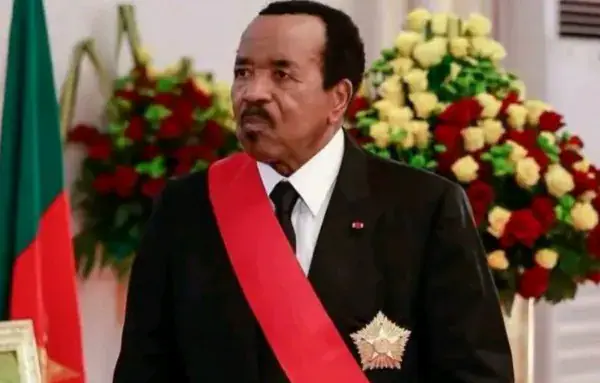
Cameroon President Paul Biya has been in power for 44 years, having assumed office on November 6, 1982. His party, the Rassemblement Démocratique du Peuple Camerounais (RDPC), is celebrating this milestone with mobilization efforts across the country, including meetings, marches, and messages of support from various sections of the party. The celebrations aim to demonstrate the party's continued mobilization and influence.
Supporters of President Biya view his long tenure as a period of stability in a region marked by crises, coups, and wars. They highlight his efforts to maintain national unity, peace, and active diplomacy, as well as infrastructure projects such as dams, roads, bridges, universities, and hospitals. The party also emphasizes the president's role in preserving the country's stability and continuity.
However, critics of President Biya point to his prolonged stay in power, high youth unemployment, rising living costs, corruption, and slow reforms. They also raise concerns about unresolved crises, including the anglophone crisis in the Northwest and Southwest regions, insecurity in the Far North, and regional inequalities. Many argue that 44 years is too long, and the country needs a new generation of leaders and stronger institutions.
The significant changes in Cameroon since 1982 are also noteworthy. The country's population has grown from a few million to over 28 million, with the majority of Cameroonians under the age of 35. This younger generation, born and raised under President Biya's rule, is connected and active on social media, demanding employment, transparency, and a future.
The youth are at the center of the debate about President Biya's continued rule. For many Cameroonians, 44 years is not just a historical date but their entire lives. They evaluate the president's performance based on their present circumstances, including access to employment, decent living standards, and a sense of security. The RDPC and opposition parties recognize the importance of the youth in determining the country's future.
The debate surrounding President Biya's rule has shifted from a simple "for or against" discussion to a more nuanced conversation about the country's readiness for the future. The RDPC's mobilization efforts demonstrate the party's strength and ability to maintain its presence 44 years after coming to power. However, the real mobilization is that of the Cameroonian people, who are advocating for their future.
As Cameroon looks to the future, the questions on everyone's mind are about stability versus renewal, continuity versus change. The answer to these questions will shape the country's next steps and determine the course of its development. President Biya's 44-year tenure has been marked by both achievements and challenges, and the nation must now consider what it wants for its future.
Key points
- President Biya's 44-year rule has sparked debate about stability versus renewal in Cameroon.