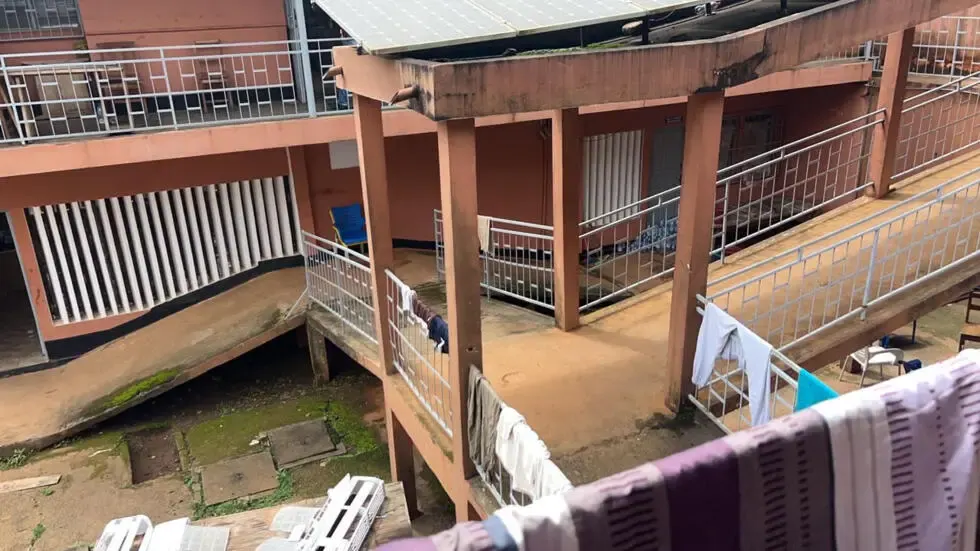
In Cameroon's capital Yaoundé, a government compound has been transformed into a shelter for people deported from the US. The shelter, located in a residential neighborhood, houses over 20 individuals from various African countries, including Ethiopia, Ghana, and the Democratic Republic of Congo. They share dorm rooms sparsely furnished with bunk beds. Many struggle to adjust, with some not speaking the local language, French.
Barbara, a young woman from Ethiopia, is one of them. She fled her homeland after war broke out between federal government forces and the Tigray People's Liberation Front, resulting in over 600,000 deaths between 2020 and 2024. She traveled to Brazil and then the US, where she was detained and sent to an immigration detention center in Louisiana. Despite being granted "withholding of removal," a protection that prevents deportation to her home country, she was abruptly deported to Cameroon on April 28, 2026.
Soraya, a Ghanaian woman, also found herself in a similar situation. She fled Ghana after her family discovered her sexual orientation and began searching for her. Soraya had been granted a protection measure in the US, but was deported without warning. Her story is not unique, as many deportees face uncertain fates in countries they've never set foot in before.
The US administration has struck secret deals with over 35 countries, mostly in Latin America and Africa, to deport migrants who are legally protected from being deported to their home countries. These agreements have facilitated the deportation of over 25,000 people. However, the actual content of many of these agreements remains shrouded in mystery, with some governments not submitting them to Parliament for approval.
Cameroonian lawyer Joseph Awah Fru provides legal assistance to migrants deported to Yaoundé. He notes that the US needed a "blank-slate" country to deport migrants, and Cameroon has become one such destination. The deportations have raised concerns about the treatment of migrants in these third countries, with reports of quasi-military conditions and limited access to lawyers.
The deportation of migrants to countries unfamiliar to them has sparked concerns about their safety and well-being. Beatrice Njeri, a Kenyan lawyer, highlights the lack of transparency and openness in these agreements, making it difficult for deportees to find out what options are available to them. The situation has left many deportees isolated and vulnerable.
An exchange of diplomatic notes between Cameroon and the US in December 2025 confirms the deal, with both countries undertaking to arrange the transfer of certain third-country nationals from the US to Cameroon. The deportations have raised questions about the Trump administration's policies and the impact on migrants caught in the midst of these secret deals.
Key points
- Over 25,000 people have been deported to African countries under secret deals struck by the US administration.
- Many deportees face uncertain fates in countries they've never set foot in before.
- The secret deals have raised concerns about transparency, safety, and well-being of deported migrants.