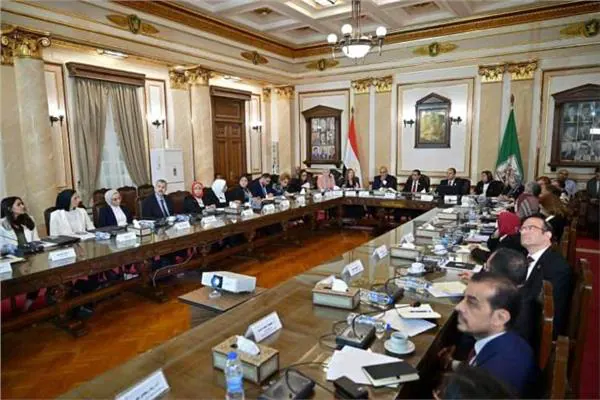
Cairo University recently organized a university listening session focused on the economic axis. The event brought together a selection of faculty members, experts, and officials. This initiative aligns with the university's efforts to contribute scientifically to the national dialogue on economic issues. By engaging with academic and practical expertise, the session aimed to discuss challenges and topics related to Egypt's economic future.
The session is part of a broader invitation by President Abdel Fattah El-Sisi to gather input from academics, experts, and specialists on various national issues. This engagement precedes the launch of the Egypt Forum 2026, scheduled from October 19-24, 2026. The university's proactive approach underscores its commitment to leveraging its scientific and research capabilities in addressing national concerns.
The listening session included 25 faculty members from Cairo University, representing diverse faculties and relevant specializations. Additionally, 14 experts and officials from five ministries and government institutions participated. These included the Ministries of Finance, Investment, Planning, Industry, and the Central Bank of Egypt. The diverse participation facilitated a comprehensive dialogue that combined academic insights with governmental and institutional experiences.
Professor Mohamed Sami Abdel Sadek, President of Cairo University, emphasized that the session was in response to the President's call for input on economic issues. He highlighted the university's role as a hub of expertise and a beacon of science and knowledge. The university aims to utilize its scientific and research potential to serve national issues and provide a platform for specialists to share their views and analyses within a framework of responsible scientific dialogue.
Dr. Mahmoud El-Saeed, Vice President of Cairo University for Postgraduate Studies and Research, and director of the university's listening sessions, noted the diversity of specializations and experiences present at the session. This diversity contributed to a multifaceted discussion of the economic axis. He stressed the importance of integrating academic vision with practical and institutional experience when addressing economic issues. Such integration enriches the dialogue and fosters an exchange of views among concerned parties.
The session covered three main themes, starting with foreign exchange resources and debt management. Participants discussed sources of foreign exchange, ways to enhance sustainability, and the relationship between exports and imports. They also examined the burdens of interest and financing needs, along with debt management, diversification of revenue sources, and investment. The role of local manufacturing, exports, services, tourism, and productive investment in supporting foreign exchange resources was also a focus.
Key points from the discussions included the need for effective strategies to manage Egypt's economic challenges.
Key points
- The session highlighted the importance of integrating academic insights with practical experiences to address economic issues.
- Participants emphasized the need for sustainable foreign exchange resources and effective debt management strategies.
- The event underscored the role of local manufacturing, exports, and investment in supporting Egypt's economic growth.