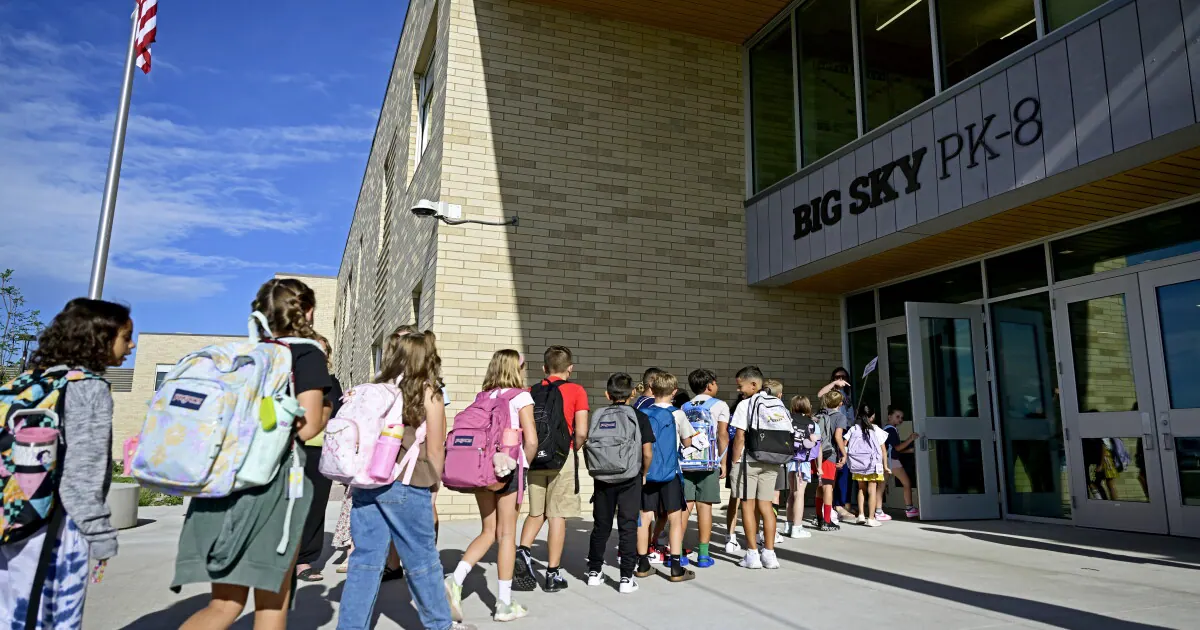
The US Department of Education has released the latest Civil Rights Data Collection, a comprehensive survey of public schools in the United States. The data, collected from over 97,000 public schools, provides insights into enrollment, harassment, and the treatment of students with disabilities. The survey, which has been conducted for over 50 years, aims to help the Education Department hold schools accountable for protecting student civil rights. The 2023-24 school year data was released on August 31, six months later than promised.
Public school enrollment has seen significant changes, with a 12% increase in preschool enrollment and a 1% decline in K-12 enrollment. The number of children in preschool programs rose to 1.5 million, although it remains slightly lower than pre-pandemic levels. States such as California, Colorado, and New Mexico have invested in expanding early childhood education, contributing to the increase. In contrast, K-12 enrollment has decreased, possibly due to declining birthrates and an increase in private school and homeschooled students.
School discipline remains a concern, with 2.5 million students receiving out-of-school suspensions and 2.3 million receiving in-school suspensions. This represents an increase of 100,000 students in each category compared to the 2021-22 school year. Research suggests that suspensions are often used for minor offenses, such as truancy or dress code violations, rather than unsafe behavior. Black students are disproportionately affected, losing over four times as many days of school due to suspensions compared to their white peers.
The population of students with disabilities has grown, making up 19% of all public school students. Boys account for nearly two-thirds of these students, and they are more likely to be suspended out of school. Students with disabilities often miss out on key services, such as mental health counseling or physical therapy, when they are suspended. Additionally, they are underrepresented in Advanced Placement classes, which can limit their access to college and other opportunities.
The teacher workforce remains predominantly white, with 75% of teachers identifying as white, 9% as Black, and 11% as Latino. This lack of diversity can impact student success, as research suggests that students benefit from having teachers from similar backgrounds. For example, Black students have better achievement and school discipline outcomes when taught by Black teachers.
The data also highlights the issue of missing information, as data on nonbinary students was collected but not released. This omission has been criticized by advocates, who argue that it is essential to include all students in the data collection. The Education Department has faced challenges in collecting and releasing accurate data, including delays and omissions.
Experts emphasize that the data highlights areas for improvement in US public schools. The increase in suspensions and lack of diversity in the teacher workforce are concerns that need to be addressed. Additionally, the data underscores the importance of supporting students with disabilities and providing them with equal access to opportunities. By analyzing the data, educators and policymakers can work towards creating a more equitable and supportive learning environment for all students.
Key points
- The Civil Rights Data Collection shows a 12% increase in preschool enrollment and a 1% decline in K-12 enrollment.
- Black students are disproportionately affected by suspensions, losing over four times as many days of school compared to their white peers.
- The teacher workforce remains predominantly white, with 75% of teachers identifying as white, 9% as Black, and 11% as Latino.