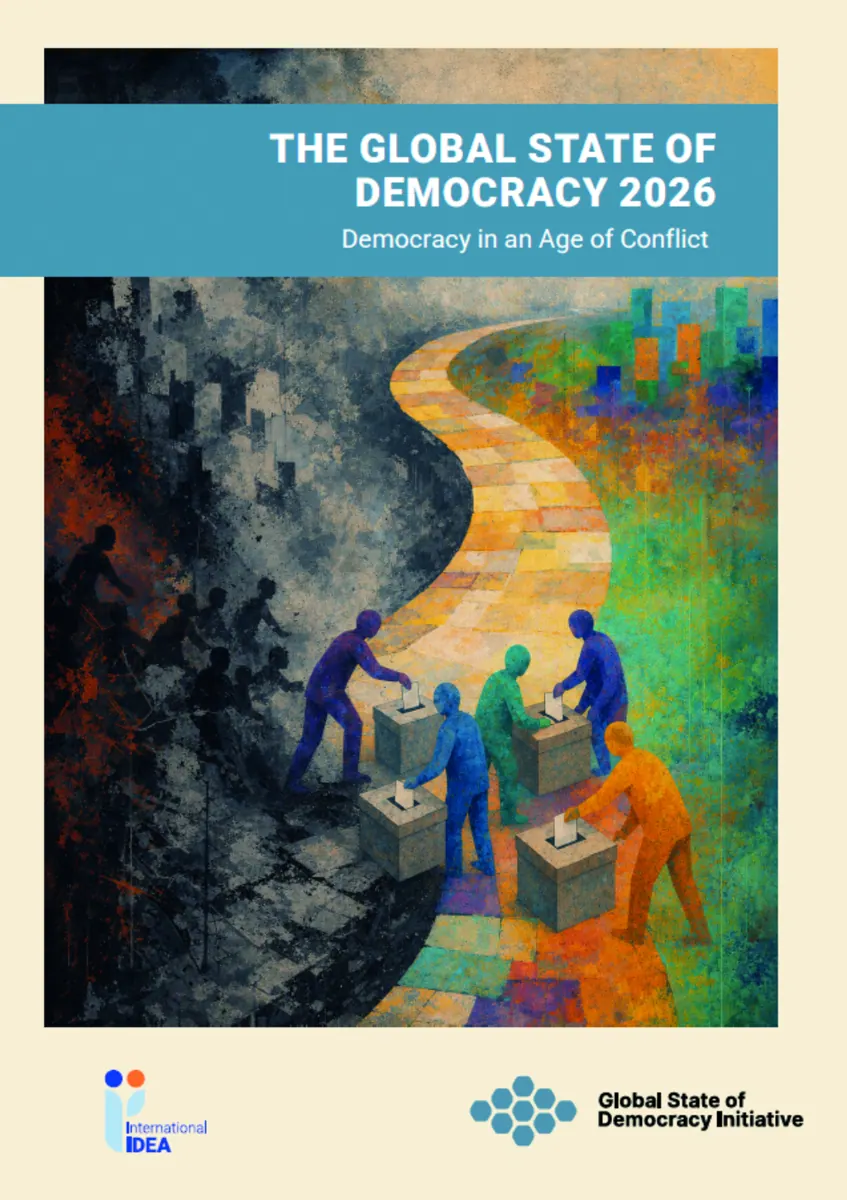
According to the 2026 Global State of Democracy report by the International Institute for Democracy and Electoral Assistance, Cabo Verde is among the top-performing lusophone countries in terms of democratic governance. The report, which analyzes 173 countries, highlights that Cabo Verde has a relatively strong performance in Representation, Rights, and Rule of Law. However, the country struggles with citizen participation, ranking 115th out of 173 countries in this category.
The report identifies a concerning trend of stagnation in democratic performance, with 81% of countries showing no change in their performance. This stagnation is particularly worrying given that current performance levels are mediocre. Cabo Verde's President, José Maria Neves, has emphasized the importance of preserving and protecting democracy, which he considers a "common and non-negotiable heritage." He notes that this responsibility lies not only with institutions but also with individual citizens.
The International IDEA report assesses democratic performance across four categories: Representation, Rights, Rule of Law, and Participation. Cabo Verde ranks 38th in Representation, 52nd in Rights, and 52nd in Rule of Law. However, the country's performance in Participation is significantly lower, with citizens showing limited engagement in public life beyond elections. The report highlights that this low participation is a concern, as it is essential for a healthy democracy.
In comparison to other lusophone countries, Cabo Verde performs well, but lags behind Portugal, which ranks 20th in Representation, 37th in Rights, 45th in Rule of Law, and 75th in Participation. Brazil, another major lusophone country, ranks 41st in Representation, 50th in Rights, 51st in Rule of Law, and 13th in Participation. Cabo Verde outperforms other African lusophone countries, including Angola, Mozambique, and Guinea-Bissau.
The report also highlights a concerning trend of declining democratic performance in Africa and the Middle East. Between 2020 and 2025, 106 countries experienced significant declines in democratic performance, while only 53 showed improvements. The declines were most pronounced in Rights and Representation, with 60 of the 106 declines occurring in these areas.
The International IDEA report notes that insecurity and conflict are significant factors contributing to the decline in democratic performance in Africa and the Middle East. The report highlights that many countries in these regions are experiencing armed conflicts, which are having a devastating impact on democratic governance. Additionally, the report notes that changes in government, particularly in West Africa, have often been driven by efforts to maintain or seize power.
The report concludes that the prospects for democracy in Africa and the Middle East are likely to be shaped by ongoing conflicts and insecurity. However, it also notes that there are signs of positive change, including improvements in countries such as Gabon and Gambia. The report emphasizes the need for continued support for democratic governance and citizen participation to address these challenges and promote more robust and resilient democracies.
Key points
- Cabo Verde ranks high in democratic performance among lusophone countries but struggles with citizen participation.
- The country's performance in Representation, Rights, and Rule of Law is relatively strong, but Participation is a concern.
- The report highlights a concerning trend of declining democratic performance in Africa and the Middle East, driven by insecurity and conflict.