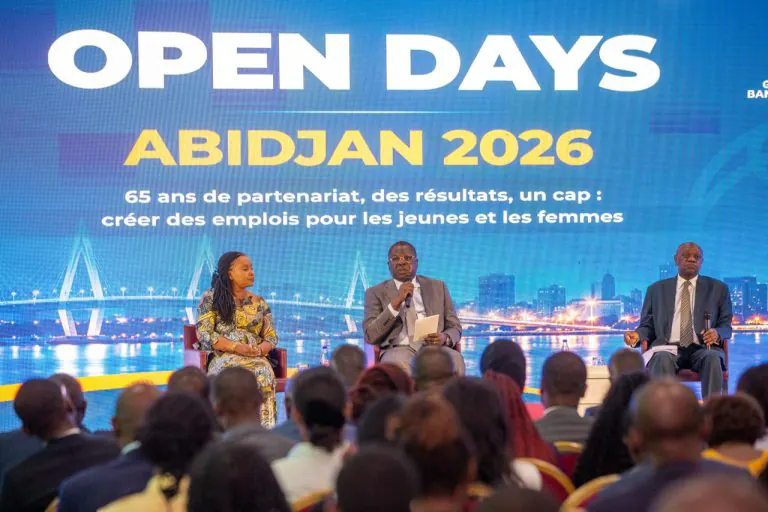
The Ivoirian government has announced plans to mobilize $5.8 billion in investments by 2035 to enhance access to clean water and improve sanitation services. Minister of Hydraulics, Sanitation, and Salubrity, Amédé Koffi Kouakou, made this announcement on September 21, 2026, in Abidjan, during a panel discussion on water organized by the World Bank. The minister emphasized that access to clean water is a top priority for the government, citing its direct impact on living conditions and public health.
The minister highlighted that the issue of access to clean water must be addressed in both urban and rural areas, with over half of the Ivoirian population living in rural areas. To address this challenge, the government has concluded the Pact for Water and Sanitation (PASEA), with an initial funding of $1.2 billion, including $825 million from the World Bank. This program is part of a broader investment plan aimed at covering different regions of the country.
The PASEA program is designed to improve access to clean water and sanitation services, particularly in rural and underserved areas. The government aims to increase the availability of clean water and sanitation facilities, thereby reducing the risk of water-borne diseases and improving overall health outcomes. The program's success will depend on effective implementation and coordination among stakeholders.
In Abidjan, the economic capital, the minister noted that the city has significant water production capacity, but its utilization is limited by inadequate distribution networks. Abidjan has several water treatment plants, including La Mé, Djibi, and Bonoua, with a combined capacity of over 1 million cubic meters per day. However, only about 650,000 cubic meters are currently distributed daily, leaving a surplus of around 400,000 cubic meters.
The minister identified the main challenge as the distribution network, emphasizing the need for new pipelines to supply water to different parts of the city. He stressed that upgrading the distribution infrastructure is crucial to ensuring that all residents have access to clean water. The government must prioritize investments in water infrastructure to address the city's growing needs.
Marie-Chantal Uwanyiligira, the World Bank's director of operations for Côte d'Ivoire, Benin, Guinea, and Togo, praised PASEA as a platform for mobilizing partners and called for accelerated efforts to ensure universal access to clean water. She urged the government to reform the sector, strengthen private sector participation, and continue investing in hydraulic infrastructure.
The Ivoirian government's investment plan for water and sanitation is a critical step towards achieving its development goals. The success of this plan will depend on effective implementation, coordination, and monitoring. The government must work closely with stakeholders, including the private sector, to ensure that the needs of all populations are met.
Key points
- The Ivoirian government plans to invest $5.8 billion by 2035 to improve access to clean water and sanitation services.
- The government has concluded the Pact for Water and Sanitation (PASEA), with an initial funding of $1.2 billion.
- The main challenge in Abidjan is the inadequate distribution network, which limits the utilization of available water production capacity.