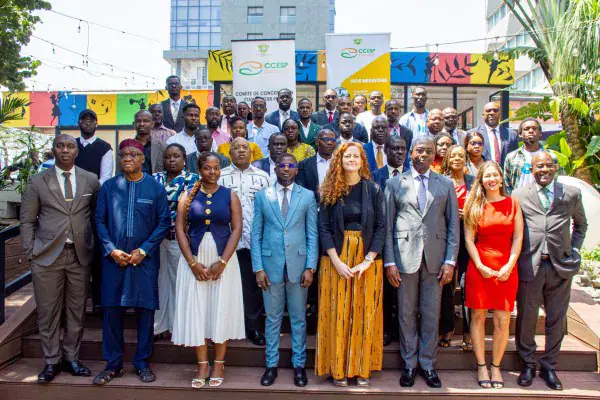
The Comité de Concertation État-Secteur Privé (CCESP) in Côte d'Ivoire has initiated a new approach to combat food waste, a significant challenge to food security, the economy, and the environment. On October 22, 2026, over 60 stakeholders from the public administration, private sector, civil society, and food solution ecosystem gathered in Abidjan to discuss the issue. The meeting focused on an opportunity study for establishing a normative framework to fight food waste in Côte d'Ivoire.
According to the study, approximately one-third of global food production is lost or wasted, while millions of people suffer from hunger. In Côte d'Ivoire, the issue is substantial, with an estimated 89 kg of food waste per inhabitant per year, totaling nearly 2.9 million tons. This figure could rise to 4.26 million tons annually if the food industry and distribution are included. The study highlights the need for a structured response to this problem.
The current regulatory framework in Côte d'Ivoire has several limitations. A 1992 decree prohibits the sale or donation of products past their expiration date, but it does not clearly distinguish between the date limit of consumption (DLC) and the date of minimum durability (DDM). Additionally, there is no specific regime for food donations, and fiscal constraints and unclear donor responsibilities hinder the redistribution of surplus food.
Despite existing solutions for collecting and redistributing surplus food, only 34% of their capacities are utilized due to difficulties in matching donors with beneficiary structures and logistical insufficiencies. To address this issue, the study recommends a mixed and progressive approach, prioritizing the adaptation of existing texts and voluntary commitments before considering a more binding legal framework.
The study proposes nine key recommendations, including producing reliable data, setting quantified reduction targets, modernizing rules related to consumption dates, securing food donations, and adopting adapted fiscal incentives. A national hierarchy for preventing and managing food waste, public awareness, and structuring actors engaged in the fight against waste are also suggested.
A national pact against food waste is at the heart of the strategy, aiming to unite the state, businesses, solidarity organizations, and other food chain actors around common commitments. The proposed roadmap consists of three phases: establishing a national reference, governance, and launching the pact (0-12 months); setting quantified objectives, organizing donations, and fiscal instruments (12-36 months); and evaluation (beyond 36 months).
The initiative has been welcomed by stakeholders, who emphasize its social dimension. The director of cabinet, representing the Minister of National Cohesion, Solidarity, and Poverty Reduction, called for a shift from a logic of loss to one of valorization and sharing. The future framework should secure donations, clarify responsibilities, and facilitate the redistribution of unsold goods from large companies.
Key points
- Côte d'Ivoire's CCESP has launched a national pact to combat food waste, aiming to transform surplus food into resources for solidarity and sustainable development.
- The study highlights the need for a structured response to food waste, with an estimated 2.9 million tons of waste per year.
- The proposed roadmap consists of three phases, focusing on establishing a national reference, setting objectives, and evaluation.