The government of Côte d'Ivoire and its development partners are intensifying efforts to improve sanitation in rural areas. The Poro and Hambol regions are part of a pilot project to construct latrines for vulnerable households, rural health centers, and public primary schools. This project, initiated by the Ministry of Hydraulics, Sanitation, and Salubrity, is funded by the World Bank and aims to combat open defecation and improve hygiene and sanitation conditions for rural populations.
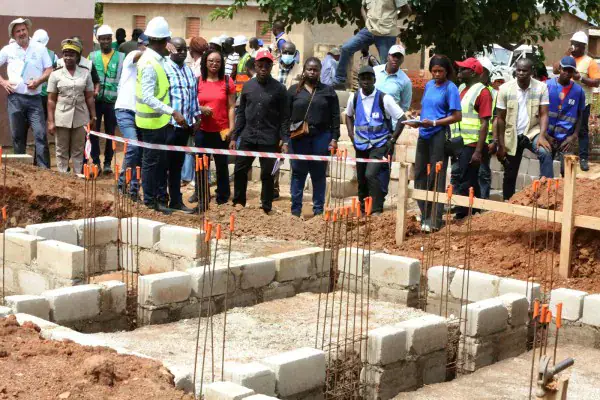
The project, implemented by the Directorate of Rural Sanitation, has entered its active phase, with construction companies starting work on site. The World Bank, accompanied by teams from the Project for Water Security and Sanitation Support (PASEA) and the Ministry of Hydraulics, Sanitation, and Salubrity, conducted a supervision and evaluation mission in the Poro and Hambol regions from November 9 to 16, 2026. The mission included visits to construction sites, including Kapélé village, where the delegation assessed the progress of work on sanitation blocks for the public primary school and health center.
During the visit, several concerns were raised by the delegation, and company representatives provided clarifications. The mission continued in Kokaha, where discussions with stakeholders allowed for an update on the project's progress and challenges encountered. Yao Yao Sialou, a nurse and head of the Kokaha dispensary, expressed satisfaction with the project's prospects, citing improved working conditions for healthcare personnel.
The delegation continued its mission in the Hambol region, visiting Timbé village to inspect the construction of sanitation blocks for the public primary school and health center. The mission also visited Kationon, where they evaluated the project's progress. Zié Coulibaly, environmental safeguard specialist at the Directorate of Rural Sanitation, expressed satisfaction with the project's progress, highlighting the effective operational mechanism in place for its execution.
The project aims to construct 40,000 family latrines in rural areas and strengthen local participation in water, sanitation, and hygiene (WASH). The World Bank-funded project is part of Côte d'Ivoire's National Development Plan (2021-2025), which prioritizes initiatives to improve rural living conditions. The project's total cost for the Poro region is estimated at 1.3 billion CFA francs.
Lionel Tamané, civil operations manager at PASEA, emphasized the project's health and environmental benefits, including reduced open defecation and pollution of water resources. The project's implementation is a collaborative effort between the government, the World Bank, and local stakeholders.
The project's progress and impact will be closely monitored, with further assessments planned to identify areas for improvement. The government's commitment to improving sanitation in rural areas is reflected in this initiative, which aims to enhance the quality of life for rural populations.
Key points
- The pilot project in Côte d'Ivoire's Poro and Hambol regions aims to improve sanitation and hygiene conditions for rural populations.
- The project includes the construction of latrines, rural health centers, and public primary schools, with a focus on vulnerable households.
- The World Bank-funded project is part of Côte d'Ivoire's National Development Plan (2021-2025) and aims to combat open defecation and improve hygiene and sanitation conditions.