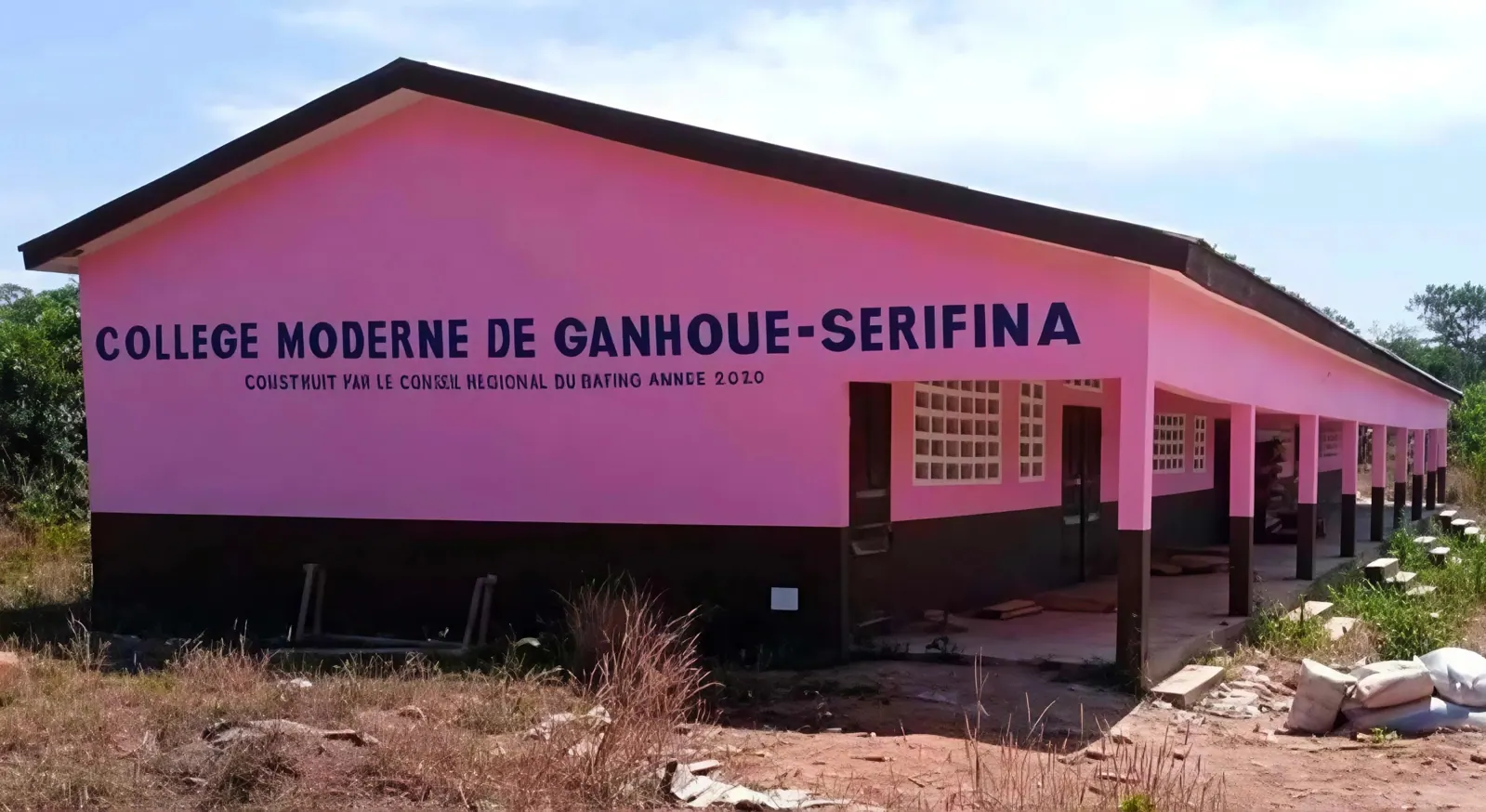
The Ouaninou department in Côte d'Ivoire has welcomed seven new colleges of proximity, significantly improving access to secondary education for local populations. These colleges, built with the support of the Bafing Regional Council, are located in Gouékan, Tiahoué, Sérifina Ganhoué, Santa, Ferentela, Gbelo Mandougou, and Saboudougou. This development brings the total number of secondary schools in the Bafing region to 29, comprising 23 public institutions and six private ones.
The new colleges of proximity are part of a broader effort to enhance the region's education infrastructure. According to regional education authorities, the Bafing region now boasts 29 secondary schools, including five lycées and 18 colleges of proximity. This expansion is a significant step towards achieving the national goal of strengthening territorial equity in access to education. The colleges will enable students in these localities and surrounding villages to pursue their secondary education near their families.
The construction of these colleges addresses a critical need in the region, as previously, students had to travel to urban centers to continue their studies. This resulted in significant expenses for transportation, accommodation, and meals. The new colleges will alleviate these financial burdens on families and allow students to remain with their families, ensuring better parental supervision. Mamadou Sanogo, president of the Bafing Regional Council, emphasized that these infrastructure projects respond to both educational and social challenges.
The Bafing Regional Council, under Mamadou Sanogo's leadership, has been instrumental in driving education development in the region. Sanogo highlighted that the council's efforts aim to bring education closer to the people, reducing the financial strain on parents and enabling them to better monitor their children's education. The council's initiatives align with the national policy of promoting equitable access to education across the country.
Côte d'Ivoire has made significant strides in expanding its secondary education infrastructure in recent years. Between 2011 and 2024, the number of public secondary schools increased from 294 to 902, with 608 new constructions, including 296 colleges of proximity. The Bafing region is continuing this trend, with plans for additional colleges of proximity in Silakoro and Moambasso, further improving access to secondary education in rural areas.
The expansion of secondary education in Côte d'Ivoire is part of a broader strategy to promote national development through education. By increasing access to quality education, the government aims to equip future generations with the skills and knowledge necessary to drive economic growth and social progress. The new colleges of proximity in Ouaninou are a testament to this commitment, offering students in the region a brighter future.
As the education sector continues to evolve in Côte d'Ivoire, stakeholders are optimistic about the impact of these new colleges on the country's human capital development. With a focus on inclusivity and accessibility, the government's efforts to enhance education infrastructure are expected to yield long-term benefits for the nation's socio-economic development. The Bafing Regional Council's initiatives serve as a model for other regions to follow in promoting equitable access to education.
Key points
- Seven new colleges of proximity have been built in Côte d'Ivoire's Ouaninou department.
- The colleges aim to improve access to secondary education for rural populations.
- Côte d'Ivoire has expanded its secondary education infrastructure significantly since 2011.