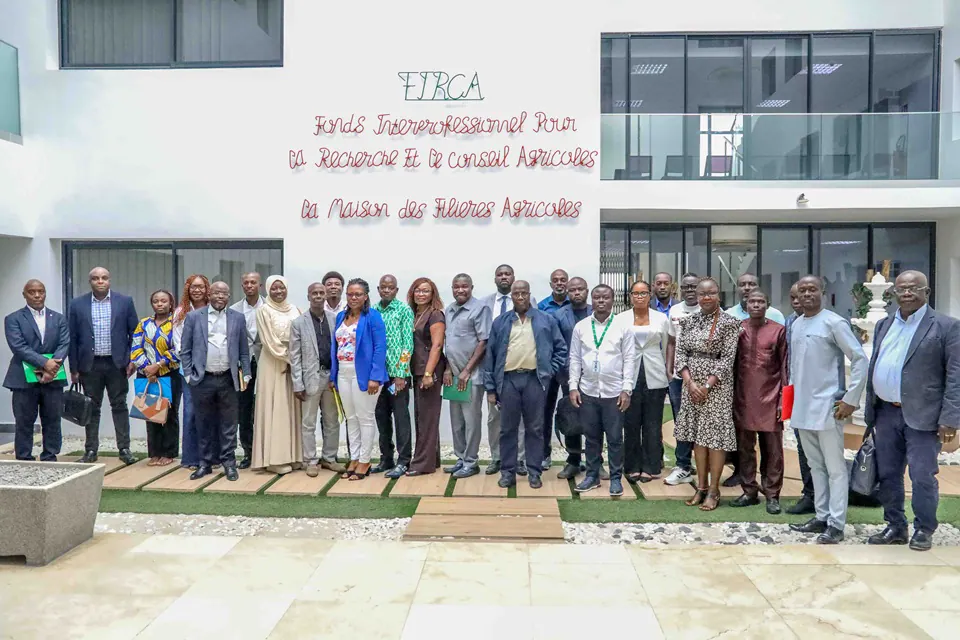
The Fonds interprofessionnel pour la recherche et le conseil agricoles (FIRCA) in Côte d'Ivoire has called for a scientific evaluation of the effects of using hévea wood as a combustible on human health. This appeal was made during a workshop held on September 28, 2026, at the FIRCA headquarters in Abidjan Cocody, where a provisional report on the study was presented. The study, conducted by the cabinet INTERFORM-CI, aims to determine the compounds emitted by the smoke from burning hévea wood and assess their impact on human health.
Representing the executive director of FIRCA, N’Diaye Oumar, Issiaka Yaméogo, the program manager for Coffee and Cocoa, emphasized the importance of this study in informing public policies on hygiene, health, and environment. He highlighted the need for scientific data to better regulate practices related to the use of hévea wood as an energy source. The study's findings are expected to provide stakeholders in the hévea sector with essential information to guide their decisions.
The use of hévea wood as a fuel source is a significant concern, particularly with the renewal of plantations that have reached the end of their economic cycle. A participant at the workshop noted that the hévea sector has already begun to valorize natural rubber and seeds, and now focuses on wood, which must be evacuated as part of an emergency program for plantation renewal and extension. The use of wood as an energy source is one of the primary valorization pathways, but it requires precise data to prevent potential risks associated with its combustion.
The study is part of a broader initiative on the valorization of hévea wood in timber and energy wood, included in the planning of the fourth cycle of projects for the hévea sector from 2021 to 2026. Côte d'Ivoire had approximately one million hectares of hévea plantations in the village sector and 54,000 hectares in the industrial sector as of 2025. The country's production of dry rubber exceeded 1.9 million tons in 2025.
Projections indicate that between 1995 and 2055, the country has a cumulative potential of over 1.62 million cubic meters of timber and approximately 1.81 million cubic meters of energy wood annually from village and industrial plantations. Hévea wood is used as firewood in households and bakeries, for smoking fish, in the form of charcoal, and for producing chips for industrial boilers.
The workshop aimed to present the provisional results of the study to hévea sector stakeholders and gather their observations and recommendations for the final report. The FIRCA's initiative seeks to ensure that the use of hévea wood as a fuel source does not pose health risks to the population. The study's findings will be crucial in shaping policies and practices related to the hévea sector.
The FIRCA's call for a scientific evaluation of hévea wood as a fuel source underscores the need for evidence-based decision-making in the sector. With the hévea sector's growth and expansion, it is essential to address potential environmental and health concerns associated with the use of hévea wood. The study's recommendations will likely inform strategies for sustainable management of hévea plantations and the valorization of hévea wood.
Key points
- FIRCA urges scientific evaluation of hévea wood as fuel source due to health concerns
- Study aims to determine compounds emitted by hévea wood smoke and assess health impact
- Findings will inform policies and practices in Côte d'Ivoire's hévea sector