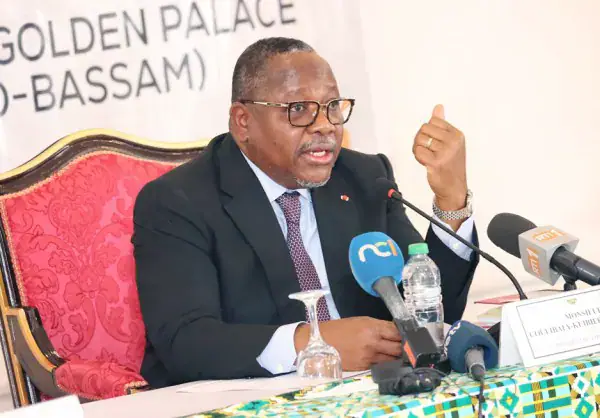
The Conseil d'État of Côte d'Ivoire has gathered for its first internal seminar of the 2026-2027 judicial year in Grand-Bassam. The meeting aims to accelerate the processing of pending cases and enhance the quality of decisions. With over 5,000 cases pending and an average judgment period of four years, President Ibrahime Coulibaly-Kuibiert emphasized the need for concrete reforms to strengthen administrative justice and restore public trust.
The Conseil d'État faces significant challenges, including a substantial backlog of cases and lengthy processing times. To address these issues, President Coulibaly-Kuibiert has outlined a plan to prioritize efficiency, optimize working methods, and leverage available resources. This strategy involves establishing an emergency chamber, creating a pool for preliminary examination of requests, and enhancing the professional capacities of magistrates, clerks, and staff.
The Conseil d'État's president highlighted the importance of harmonizing jurisprudence across different chambers to ensure predictability and strengthen legal security. He stressed that delayed decisions can lose their utility and that decisions must be comprehensible, executable, and grounded in rigorous legal analysis. The president's vision is to transform the Conseil d'État into a jurisdiction capable of delivering timely, accessible, and high-quality decisions.
Yves N'Goran-Theckly, president of the seminar's scientific committee, noted the evolution of the Conseil d'État's role in promoting the rule of law and good governance. The Conseil d'État now plays a critical role in addressing various issues affecting citizens' daily lives and the economy. N'Goran-Theckly emphasized that the quality of a decision is measured by its clarity, executability, and acceptance, rather than its length.
The seminar aims to foster the emergence of practical solutions and reform proposals to bring administrative justice closer to citizens' expectations. The event also provides a platform for experience sharing between active magistrates and former officials of Côte d'Ivoire's administrative justice system. The presence of former presidents of the Supreme Court's Administrative Chamber, Georges Amangoua and Professor Pierre-Claver Kobo, was particularly noteworthy.
President Coulibaly-Kuibiert's initiatives to improve the Conseil d'État's functioning include strengthening the institution's capacity to handle complex cases and promoting a culture of efficiency. The Conseil d'État's efforts to enhance its performance and responsiveness are crucial in maintaining public trust and confidence in the justice system.
The Conseil d'État's seminar will likely lead to significant reforms aimed at improving the institution's efficiency and effectiveness. By addressing the backlog of cases and enhancing decision quality, the Conseil d'État can better serve the needs of Côte d'Ivoire's citizens and contribute to the country's economic and social development.
Key points
- The Conseil d'État aims to reduce its backlog of over 5,000 pending cases and improve decision quality.