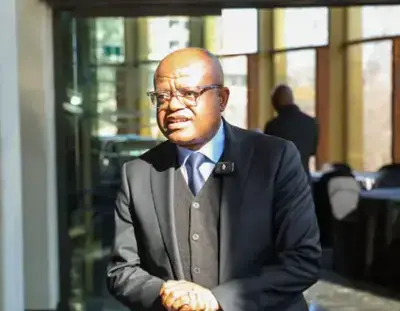
Côte d'Ivoire's Bar Association has expressed concerns over the country's anti-terrorism legislation, suggesting that certain provisions may be too broad and could be used to stifle political dissent. The association's leader, Maître Florence Loan Messan, made these comments during a recent court hearing in Abidjan, the economic capital of Côte d'Ivoire. She emphasized that while the fight against terrorism is a legitimate concern for any state, it is essential to ensure that anti-terrorism laws do not infringe on individual freedoms and the right to express opinions.
Maître Florence Loan Messan noted that Côte d'Ivoire has experienced terrorist attacks in the past, including the 2016 attacks in Grand-Bassam and Kafolo, which resulted in loss of life and damage to property. She stressed that the state has a responsibility to protect its citizens and pursue those who engage in terrorist activities. However, she also emphasized that this should not be done at the expense of individual freedoms and the right to express opinions. The Bar Association is calling for a review of the anti-terrorism law to ensure that it is not misused to silence political opponents or restrict freedom of expression.
The anti-terrorism law in question was passed in 2015 and amended in 2024. Maître Florence Loan Messan pointed out that certain provisions, such as Article 3, may be too broad and could lead to the misclassification of certain acts as terrorism. For example, a person who throws a stone at a bus in protest of a political candidate could be charged with terrorism under the current law, which carries severe penalties. The Bar Association is concerned that such a broad definition of terrorism could lead to the suppression of legitimate political dissent.
Maître Florence Loan Messan also highlighted that many countries require that terrorist acts be motivated by a specific intent to cause harm, rather than simply being related to a political or ideological cause. She argued that the current law in Côte d'Ivoire may not be specific enough and could lead to the misclassification of certain acts as terrorism. The Bar Association is calling for a more nuanced approach to defining terrorism, one that takes into account the complexities of the issue.
The issue of anti-terrorism legislation is a complex one, and Côte d'Ivoire is not alone in its concerns. Many countries have struggled to balance the need to combat terrorism with the need to protect individual freedoms and human rights. The Bar Association's call for a review of the anti-terrorism law is a timely reminder of the importance of ensuring that such laws are fair, effective, and do not infringe on human rights.
Maître Florence Loan Messan emphasized that the Bar Association is not opposed to the anti-terrorism law in principle but rather seeks to ensure that it is applied in a way that respects human rights and individual freedoms. She called on the judiciary to exercise caution and discernment when applying the law, taking into account the context and circumstances of each case.
The debate over Côte d'Ivoire's anti-terrorism legislation is likely to continue, with the Bar Association and other stakeholders pushing for reforms to ensure that the law is fair and effective.
Key points
- The Bar Association of Côte d'Ivoire has expressed concerns that the country's anti-terrorism law may be too broad and could be used to stifle political dissent.
- Maître Florence Loan Messan, the leader of the Bar Association, has called for a review of the law to ensure that it respects human rights and individual freedoms.
- The law has been criticized for its broad definition of terrorism, which could lead to the misclassification of certain acts as terrorism.