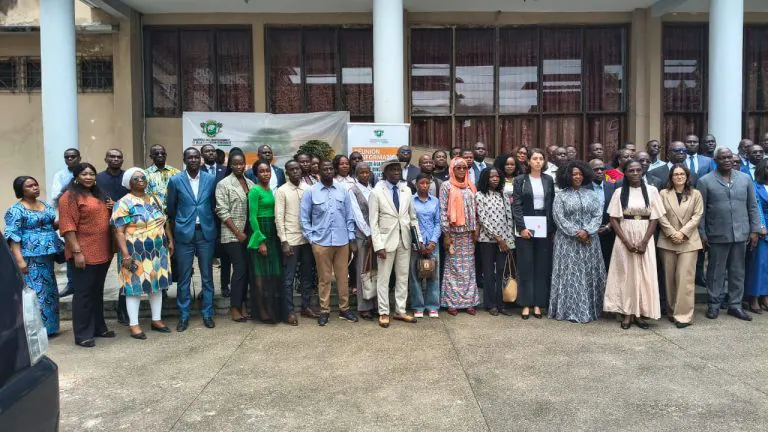
The Ivoirian Ministry of Environment and Ecological Transition recently convened a meeting in Abidjan to prepare for the upcoming COP17 on biodiversity and COP31 on climate change. The session, attended by institutional actors, the private sector, and civil society, aimed to coordinate national preparations for these international events. With COP17 scheduled for October 19-30 in Yerevan, Armenia, and COP31 for November 9-20 in Antalya, Turkey, Côte d'Ivoire seeks to structure its national delegation and secure concrete financial benefits.
The meeting, held at the Conference of the West African Episcopal Conference (CERAO), brought together stakeholders to discuss the country's strategy for the conferences. Indira Yanni-Domingo, Deputy Director of Cabinet, represented the Minister of Environment and emphasized the interconnectedness of environmental and climate issues. She stressed that responses to these challenges must be coherent, complementary, and actionable.
Yanni-Domingo highlighted the importance of Côte d'Ivoire's participation in the conferences, which should go beyond mere negotiations. She emphasized that the country's presence should be a lever for attracting investments in national priorities, such as adapting the agricultural sector, preserving the coastline, and restoring forests. The Deputy Director of Cabinet called for the development of bankable projects with private sector support.
Ange Patricia Adiko, Director of Climate Change and National Focal Point of the UNFCCC, presented the delegation's roadmap. She emphasized that the meeting was essential for establishing common national positions and addressing practical aspects of travel to Armenia and Turkey. Technical teams provided detailed information on accreditation, visa procedures, transportation, and accommodation.
The Ivoirian government aims to capitalize on the conferences to mobilize concrete financing for environmental projects. Yanni-Domingo emphasized that climate justice must translate into tangible benefits for territories and populations. The government seeks to develop projects that can attract funding and support from the international community.
The meeting demonstrated Côte d'Ivoire's commitment to addressing environmental and climate challenges. By structuring its national delegation and developing a clear strategy, the country aims to make a meaningful impact at COP17 and COP31. The government's efforts to engage the private sector and civil society in the preparation process underscore the importance of collaboration in addressing these global challenges.
As Côte d'Ivoire prepares for the conferences, the country faces significant environmental challenges, including deforestation, coastal erosion, and illegal mining. The government's focus on mobilizing climate finance and promoting sustainable development will be crucial in addressing these issues. The outcome of COP17 and COP31 will have significant implications for Côte d'Ivoire's environmental and climate agenda.
Key points
- Côte d'Ivoire aims to secure concrete financial benefits from COP17 and COP31.
- The government seeks to develop bankable projects with private sector support.
- Côte d'Ivoire faces significant environmental challenges, including deforestation and coastal erosion.