Côte d'Ivoire has set its sights on propelling its cashew sector into a new industrial era. The country's Prime Minister, Robert Beugré Mambé, outlined four key priorities to strengthen the nation's industrial sovereignty and stimulate innovation. This move comes as Côte d'Ivoire boasts a local transformation rate of 57% in 2026, with a production of over 1.5 million tons of raw cashews. The government aims to build a robust national industry capable of generating more value from this agricultural resource.
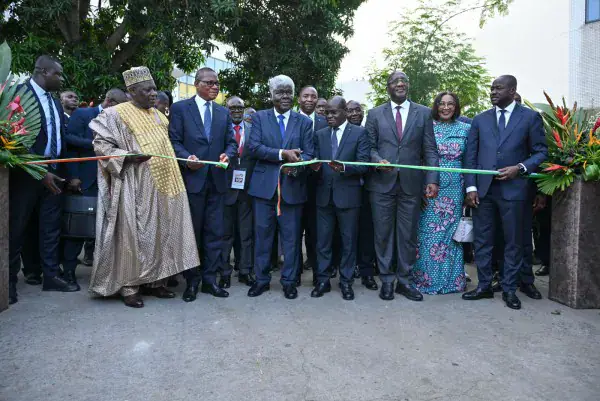
The 5th edition of the International Salon of Equipment and Technologies for Cashew Transformation (SIETTA 2026) recently opened in Abidjan, gathering over 500 participants. The event, themed "Cashew Transformation: Beyond the Kernel," aims to bring together industry players, investors, researchers, and public decision-makers. Prime Minister Beugré Mambé commended the efforts of sector stakeholders, including producers, industries, and the Cotton-Cashew-Karité Council. He emphasized that current achievements should serve as a springboard for even more ambitious goals.
To accelerate the structural transformation of the cashew sector, Beugré Mambé defined four priority areas. The first involves increasing national production of raw cashews to ensure a regular supply for industrial units. The second priority focuses on improving the local transformation rate, with the goal of surpassing current performance. The third challenge concerns the development of national scientific and technological skills, enabling Côte d'Ivoire to design and manufacture its own industrial equipment.
The fourth priority involves facilitating access to bank financing for young entrepreneurs, particularly in second and third transformation activities. This aims to promote the emergence of new enterprises and diversify cashew-based products. Beugré Mambé also stressed the need to promote a circular economy, highlighting the significant economic and industrial potential of cashew by-products, which remain largely under-exploited.
Agriculture Minister Bruno Nabagné Koné noted that despite remarkable progress, a substantial share of the cashew's potential wealth is being lost. Each year, around 460,000 tons of shells are burned, and over 7 million tons of cashew apples rot in orchards due to inadequate valorization channels. Koné advocates for the integral transformation of the cashew fruit to create a circular economy model.
To achieve this goal, several constraints need to be addressed, including securing the commercialization of raw cashews, relocating industrial units closer to production basins, and enhancing the technical and professional capacities of stakeholders. Improving working conditions is also crucial for a sector that directly employs around 20,000 people, mostly women.
The cashew sector in Côte d'Ivoire has made significant strides, with the country ranking third globally in cashew transformation and second in cashew kernel exports. In 2025, the sector generated over 1,000 billion FCFA in revenue, with projections for 2026 indicating that over 760,000 tons of cashews will be transformed, representing around 57% of national production.
Key points
- Côte d'Ivoire aims to increase its local cashew transformation rate beyond 57% in 2026.
- The government has identified four strategic priorities to strengthen the nation's industrial sovereignty in the cashew sector.
- The cashew sector directly employs around 20,000 people in Côte d'Ivoire, with women making up nearly two-thirds of the workforce.