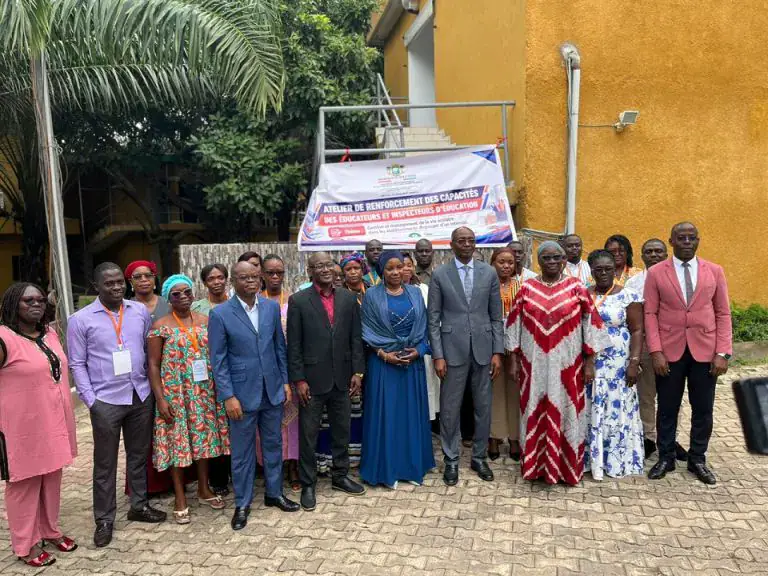
The Ministry of National Education, Literacy, and Technical Education (MENAET) in Côte d'Ivoire has initiated a capacity-building workshop for educators and education inspectors. The training, which began in Yamoussoukro on November 5, 2026, focuses on managing and leading school life in institutions with boarding facilities. The workshop is organized by the Directorate of Human Resources and Technical Education. It brings together 20 participants from the first batch out of 120 educators and inspectors assigned to 18 schools with boarding houses nationwide.
The workshop aims to address the challenges arising from the government's program to increase boarding house capacity. The program, known as AVIC, has provided infrastructure in 18 establishments, creating new demands for security, discipline, and educational support. The training will cover six modules, including deontology, conflict management, organizational leadership, and the prevention of gender-based violence in boarding houses. The approach emphasizes case studies, role-playing, and experience sharing.
Amidou Coulibaly, Director of Human Resources at MENAET, presided over the opening ceremony. He stated that the government aims to increase boarding house capacity from 5% to 10% by 2030 and 15% by 2035. Coulibaly stressed the crucial role educators play as a link between parents and the school, urging them to be fully aware of their responsibilities in supervising students.
Koné Yétan, Yamoussoukro's Regional Director of Technical Education, highlighted that boarding houses are not just spaces for accommodation and meals but also places for citizen formation. She emphasized the need for rigorous proximity management and active listening to ensure effective management of these school life spaces. Yétan's remarks underscored the importance of adapting educational practices to the specific needs of boarding house environments.
The training targets educators from various backgrounds, including those from the École Normale Supérieure (ENS), who have not received specific modules on boarding house management. The program seeks to standardize professional practices and equip educators with the necessary skills to manage boarding houses effectively. By enhancing their capabilities, the educators can provide better support to students and contribute to a more conducive learning environment.
The government's initiative to expand boarding house capacity reflects its commitment to improving education infrastructure. By 2030 and 2035, the goal is to significantly increase the proportion of students accommodated in boarding houses. The success of this initiative partly depends on the effectiveness of educators in managing these facilities. Therefore, the capacity-building workshop is a critical step toward achieving the government's objectives.
The workshop in Yamoussoukro marks the beginning of a broader effort to enhance the quality of education in Côte d'Ivoire. By focusing on the management of boarding houses, MENAET aims to create a supportive and disciplined environment that fosters students' academic and personal growth. The training program's impact will be closely monitored as it rolls out to more educators and inspectors across the country.
Key points
- The government aims to increase boarding house capacity to 10% by 2030 and 15% by 2035.
- The training program covers six modules, including deontology, conflict management, and the prevention of gender-based violence.
- The workshop targets 120 educators and inspectors assigned to 18 schools with boarding houses nationwide.