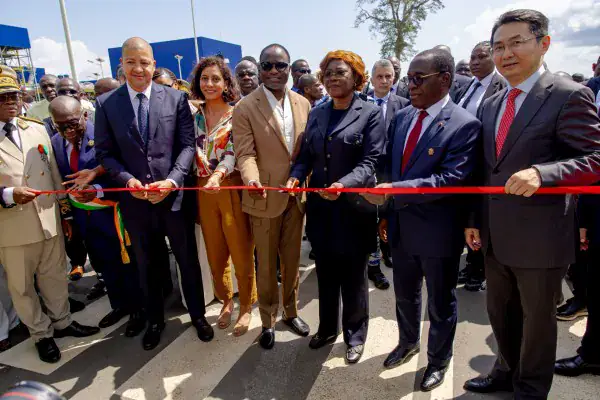
The Côte d'Ivoire government has officially launched BIOVEA, the largest biomass power plant in West Africa, in Ayébo, near Aboisso. The plant, with a capacity of 46 MW, was inaugurated by Nialé Kaba, Minister of State for Foreign Affairs and International Cooperation, on behalf of Prime Minister Robert Beugré Mambé. The project represents an investment of over 150 billion FCFA and aims to provide electricity to approximately 1.7 million people.
BIOVEA is a significant milestone in Côte d'Ivoire's energy transition and diversification strategy. The plant will generate around 336 GWh of electricity annually, contributing to the country's goal of increasing the share of renewable energy in its energy mix to 46.3% by 2035. The project also aligns with Côte d'Ivoire's commitment to reducing greenhouse gas emissions by 33.07% under the Paris Agreement.
The biomass power plant will utilize approximately 450,000 tons of agricultural residues from palm oil production, mainly sourced from PALMCI and local producers. This approach establishes a direct link between the agricultural sector and the energy sector, promoting a circular economy. The project is expected to create over 1,000 direct and indirect jobs and provide an additional source of income for around 12,000 farmers.
The BIOVEA project is a partnership between the Ivorian government and international private investors, including EDF, Meridiam, and the SIFCA group. The plant's construction was launched in July 2023, and it is expected to operate for 25 years. During this period, it will help avoid the emission of around 4.5 million tons of CO2.
In addition to its environmental benefits, BIOVEA is expected to have a positive impact on the local economy. The project will generate significant revenue for farmers and create new opportunities for young people and workers in the region. The plant's ashes will also be reused as natural fertilizers for agriculture.
Minister Nialé Kaba emphasized the importance of ensuring sustainable biomass supply, fair and transparent remuneration for producers, and respect for environmental standards. She also called on BIOVEA Énergie to prioritize the development of local skills and competencies.
The launch of BIOVEA marks a significant step forward in Côte d'Ivoire's energy transition and its goal of becoming a more sustainable and environmentally friendly economy. The project demonstrates the country's commitment to harnessing its agricultural resources to produce renewable energy and reduce its carbon footprint.
Key points
- The BIOVEA biomass power plant represents an investment of over 150 billion FCFA and will provide electricity to approximately 1.7 million people.
- The plant will generate around 336 GWh of electricity annually and contribute to Côte d'Ivoire's goal of increasing the share of renewable energy in its energy mix.
- The project is expected to create over 1,000 direct and indirect jobs and provide an additional source of income for around 12,000 farmers.