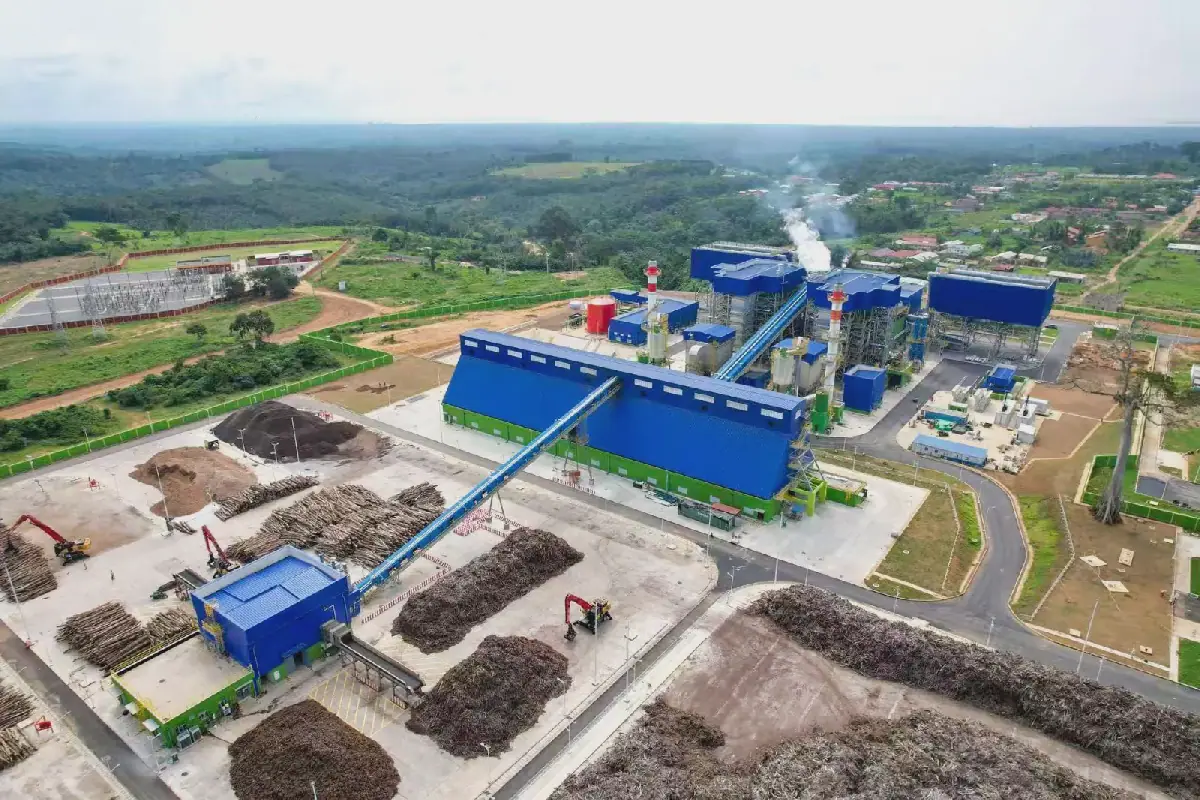
Côte d'Ivoire has officially commissioned a 46 megawatt (MW) biomass power plant in Ayébo, near Aboisso. The plant, known as BIOVEA, uses agricultural residues such as oil-palm waste and rubber-tree residues to generate electricity. According to the Ivorian government, it is the largest power plant in West Africa operating exclusively on agricultural residues. The facility was commissioned on 5 November 2026 and will supply the national grid with electricity.
The BIOVEA plant is expected to generate approximately 336 gigawatt-hours (GWh) of electricity annually. This amount of electricity is equivalent to the needs of about 1.7 million people. To achieve this, the plant will require more than 540,000 tonnes of biomass each year. This creates a structured market for agricultural residues that might otherwise have limited commercial use. The project is a significant step towards expanding renewable energy in Côte d'Ivoire.
The significance of the BIOVEA facility extends beyond its contribution to electricity supply. By connecting agriculture with energy production, the plant creates an additional economic pathway for farmers and agricultural communities. Approximately 12,000 farmers could benefit from the collection and sale of agricultural residues. Additionally, around 1,000 direct jobs are expected to be created. This model offers an important lesson for African economies seeking to expand renewable energy.
The BIOVEA project supports Côte d'Ivoire's efforts to strengthen its electricity supply and diversify its energy mix. Reliable electricity is essential to manufacturing, agro-processing, commercial activity, and the delivery of public services. Additional generation capacity can help support these sectors as demand for power grows. The plant also highlights the importance of developing partnerships that connect infrastructure investment with local economic participation.
The long-term contribution of the BIOVEA plant will depend on several factors. These include the reliability of biomass supply, efficient transport and collection systems, responsible management of agricultural residues, and consistent operation of the facility. If these conditions are met, the project can maintain its expected output while delivering benefits to surrounding communities.
The BIOVEA facility demonstrates how the relationship between agriculture and energy can be strengthened through infrastructure investment. It places agricultural residues within a broader economic system in which resources can support electricity generation, employment, and rural enterprise. The measure of success will be the plant's ability to deliver reliable power over time while sustaining the supply chain and economic benefits around it.
The BIOVEA project has wider implications for other African countries with substantial agricultural industries. Palm oil, rubber, rice, sugarcane, and other agricultural activities generate residues that may offer opportunities for energy production. Developing such projects requires careful planning, investment in processing infrastructure, and arrangements that ensure farmers receive fair value for the materials they supply.
Key points
- The BIOVEA biomass plant in Côte d'Ivoire is the largest in West Africa operating exclusively on agricultural residues.
- The plant will generate electricity for 1.7 million people and create economic opportunities for 12,000 farmers.
- The project demonstrates how agricultural waste can be converted into a reliable source of electricity and economic value.
Reporting sources
- Côte d’Ivoire’s 46MW Biomass Plant: Turning Agricultural Waste into Energy and Economic Value · African Leadership Magazine