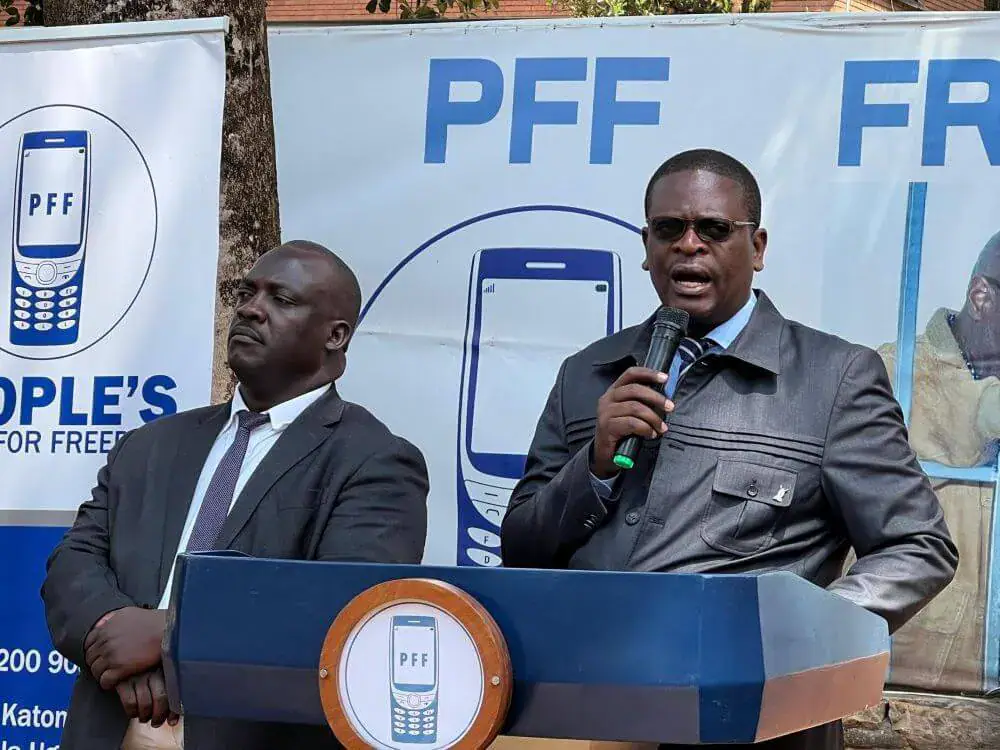
The People’s Front for Freedom (PFF) has outlined four conditions for participating in national dialogue with Uganda's government. The party insists that any negotiations must be independently organised, inclusive, and backed by guarantees to ensure implementation of agreed resolutions. PFF's conditions include the appointment of a neutral convener jointly agreed upon by government and opposition parties. This is crucial to ensure the process is impartial and fair.
PFF also wants a jointly developed dialogue agenda, representation of different sections of Ugandan society, and an independent guarantor to oversee the implementation of any agreement reached. The party argues that negotiations should focus on identifying Uganda’s political challenges and agreeing on solutions rather than presenting opposition leaders with an already prepared agreement. This approach aims to ensure that all stakeholders have a voice in the dialogue process.
The PFF has rejected the proposed Consociational Democracy Agreement, describing it as a possible return to the Movement political system. The party questions whether the agreement offers genuine political reforms or merely creates opportunities for selected opposition figures to access government positions. PFF's Acting President, Dr Michael Lulume Bayiga, expressed concerns that the agreement was developed without the input of opposition parties.
According to Bayiga, genuine dialogue must begin with an agreement on its purpose, who should organise it, who should participate, and what mechanisms would guarantee implementation of the final resolutions. He emphasised that allowing one side to control the process could turn national dialogue into a monologue rather than genuine negotiations. The party is advocating for a neutral convener who can manage negotiations, enforce agreed procedures, and ensure fair treatment of all participating parties.
The PFF's proposed agenda for national dialogue includes constitutional reform, political freedoms, governance, national reconciliation, and political exclusion. The party maintains that broad representation beyond government and opposition political parties is essential, including cultural institutions, religious leaders, civil society organisations, and representatives of Uganda’s historical communities. This inclusive approach aims to address Uganda's complex political challenges.
PFF is also calling for a political transition after President Museveni’s approximately four decades in power, a new constitutional framework, truth and reconciliation to address historical grievances, and independent state institutions free from political interference. The party advocates for federalism, which would empower Uganda’s historical communities and give them greater control over their resources and development priorities.
The party's conditions and proposals reflect its commitment to genuine dialogue and meaningful political reforms in Uganda. PFF's stance comes amid renewed attention to efforts by Gen Salim Saleh, President Museveni’s brother, to engage veteran opposition leader Dr Kizza Besigye. The outcome of these developments remains uncertain, but PFF's participation in national dialogue is contingent upon the fulfilment of its conditions.
Key points
- PFF wants a neutral convener jointly selected by government and opposition parties for national dialogue.
- The party rejects the proposed Consociational Democracy Agreement, citing concerns about its development and potential impact.
- PFF advocates for broad representation, including cultural institutions and historical communities, in national dialogue.
Reporting sources
- PFF Sets Four Conditions for Joining National Dialogue · 88.2 Sanyu FM