Côte d'Ivoire's Ministry of Mines, Oil, and Energy has recorded the highest budget increase in the 2027 finance law, ranking among the top 5 largest budgets. The country's extractive industry is experiencing significant growth, presenting an opportunity for Côte d'Ivoire to exploit, produce, and transform its natural resources. However, the country must avoid exporting its raw materials and instead focus on adding value through transformation.
The country is at a crossroads, with its mining and petroleum sectors booming, but facing two major challenges. Firstly, Côte d'Ivoire must balance this growth with the need for efficient transformation to maximize profits. Secondly, it must address the financing of the fossil fuel industry, which is being shunned by Western countries. The reality is that many African countries, including Côte d'Ivoire, export their products in their raw state, only to re-import them at a much higher price after processing.
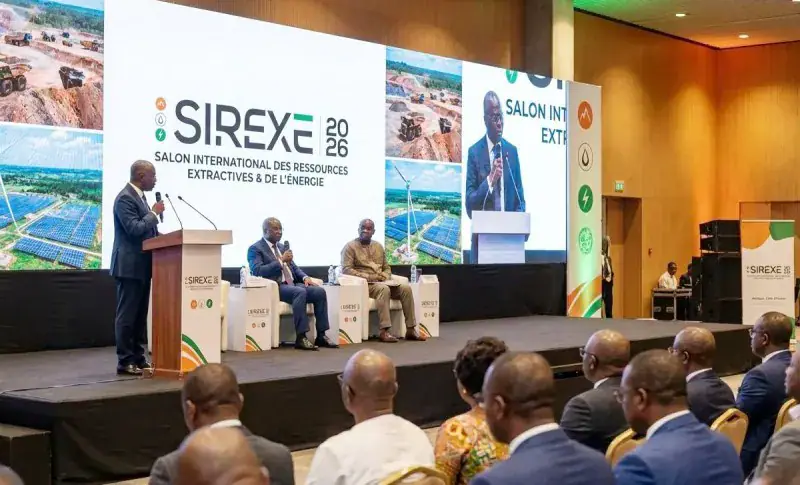
To address these challenges, the government has launched initiatives such as the Salon international des ressources extractives et de l'énergie (Sirexe), which aims to bring together industry players and financing actors. Additionally, the Politique intégrée des ressources minérales et de l'énergie (Pirme) was presented in November, with a goal of making the mining and energy sectors a driver of growth. The Pirme program aims to increase the contribution of these sectors to the country's GDP from 7% in 2025 to 14% by 2040.
The Pirme program has announced a planned investment of 38,000 billion FCfa by 2040, with a focus on local transformation, increased participation of national companies, adapted infrastructure, strengthened governance, and better distribution of created value. To achieve this, the government must create favorable conditions for investment and ensure a coherent regulatory framework. Companies must invest in innovation, operational performance, and local development.
Financial institutions are also crucial in supporting national SMEs, while training institutions must anticipate skills needs. Local populations must be involved in the transformations that affect their future, as a mine's presence in a region represents an opportunity for territorial development. Ultimately, the challenge of transformation requires the complementarity of different actors, involving a change in economic, industrial, and managerial schemes.
However, the extractive industry is now facing a complex equation: addressing the financing of fossil fuels. As global energy transition requirements strengthen, access to financing for oil and gas projects is evolving profoundly. This mutation places African countries, including Côte d'Ivoire, in a particular situation: valorizing their natural resources, responding to development needs, while adapting to an increasingly demanding international financial environment on climate issues.
The paradox is real, as Africa contributes less than 4% of global greenhouse gas emissions but faces significant infrastructure deficits, insufficient industrialization, and growing electricity needs. The debate should focus on the financial conditions allowing African countries to build diversified, reliable, and economically accessible energy systems. Côte d'Ivoire and other African countries should not be condemned to choose between development and climate commitments; they must have access to necessary financial means to organize their own energy trajectory.
Key points
- Côte d'Ivoire's extractive industry faces challenges in transformation and financing.
- The country's government has launched initiatives to support the sector's growth and transformation.
- African countries must have access to financial means to organize their own energy trajectory, balancing development and climate commitments.