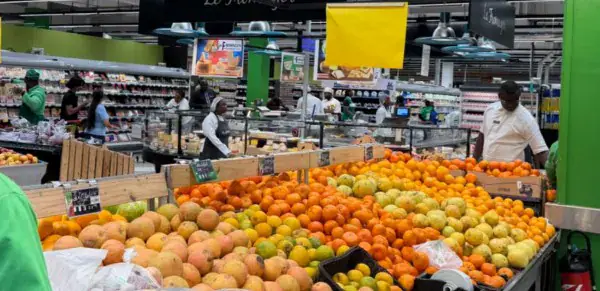
The Ivoirian government is considering a new economic doctrine that aims to reduce the country's high cost of living. Economist Giancarlo Gattuso of Coop Finance has proposed a change in paradigm within the West African Economic and Monetary Union's (WAEMU) central bank, made possible by the launch of the Platform for Instant Payment Interoperability (PI-SPI) on November 2, 2026. This infrastructure will serve as the foundation for the "Theory of Circular and Mutualist Consumer Credit" (TCCM).
Côte d'Ivoire's economy has been grappling with high inflation, driven by imported goods, which has reduced the purchasing power of urban households. The country's demographic trajectory, with a population growth from 3.5 million in 1960 to over 33 million in 2026, has resulted in a young population with a high propensity to consume. This has led to a surge in demand for imported goods, further exacerbating inflation.
The TCCM theory proposes a shift from traditional static consumer credit to a continuous flow of credit, where the state's sovereign debt yield is used to neutralize citizens' consumer debt in real-time. This approach aims to mitigate the impact of imported inflation and optimize the country's demographic dividend. The theory draws inspiration from Brazil's PIX payment system, which has successfully integrated instant payments with social protection programs.
The PIX system, launched in 2020, has enabled the Brazilian government to make instant payments to beneficiaries of its "Bolsa Família" program, reducing latency and costs associated with traditional payment systems. The system has also provided financial technology companies with data to assess the creditworthiness of previously excluded populations, stabilizing consumption in the face of global macroeconomic shocks.
The TCCM theory can be adapted to Côte d'Ivoire's ecosystem through the PI-SPI infrastructure, which brings together 175 financial institutions and mobile money operators. The proposed mechanism involves a closed-loop model, where cooperative structures and mutual funds aggregate savings to subscribe to Ivoirian Treasury bonds. The yield on these bonds is then converted into a continuous flow of liquidity, distributed to citizens through their credit cards.
The new doctrine aims to address the country's high cost of living by reducing the impact of imported inflation and promoting financial inclusion. By leveraging the PI-SPI infrastructure and the TCCM theory, Côte d'Ivoire hopes to create a more sustainable and equitable economic model that benefits its young population. The government is expected to discuss the proposal in the coming weeks, with a decision on implementation expected soon.
The success of the TCCM theory will depend on its ability to balance the needs of different stakeholders, including citizens, businesses, and financial institutions. If implemented, the new doctrine could have far-reaching implications for Côte d'Ivoire's economic development and provide a model for other countries in the region to follow. The country's economic growth and stability will be closely watched in the coming months as it navigates this new economic approach.
Key points
- The "Theory of Circular and Mutualist Consumer Credit" aims to mitigate the impact of imported inflation by using the state's sovereign debt yield to neutralize citizens' consumer debt in real-time.