The Ivoirian government has unveiled an ambitious program to accelerate the country's economic transformation through industrial infrastructure development. By 2030, the government aims to increase the national industrial heritage to 7,000 hectares, significantly up from the current area. This goal is part of the country's National Development Plan (PND) 2026-2030, which prioritizes private investment promotion, informal sector reduction, and economic structural transformation.
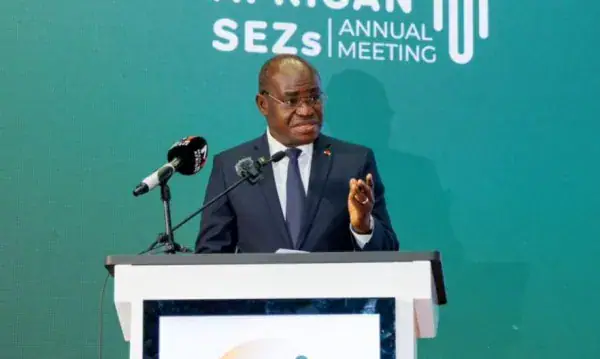
To achieve this objective, the government plans to develop 14 special economic zones (SEZs), one in each of the country's 14 districts. This will help distribute industrial infrastructure across the territory. The Minister of Trade, Industry, and Handicrafts, Ibrahim Kalil Konaté, announced this plan during the 11th annual meeting of African special economic zones in Abidjan. The government will focus on land mobilization, customary rights clearance, and negotiations with landowners to facilitate the development of new industrial zones.
The government has allocated between 120 and 150 billion FCFA to prepare and constitute land reserves necessary for new industrial zones. The construction and development of industrial infrastructure will largely rely on the private sector through public-private partnerships. The state's role will be limited to land preparation and facilitating the involvement of private investors. This approach aims to create a favorable business environment and encourage private sector participation in financing and operating industrial infrastructure.
Côte d'Ivoire's ambition goes beyond expanding industrial zones; it aims to shift its economic model from a primary producer of raw materials to an industrial powerhouse. The country is the world's largest producer of cocoa, cashew nuts, and kola nuts, and a significant producer of rubber, palm oil, and bananas. The government wants to increase local processing to generate more value-added, develop national industries, and create sustainable jobs.
Progress has been made in this direction, particularly in the cashew sector. The cashew nut processing rate has risen from 6.2% in 2012 to 43.71% in 2025, thanks to bonus mechanisms and support for processing units. The government aims to increase this rate to 50-60% by 2030 and process over half of the country's agricultural production locally. Special economic zones will play a crucial role in achieving these goals by providing businesses with suitable infrastructure, efficient services, and competitive operating conditions.
Ibrahim Kalil Konaté emphasized that infrastructure, financing, and integration into global value chains are essential for the continent's industrial development. He stressed the need to reduce constraints faced by investors and guarantee them the necessary conditions for efficient and low-cost production. The minister also advocated for innovative financing mechanisms, as no state can support the significant investments required for industrial infrastructure development alone.
Côte d'Ivoire already has a network of industrial zones, including those in Yopougon, PK24, Koumassi, and Vridi, as well as San Pedro, Bouaké, Korhogo, and Ferkessédougou. The government plans to strengthen and expand these zones to consolidate the national industrial fabric. By improving the business environment, simplifying procedures, and enhancing attractiveness, Abidjan aims to reinforce its industrial positioning on the continental scale.
Key points
- The Ivoirian government aims to develop 7,000 hectares of industrial zones and 14 economic poles by 2030.