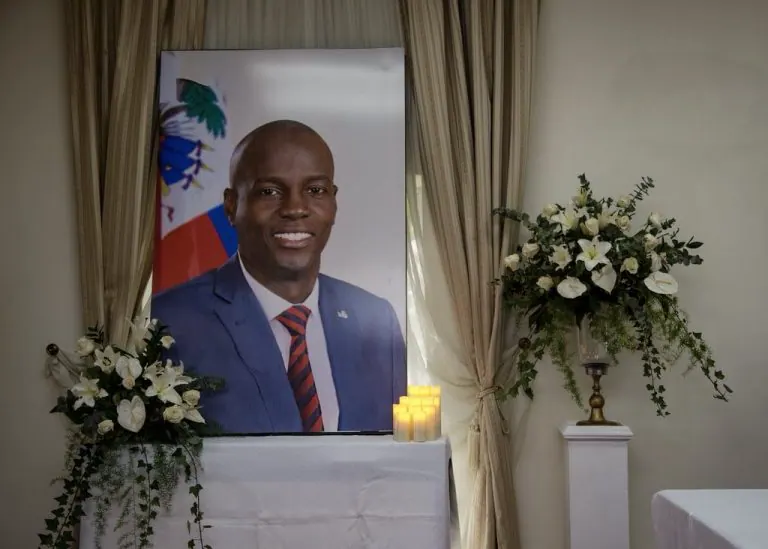
On Sunday, September 20, 2026, eighteen individuals suspected of involvement in the assassination of Haitian President Jovenel Moïse were extradited to the United States. The extradition was confirmed by the Colombian Ministry of Foreign Affairs, which stated that 17 Colombian citizens were transferred from Haiti to the US. The suspects will face federal charges in Florida. This development marks a significant step in the US investigation into Moïse's assassination.
President Jovenel Moïse was killed on July 7, 2021, at his private residence in Port-au-Prince. The assassination has exacerbated Haiti's ongoing crisis, with the country yet to hold elections since 2016 and still without a president. The extradited suspects include Joseph Félix Badio, a former anti-corruption official considered a key suspect, and 17 Colombian nationals. Their transfer has raised questions about the role of Haitian justice in the case.
The extradition process was carried out under a treaty between Haiti and the US, which allows for the transfer of individuals accused or convicted of certain crimes. However, concerns have been raised about the circumstances surrounding the transfer of suspects before they have been tried in Haiti. The Haitian investigation into the assassination remains incomplete, and it is unclear how the extraditions will impact the case.
The assassination of President Moïse has had significant repercussions for Haiti. The country's instability has been compounded by the lack of a president and the absence of elections. The US investigation has already led to several convictions, but in Haiti, no major trial has been held five years after the event. The extraditions may help shed light on the circumstances surrounding Moïse's death.
In a related development, Canadian authorities have arrested Ashkard Pierre Joseph, a former contractor at the Haitian Consulate in Montreal, in connection with the assassination. Joseph is believed to be associated with Christian Emmanuel Sanon, a pastor detained in the US in connection with the case. The search for other suspects continues.
The extradited suspects will face federal charges in Florida, where the US investigation into the assassination is ongoing. The Colombian Ministry of Foreign Affairs has confirmed that it is following the case, although it is not directly involved in the process. The extraditions mark a significant development in the case, but many questions remain unanswered.
The case raises questions about accountability and justice for the assassination of President Moïse. While the US investigation has made progress, the Haitian investigation remains incomplete. The extraditions may help bring some closure to the case, but the impact on Haiti's ongoing crisis remains to be seen.
Key points
- Eighteen suspects, including 17 Colombians and one Haitian, have been extradited to the US to face federal charges in connection with the assassination of Haitian President Jovenel Moïse.
- The extraditions mark a significant step in the US investigation into Moïse's assassination, but raise questions about the role of Haitian justice in the case.
- The case highlights the ongoing crisis in Haiti, where the lack of a president and the absence of elections have exacerbated instability.