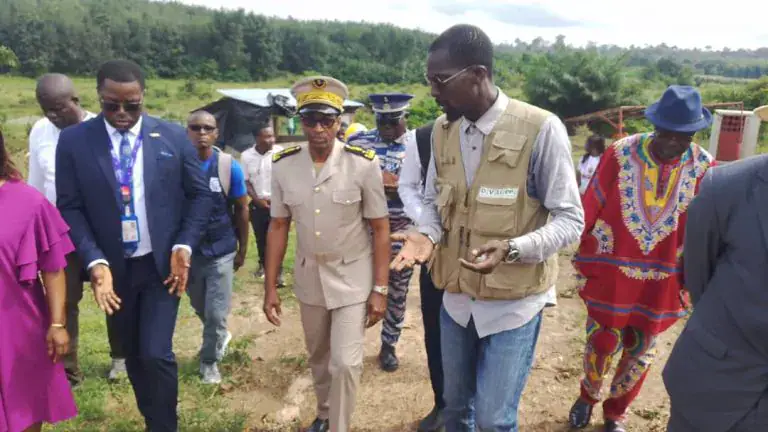
In a significant effort to combat child labor in cocoa-producing areas, 100 adolescents from Méagui, Buyo, Okrouyo, and Guéyo have benefited from vocational training under the "Ensemble pour agir contre les causes profondes du travail des enfants" (ENACTE) program. The program has established three training centers in the Nawa region, which were officially handed over to local authorities following a visit by the International Labor Organization (ILO) from October 27 to 30, 2026.
The ENACTE program aims to provide adolescents in cocoa-producing zones with opportunities for training and professional insertion, thereby steering them away from age-inappropriate work in plantations. According to Konan Sylvain, coordinator of the ENACTE program, the establishment of these training centers is a crucial step, but the project also seeks to create an environment conducive to quality learning. This includes ensuring the conditions for sustainable vocational training are met.
The training centers are designed to offer a range of vocational skills, empowering the adolescents to become self-sufficient. Marie-Marcelle, a trainee from Guéyo, expressed her satisfaction with the knowledge gained and the prospects offered by the program. She believes that the project will enable her and her peers to become capable individuals who can fend for themselves.
Local leaders have welcomed the initiative, recognizing its potential to transform the lives of families and communities in the region. Kosséré Zéphirin, chief of the Okrouyo sub-prefecture, praised the program as a significant benefit to his village and sub-prefecture, pledging to protect and maintain the infrastructure as it represents the future of their children.
The ENACTE program is supported by the European Union and Swiss Cooperation, with the goal of enhancing the livelihoods of cocoa-producing communities and promoting access to training and professional insertion for children and adolescents. Following the handover of the training centers, the program coordinator urged local authorities to take ownership of the facilities and accompanying support system to ensure their operation and sustainability.
The coordinator emphasized that with regular monitoring and adequate maintenance, the training centers can become autonomous and serve as a genuine catalyst for local development and youth reorientation. The centers are expected to play a pivotal role in redirecting the trajectory of young people in the region, equipping them with skills that can be translated into sustainable livelihoods.
Ultimately, the success of the ENACTE program in the Nawa region will depend on the continued support and commitment of all stakeholders involved, including local authorities, the European Union, and Swiss Cooperation. As the program moves forward, it is expected to have a lasting impact on the lives of adolescents in cocoa-producing areas, helping to break the cycle of child labor and fostering a brighter future for the region's youth.
Key points
- The ENACTE program has established three vocational training centers in the Nawa region to combat child labor in cocoa plantations.
- 100 adolescents from Méagui, Buyo, Okrouyo, and Guéyo have benefited from vocational training under the program.
- The program is supported by the European Union and Swiss Cooperation, aiming to enhance livelihoods and promote access to training and professional insertion for children and adolescents.