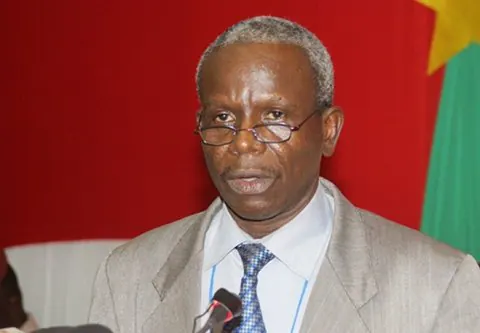
Burkinabe activist Jonas Hien has expressed concerns over French Deputy Bruno Fuchs' recent comments calling for the destabilization of states in the Sahel Confederation. In a televised interview, Fuchs suggested that France should work to bring down the leaders of the Burkina Faso, Mali, and Niger. Hien argues that this approach is misguided and that the governance of the Sahel region is now in the hands of its people.
Hien believes that any external interference in the region would be suicidal and that Africa is no longer a continent to be administered by external powers. He emphasizes that intimidation will not replace genuine cooperation and that the fall of a Sahel leader will not lead to the return of French troops to the region. Hien's comments reflect a growing sentiment in the Sahel region that its countries should be free to determine their own destiny.
Deputy Bruno Fuchs is not the first to make such comments, having previously stated that Russia is negotiating its departure from Mali and that the junta in Bamako will fall in a few weeks or months. Hien argues that such comments demonstrate a lack of understanding of the changing dynamics in the region and the world. The Sahel Confederation, comprising Burkina Faso, Mali, and Niger, has made significant strides in asserting its sovereignty.
The Sahel region has undergone significant changes in recent years, with many Africans demanding a new approach to cooperation with external partners. The traditional model of cooperation, where France provides aid and guidance, is no longer seen as relevant. Hien argues that the Sahel states want to be able to make their own decisions on trade, investment, and alliances.
The French approach to Africa has long been criticized for perpetuating a paternalistic relationship, where African countries are seen as recipients of aid rather than equal partners. The Sahel states are seeking a new approach based on mutual respect and cooperation. Hien emphasizes that if France wants to maintain a relationship with the Sahel states, it must change its approach.
The comments by Deputy Fuchs have sparked a wider debate on the role of France in the Sahel region. Many Africans see France's continued interference in the region as a threat to their sovereignty. Hien argues that the Sahel states will not be swayed by external pressure and will continue to assert their independence.
The Sahel Confederation has become a symbol of African resistance to external interference. The region's leaders are determined to build a new model of cooperation based on mutual respect and benefit. As the region continues to evolve, it remains to be seen how France will adapt its approach to the changing dynamics in the Sahel.
Key points
- - Burkinabe activist Jonas Hien criticizes French Deputy Bruno Fuchs' call for destabilization of Sahel states - The Sahel states are seeking a new approach to cooperation based on mutual respect and benefit - The region's leaders are determined to assert their sovereignty and independence from external interference