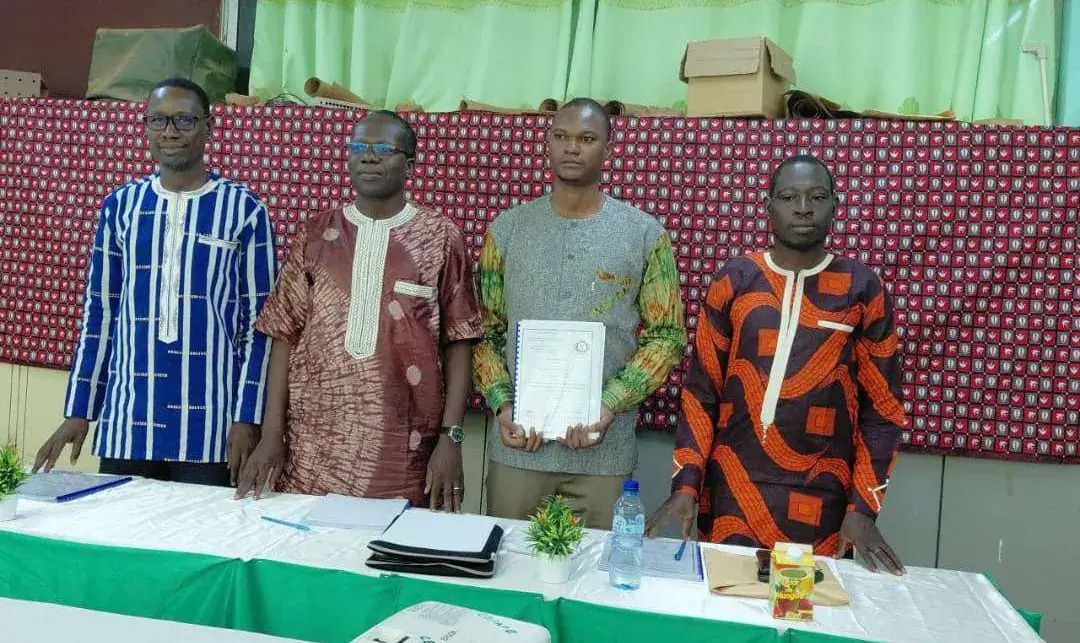
Rodrigue Diyabo Bicaba, a Burkinabé researcher, has earned his master's degree in Environmental Technology with a remarkable 17/20 score. His study, titled "Evaluation of the physico-chemical and sanitary quality of groundwater and wells in Ouakara village, Bankui region," aimed to assess the quality of water used by the local population and provide recommendations for improvement. The research was conducted in Ouakara village, where access to clean drinking water is a significant concern.
The study revealed that the analyzed waters are mostly acidic and do not meet the World Health Organization (WHO) and Burkinabé standards for potability. The research also highlighted fecal contamination of the waters. Based on these findings, Bicaba recommended treating the water before consumption, suggesting chlorination, using moringa skin, and activated charcoal to reduce undesirable elements. He also emphasized the importance of maintaining hydraulic infrastructure, including covering wells and rebuilding degraded well rings.
Seven water sources were analyzed in the study, including six traditional wells and one borehole. Two sampling campaigns were conducted in April and July 2026, evaluating various parameters related to the physico-chemical and sanitary quality of the water. The results showed that the waters in Ouakara do not generally meet the WHO and Burkinabé standards for potability. Bicaba's study provides valuable insights into the water quality issues in rural Burkinabé communities.
The idea for this study was born about 20 years ago, when Bicaba first visited his village, Ouakara. He was concerned about the water quality and decided to investigate further through his research. The study was conducted in the presence of a jury, his parents, colleagues, and friends. Bicaba dedicated his thesis to the victims of terrorist attacks that occurred in Ouakara on May 28 and 29, 2023.
Dr. Jean-Claude Ouédraogo, a member of the jury, praised the relevance of Bicaba's work, highlighting the alert it raises about the quality of groundwater in Ouakara. He also commended the recommendations formulated by Bicaba, which focus on maintaining and securing hydraulic infrastructure to preserve water quality. The study's findings and recommendations are expected to contribute to improving access to clean drinking water in rural Burkinabé communities.
The study's results have significant implications for the health and well-being of Ouakara's residents, who rely heavily on groundwater for their daily needs. By highlighting the need for water treatment and infrastructure maintenance, Bicaba's research aims to mitigate the risks associated with contaminated water. The study's findings are expected to inform policies and interventions aimed at improving access to clean drinking water in rural areas.
Rodrigue Diyabo Bicaba's achievement is a testament to the importance of research and innovation in addressing pressing environmental and health issues in Burkinabé communities. His study serves as a model for future research initiatives focused on improving access to clean drinking water and promoting sustainable development in rural areas.
Key points
- The study revealed that the analyzed waters in Ouakara village are mostly acidic and do not meet WHO and Burkinabé standards for potability.
- The research highlighted the need for water treatment and infrastructure maintenance to mitigate the risks associated with contaminated water.
- Bicaba's study provides valuable insights into the water quality issues in rural Burkinabé communities, with implications for policies and interventions aimed at improving access to clean drinking water.