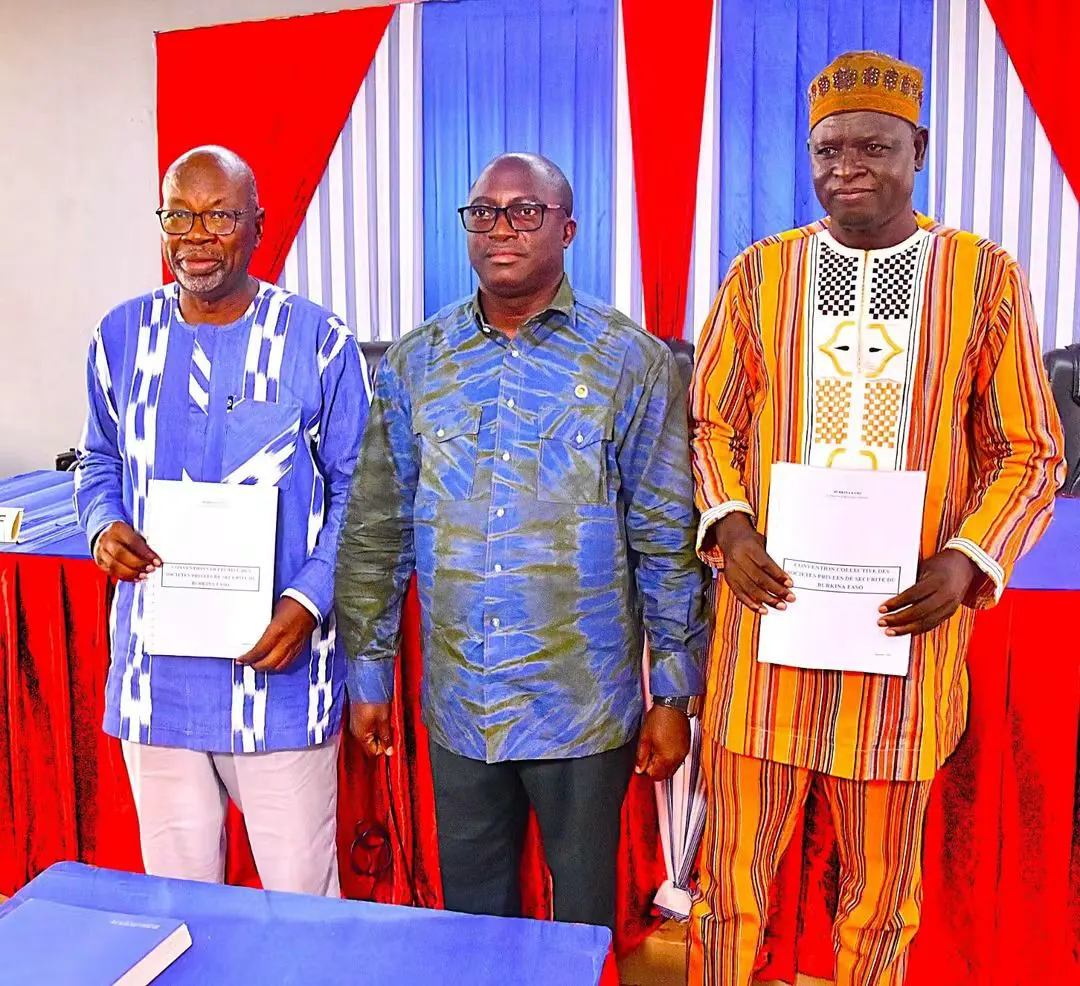
In a significant development, private security companies in Burkina Faso have signed a collective agreement, marking a major milestone after nine years of negotiations. The agreement was signed on September 29, 2026, in Ouagadougou, in the presence of Minister of Public Servants, Mathias Traore. The collective agreement aims to improve working conditions, enhance competitiveness, and promote social peace in the sector.
The collective agreement regulates various aspects of employment, including employment contracts, job classification, wages, bonuses, and benefits, as well as worker promotions, union rights, and workplace safety. Minister Traore emphasized that the agreement contains numerous innovations, including a minimum wage increase to 57,000 CFA francs for security guards. The agreement also provides for a career development plan and additional benefits, such as allowances and in-kind benefits.
The collective agreement was signed between two umbrella organizations representing 400 private security companies. Minister Traore noted that the agreement is set to take effect one year after its signature and can be extended to non-signatory companies. He urged stakeholders to implement the agreement promptly, emphasizing its importance in promoting decent work and social peace.
Harouna Toguyeni, Vice-President of the Confederation of Burkinabe Enterprises (COGEF), welcomed the agreement, stating that it provides a framework for employers and workers to operate with confidence. He assured that employers will work to implement the agreement for the benefit of workers and the security of Burkinabe citizens.
Inoussa Nana, President of the month of central trade unions, highlighted the significance of the agreement, which he said constitutes a major breakthrough in organizing the sector and improving working conditions. The agreement is expected to have a positive impact on the lives of workers in the private security sector.
Minister Traore expressed hope that the collective agreement will serve as a model for other sectors that have not yet adopted such an instrument. He encouraged other sectors to follow the example of the private security sector and pledged government support in implementing collective agreements that benefit both workers and employers.
The signing of the collective agreement marks a major achievement for the private security sector in Burkina Faso, which has been working towards this goal for nine years. The agreement is expected to improve the working lives of thousands of security personnel and contribute to the country's social and economic development.
Key points
- The collective agreement increases the minimum wage for security guards to 57,000 CFA francs.
- The agreement provides for a career development plan and additional benefits for workers.
- The agreement is expected to take effect one year after its signature and can be extended to non-signatory companies.