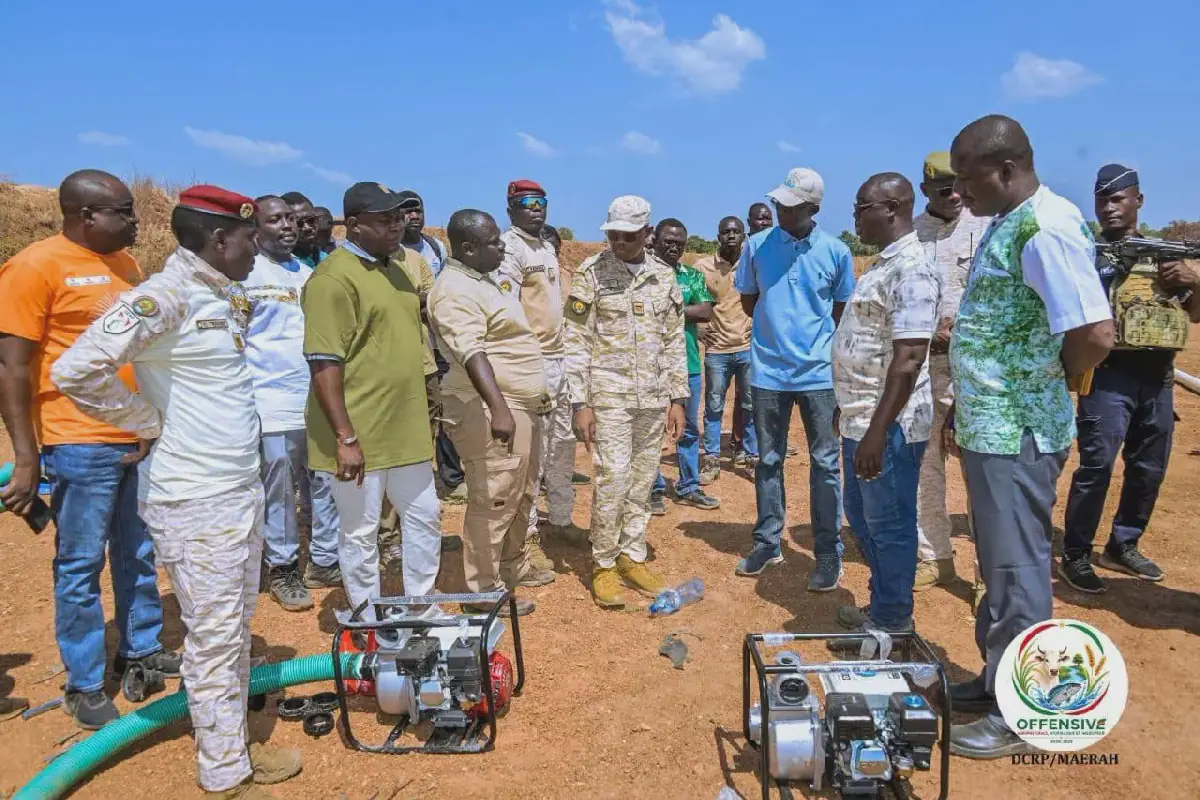
The Pô Dam, located in Burkina Faso's Nahouri province, has become a significant asset for agricultural and fisheries development. As part of the government's emergency plan for the dry season, Minister of State for Agriculture, Water, Animal and Fisheries Resources, Commander Ismaël SOMBIÉ, visited the site on November 12, 2026, to assess the progress of the irrigation perimeter development. The dam was completed in eight months by the National Office for Dams and Hydro-Agricultural Developments (ONBAH).
The Pô Dam was filled with water on July 25, 2026, by President Captain Ibrahim TRAORÉ, enhancing local water resource mobilization and valuation. During his visit, Minister SOMBIÉ observed satisfactory progress in the developments, with completed excavation works and already conducted plowing. Technical teams and producers are working to make the plots available for production as soon as possible. The 18-hectare irrigated perimeter is expected to benefit over 140 agricultural exploiters.
The perimeter is primarily dedicated to market gardening and potato cultivation, allowing for three production cycles per year. This presents a significant opportunity to increase yields and ensure a steady supply of agricultural products throughout the year. The dam also has considerable potential for fish farming, with floating cage fish farming activities already underway. On September 18, 2026, 180,000 tilapia and 3,000 pangasius fingerlings were introduced to the facilities under Minister SOMBIÉ's supervision.
The introduction of the pangasius species aims to diversify the national fish production. Through the development of this infrastructure, the government aims to improve water control, support agricultural and fisheries production, and reduce producers' dependence on rainfall. The Pô Dam project demonstrates the government's commitment to enhancing agricultural productivity and food security in Burkina Faso.
The Pô Dam project is a key component of the government's strategy to boost agricultural production in the dry season. With the dam's completion, farmers in the region can now cultivate crops year-round, increasing their income and contributing to the country's economic growth. The project also has the potential to improve the livelihoods of local communities by providing them with access to fresh produce and fish.
Minister SOMBIÉ commended the efforts of technicians and exploiters, urging them to maintain their mobilization to ensure optimal exploitation of the irrigated perimeter and the dam. The government's investment in the Pô Dam project is expected to have a positive impact on the region's economy and food security.
Overall, the Pô Dam project is a significant step towards achieving food self-sufficiency in Burkina Faso. By supporting agricultural production in the dry season, the government can help reduce the country's reliance on imports and improve the livelihoods of its citizens.
Key points
- The Pô Dam project supports over 140 farmers with 18 hectares of irrigated land for crops like potatoes and vegetables.
- The dam allows for three production cycles per year, increasing yields and ensuring a steady supply of agricultural products.
- The project also includes floating cage fish farming activities, aiming to diversify the national fish production.