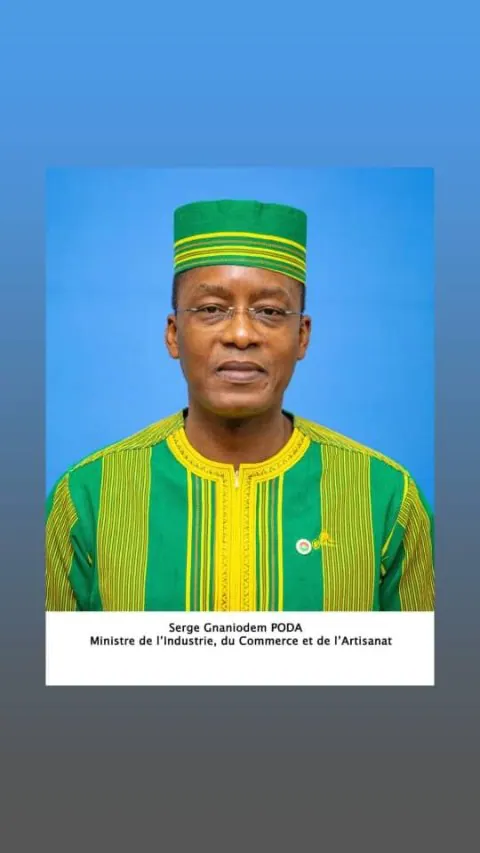
On October 7, 2026, Burkina Faso joined the global community in celebrating World Cotton Day, with the theme "Coton au service du bien: construire la prospérité grâce au commerce, à la transformation et au partenariat" (Cotton for the greater good: building prosperity through trade, transformation, and partnership). The country's Minister of Industry, Commerce, and Artisanal, Serge Gnaniodem Poda, delivered a message on behalf of President Captain Ibrahim Traoré, highlighting the government's commitment to transforming the cotton industry.
The Burkinabè government aims to break away from the colonial model of exporting raw cotton and instead focus on creating value-added products through industrialization and local transformation. The goal is to ensure that every kilogram of cotton produced generates real economic opportunities for the population. Minister Poda emphasized the need for a new approach, shifting from a simple export-oriented logic to a more dynamic and industrialized model.
Several major projects illustrate the government's commitment to transforming the cotton industry. These include the construction of the IROTEX-BURKINA industrial complex on two sites (Sourgou in the Nando region and Boromo in the Bankui region), the inauguration of the National Center for Artisanal Cotton Transformation (CNATAC) on November 9, 2025, and the launch of the Textile Forces of Burkina Faso (TEXFORCES-BF) industrial complex on September 9, 2026, in Bobo-Dioulasso.
Burkina Faso is also counting on cooperation frameworks such as the African Continental Free Trade Area (AfCFTA) and the Confederation of Sahel States (AES) to promote the emergence of regional value chains. The country is strengthening its cooperation within the C4 group of countries (Benin, Burkina Faso, Mali, and Chad). An agreement has been signed with the International Islamic Trade Finance Corporation (ITFC) to facilitate the export of agricultural products (cotton, cashew nuts) and provide credit lines to local banks.
Minister Poda paid tribute to the defense and security forces for securing production areas, as well as to producers, transformers, and actors in the cotton value chain for their resilience. The government's efforts aim to make cotton a genuine driver of industrial development and job creation, with a focus on local transformation and consumption.
The Burkinabè government's vision, led by President Captain Ibrahim Traoré, is to produce, transform, and consume more products made from local cotton. The country seeks to enhance the quality of its cotton, improve its competitiveness, and diversify its outlets on national, regional, and international markets. Partnerships are seen as essential for propelling the cotton sector towards sustainable industrial and economic sovereignty.
As Burkina Faso celebrates World Cotton Day 2026, the government reaffirms its commitment to transforming the cotton industry and creating a more prosperous future for its people. The country's efforts to industrialize and transform its cotton sector are expected to have a positive impact on the economy and the lives of Burkinabè citizens.
Key points
- The Burkinabè government aims to break away from the colonial model of exporting raw cotton and focus on creating value-added products through industrialization and local transformation.
- Several major projects, including the IROTEX-BURKINA industrial complex and the TEXFORCES-BF industrial complex, illustrate the government's commitment to transforming the cotton industry.
- Burkina Faso is counting on cooperation frameworks such as the African Continental Free Trade Area (AfCFTA) and the Confederation of Sahel States (AES) to promote the emergence of regional value chains.