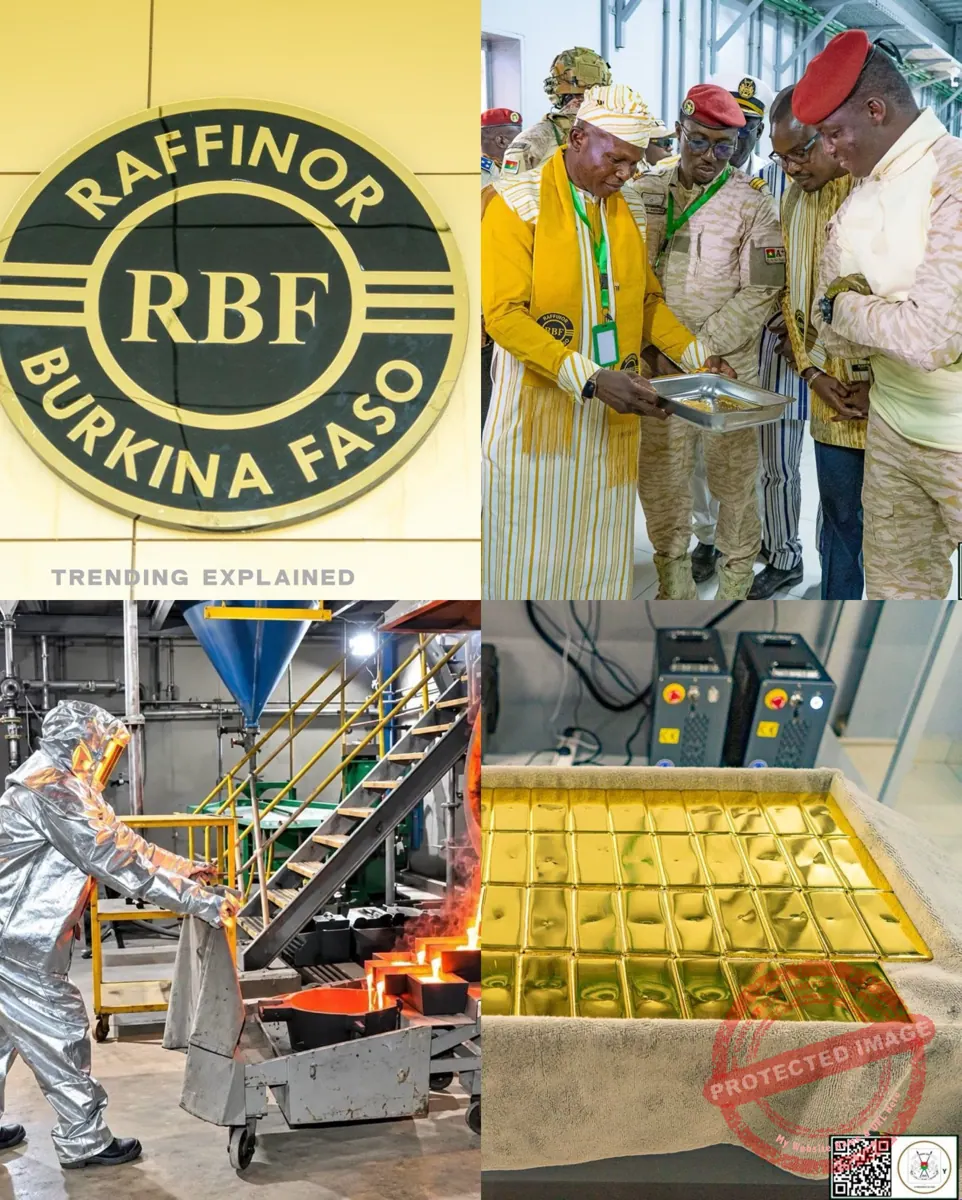
Burkina Faso has officially opened its first industrial gold refinery, marking a significant step in the country's efforts to increase domestic control over its gold industry. The Raffinerie Nationale d'Or du Burkina Faso (RAFFINOR-BF) was inaugurated by transitional leader Captain Ibrahim Traoré on September 28, 2026, in Ouagadougou. The refinery aims to process the country's mineral resources domestically, rather than exporting them in raw form. This move is part of a broader effort to establish the entire mineral value chain within Burkina Faso.
The RAFFINOR-BF refinery was built on a five-hectare site at a cost of over 11 billion CFA francs, approximately $19 million. The facility was financed mainly by the Burkinabe state through the National Precious Substances Company (SONASP), with contributions from private-sector partners. The refinery has an initial annual processing capacity of 164 tonnes of gold, exceeding Burkina Faso's reported gold production of about 94 tonnes in 2025. A planned second phase is expected to increase the refinery's capacity to 515 tonnes annually.
The refinery is equipped to process doré gold from both industrial and artisanal mining operations and produce gold bars with a purity of up to 99.99 percent. The facility also features a foundry, an analysis laboratory, secure storage facilities, and a jewelry production unit. Officials expect the project to generate approximately 100 direct jobs and over 5,000 indirect jobs. The inauguration ceremony saw the presentation of the first gold bars refined entirely within Burkina Faso.
Captain Ibrahim Traoré emphasized that the refinery is part of a broader effort to establish the entire mineral value chain within Burkina Faso. He stated that the country wants to refine all its metals on site and have the entire value chain domestically. The government sees domestic refining as a way to gain greater control over the country's gold production while potentially increasing revenue from processing, refining, and related activities.
Gold is one of Burkina Faso's most important sources of export revenue, making the mining sector central to the country's economy. The new refinery comes as Traoré's administration pursues wider reforms aimed at increasing state involvement in the mining industry, including changes to the country's mining framework. The government has also sought to increase the country's participation in the value chain rather than relying primarily on the export of mineral commodities for processing elsewhere.
Burkina Faso's move comes amid wider efforts by several African countries to capture a larger share of the value generated by their natural resources. Rather than exporting minerals for processing abroad, governments across the region have increasingly explored domestic refining and processing facilities as a way of developing local industries, creating employment, and increasing government revenues. With RAFFINOR-BF now operational, Burkina Faso has the capacity to refine its own gold domestically and could potentially process gold from neighboring countries in the future.
The inauguration of the RAFFINOR-BF refinery marks a significant development in Burkina Faso's mining strategy as the government seeks to move beyond simply extracting and exporting raw mineral resources. The project is expected to contribute to the country's economic growth and development, while also providing new opportunities for employment and skills development. The refinery's operationalization is a key milestone in Burkina Faso's efforts to optimize its mineral resources for the benefit of its economy and citizens.
Key points
- The refinery has an initial annual processing capacity of 164 tonnes of gold.
- The project is expected to generate approximately 100 direct jobs and over 5,000 indirect jobs.
- The refinery can produce gold bars with a purity of up to 99.99 percent.