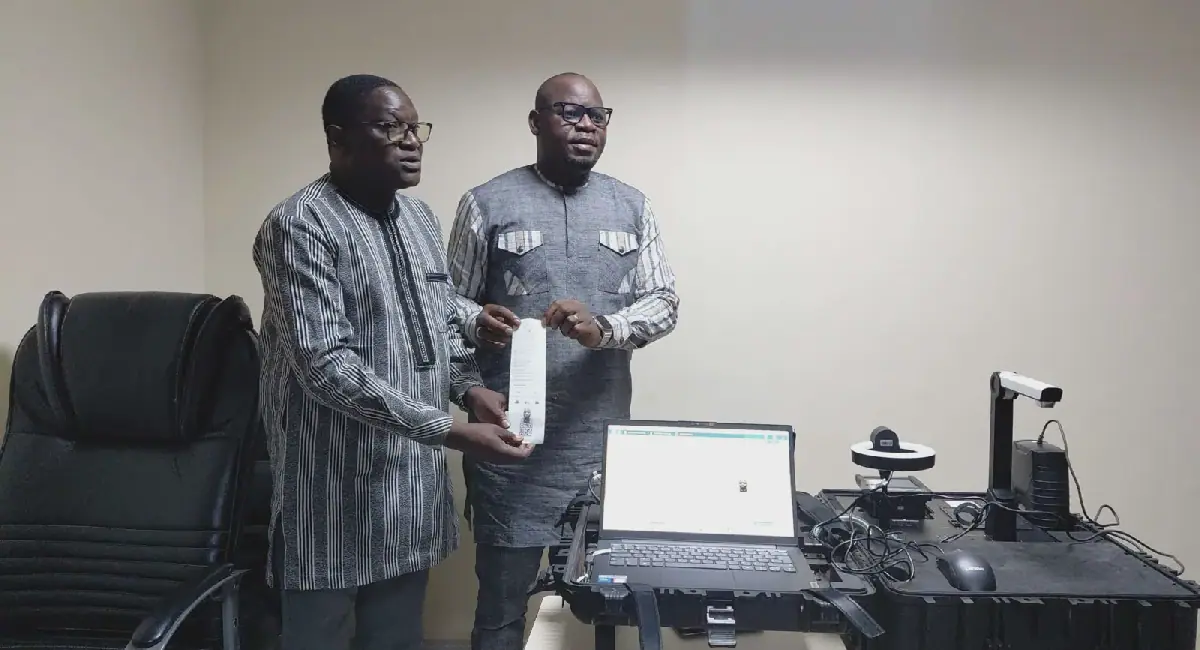
On November 25, 2026, Burkina Faso's Minister of Justice, Me Edasso Rodrigue Bayala, underwent biometric enrollment for the electronic unique identifier for physical persons (IUE). This move aligns with the initiative launched by President Captain Ibrahim Traoré, aiming to enhance the country's administrative and developmental processes. The minister's participation also enabled the Justice department's staff to take part in the operation.
The enrollment process at the Ministry of Justice began two days prior and involves approximately 5,000 collaborators. According to Minister Bayala, participating in this process is a civic duty. He emphasized the benefits of a secure biometric enrollment for administration and public action. The unique identifier is seen as a tool for governance, strengthening Burkina Faso's position among serious nations and providing better levers for development policy planning and anticipation.
Minister Bayala highlighted that the unique identifier goes beyond its administrative framework, serving as a governance tool. He encouraged his colleagues and Burkinabè citizens to enroll promptly, stressing the identifier's role in enhancing the country's development policies. The minister's call to action aims to promote a sense of civic responsibility and urgency among citizens.
The initiative targets all Burkinabè citizens, as well as foreign nationals residing in or visiting Burkina Faso, to obtain a unique electronic identifier. This endeavor seeks to bolster the country's positioning among serious nations, while improving administrative security and development policy orientation across various sectors. By doing so, the government aims to create a more efficient and organized system.
The launch of this campaign is part of a broader effort to modernize and enhance Burkina Faso's administrative capabilities. The electronic unique identifier is expected to play a crucial role in this process, facilitating better governance, security, and development planning. As the country moves forward with the enrollment process, citizens are encouraged to participate and reap the benefits of this innovative system.
With the minister's endorsement and participation, the enrollment process is expected to gain momentum. The government's commitment to implementing this system nationwide underscores its dedication to improving administrative efficiency and promoting national development. As Burkina Faso continues to roll out the electronic unique identifier, citizens can anticipate a more streamlined and secure administrative experience.
The successful implementation of the electronic unique identifier system has the potential to significantly impact Burkina Faso's development trajectory. By providing a secure and efficient means of identification, the government can better target development initiatives, enhance public services, and promote economic growth. As the country embarks on this journey, the minister's leadership and citizens' participation will be crucial to its success.
Key points
- The electronic unique identifier aims to strengthen Burkina Faso's position among serious nations and provide better levers for development policy planning and anticipation.