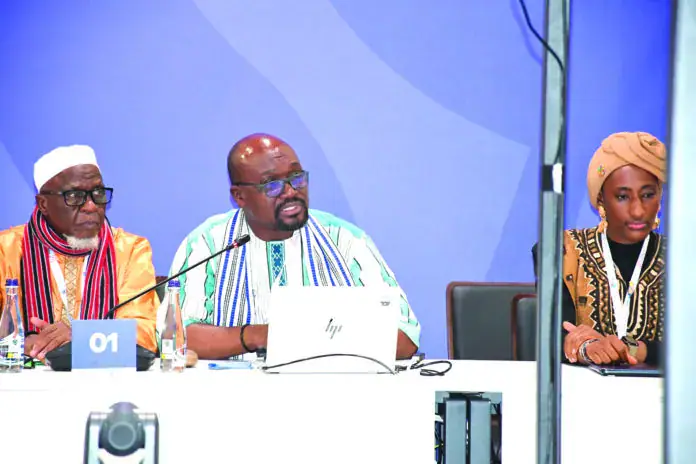
On the sidelines of COP31, held in Antalya, Turkey, delegations from Burkina Faso, Mali, and Niger, member states of the Alliance of Sahel States (AES), convened on November 16, 2026, to exchange experiences on combating climate change. The meeting aimed to foster cooperation and knowledge sharing among the three countries, which face similar climate-related concerns. The delegations comprised representatives from public administrations and civil society.
Dr. Rémy Palé, Secretary Permanent of the Coordination of Sectoral Policies and Sustainable Development (SP/CPSADD) of Burkina Faso and president of the meeting, highlighted the importance of the gathering. He stated that the objective was to facilitate experience sharing, get to know each other, and explore ways to advance the construction of a common space to address climate change.
The Burkinabé delegation presented its national climate security strategy, which aims to enhance climate resilience by 2028. The strategy focuses on four areas: climate security governance, sustainable natural resource management, protection of populations against crises and disasters, and climate financing. Marcus Zoungrana from SP/CPSADD presented the strategy, emphasizing its importance in addressing climate-related challenges.
Célestin Pouya, Director of the Policy, Advocacy, and Communication Department at WaterAid Burkina, presented his organization's interventions in the water, hygiene, and sanitation sectors in Burkina Faso, Mali, and Niger. He emphasized that climate crisis is primarily a water crisis, as droughts and floods impact water resources. Pouya also presented a joint project with the three countries, focusing on water security and community capacity building.
The Malian delegation, represented by Thierno Seydou Diarra, presented its national climate security strategy, highlighting the linkages between peace and climate change. Diarra stressed the need for synergistic actions among the three AES member states and called for strengthened capacities at the local level to address climate-related challenges.
The Nigerien delegation, led by Ramata Abba Kiari, discussed climate-induced mobility and its impacts on women. Kiari emphasized the need for capacity building and endogenous knowledge to address climate-related challenges. Issa Garba, representing Niger's civil society, presented the country's irrigation programs, which aim to create rural employment, reduce migration, and promote food security and social cohesion.
The experience-sharing meeting among the AES member states demonstrated their commitment to addressing climate change through collaborative efforts. The delegations identified areas for cooperation, including climate financing, capacity building, and policy development. The meeting concluded with a call for strengthened partnerships and cooperation to address the complex climate-related challenges facing the Sahel region.
Key points
- The AES member states aim to develop a common policy framework to address climate change and promote sustainable development.
- The countries' delegations emphasized the need for increased climate financing and capacity building to support effective climate change mitigation and adaptation efforts.
- The meeting demonstrated the importance of South-South cooperation in addressing climate-related challenges and promoting sustainable development in the Sahel region.