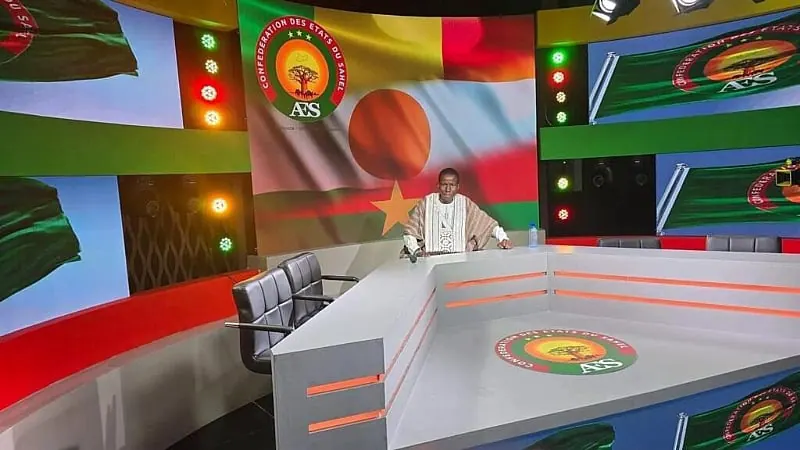
Burkina Faso, Mali, and Niger have launched a new television channel called Tafouk TV, which aims to promote their own narrative and counter Western media coverage. The channel, which began official programming on September 16, broadcasts from Bamako and is available through Canal+. It is part of a wider media network being developed by the Alliance of Sahel States (AES), a grouping of the three countries that have deepened ties with Russia and distanced themselves from France and other Western partners.
The launch of Tafouk TV is seen as a move to counter what the Sahel juntas perceive as biased Western media coverage. Malian Foreign Minister Abdoulaye Diop said that the channel was necessary to "strike back" and ensure that the Sahel countries' narrative is heard. The channel's name, which means "Sun" in Tamasheq, reflects its focus on regional imagery and culture. Its presentation draws heavily on traditional Sahel music and symbolism, with its opening theme inspired by the music of traditional Dozo hunters.
Tafouk TV's programming includes three daily news bulletins focused on the three members of the AES. The channel also plans to feature programs on fact-checking, geopolitics, and frontline developments in French, English, and regional languages. One of its programs featured pan-African influencer Franklin Nyamsi analyzing French media coverage of a thwarted mutiny in Niger in August. The channel has also signed a cooperation agreement with the parent company of Russian state-funded broadcaster RT.
The launch of Tafouk TV is part of a broader effort by the AES to build a common media network. In December, the three countries launched Daande Liptako radio, broadcasting from Ouagadougou on a frequency previously used by Radio France Internationale (RFI). RFI is now banned in all three AES states. The alliance is also planning a joint official news agency based in Niamey, further extending its media network.
The AES countries have progressively broken with Western governments, particularly former colonial power France, while strengthening diplomatic and security ties with Russia. Military leaders in the three countries justified their takeovers partly by citing the failure of civilian governments to contain years of jihadist violence. However, armed groups remain active across large parts of the region, with civilians and security forces continuing to be killed.
The juntas have also faced criticism over restrictions on political opposition and the media. Foreign correspondents have been expelled, and several major Western broadcasters suspended or banned after reporting military losses or accounts that contradicted official claims of battlefield successes. Niger's state television said the launch of Tafouk TV meant that Sahel populations were "no longer passive consumers of false and manipulated stories coming from fake news factories".
The project has also prompted calls for greater media pluralism. A former Nigerien MP warned that the new service "must not become a propaganda tool". The MP emphasized the need for genuine, open debates where any and all opinions can be expressed. Russia has openly supported the project, with Moscow's ambassador to Mali, Igor Gromyko, praising its planned role in fighting "disinformation and cognitive warfare" in June.
Key points
- The channel aims to promote the Sahel countries' own narrative and counter Western media coverage.
- The launch of Tafouk TV is part of a broader effort by the AES to build a common media network.
- The project has prompted calls for greater media pluralism and concerns about the potential for propaganda.