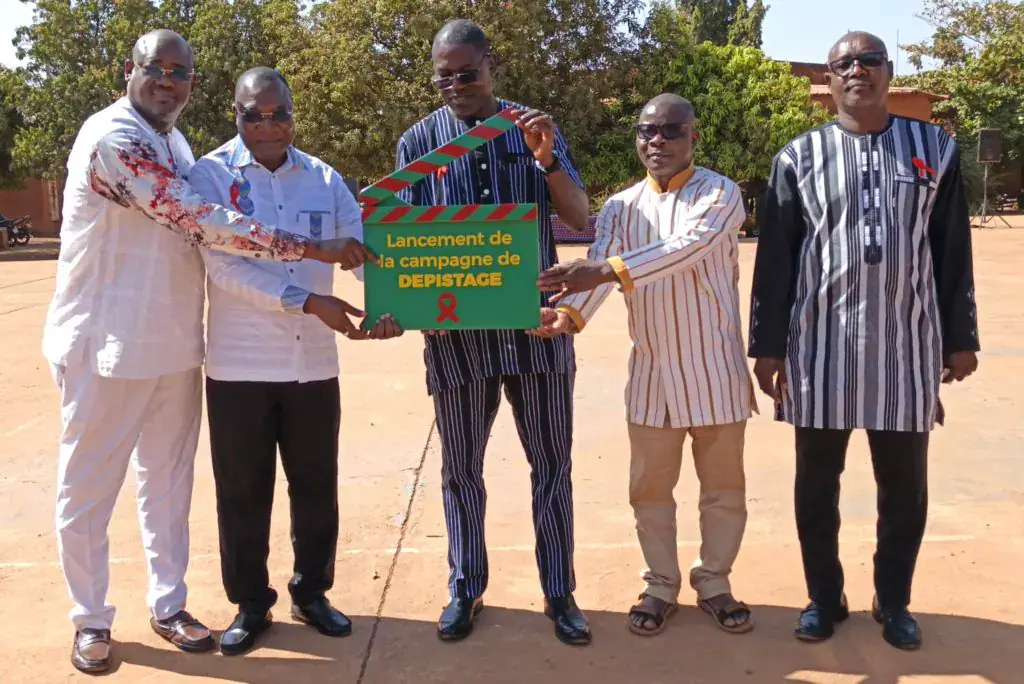
The Burkina Faso government has initiated a national campaign to promote voluntary HIV testing and counseling, which will run until December 8, 2026. This year's campaign is coupled with syphilis testing and is part of the activities commemorating World AIDS Day. The campaign, organized by the Secretariat Permanent of the National Council for the Fight Against AIDS and Sexually Transmitted Infections (SP/CNLS-IST), aims to encourage people to know their HIV status and facilitate early detection.
According to Dr. Seydou Ouattara, the Secretary Permanent of CNLS-IST, testing is a crucial step in the fight against HIV. He emphasized that knowing one's HIV status enables individuals to take action, benefit from adapted care, and protect their health and that of their loved ones. The international objective is to have 95% of people living with HIV know their status. Burkina Faso has made significant progress in the fight against HIV, with a prevalence rate that has decreased from around 7% in the 1990s to 0.5% currently.
Despite this progress, challenges persist in prevention, testing, and care. Dr. Ouattara stated that approximately 90,000 people live with HIV in the country and require medical follow-up. He highlighted the importance of resources mobilized in this fight, estimated at around 30 billion FCFA per year, with contributions from the state and technical partners. The campaign targets 150,000 people nationwide, including specific populations such as drug users, detainees, adolescents, and young people.
Herman Abouga, President of the Board of Directors of the Coalition of Burkinabé Networks and Associations for the Fight Against HIV-AIDS and Health Promotion (CORAB), emphasized that the campaign will focus on reaching populations that are still not tested. The campaign will also include testing for syphilis and hepatitis. The goal is to encourage people to know their HIV status and take action to protect themselves and their loved ones.
The campaign is part of the commemoration of World AIDS Day 2026, themed "Ending AIDS Starts with Access." Dr. Ouattara recalled that Burkina Faso, as a sovereign state, adapts to different situations, including the suspension of US development aid. The country continues to work towards achieving its objectives in the fight against HIV.
The campaign will focus on proximity actions to reach people who are not yet tested. The organizers aim to intensify actions to reach specific populations and search for potentially infected people who do not know their status. The campaign will also target the general population, with a particular emphasis on adolescents and young people.
The campaign's success will be measured by its ability to reach the target of 150,000 people and encourage them to know their HIV status. The organizers hope that this campaign will contribute to the country's efforts to end AIDS by 2030. Key stakeholders will continue to work together to achieve this goal, including the government, technical partners, and civil society organizations.
Key points
- The campaign aims to test 150,000 people for HIV and syphilis.
- Burkina Faso has made significant progress in reducing HIV prevalence from 7% to 0.5%.
- The campaign targets specific populations, including adolescents, young people, and people living with HIV.