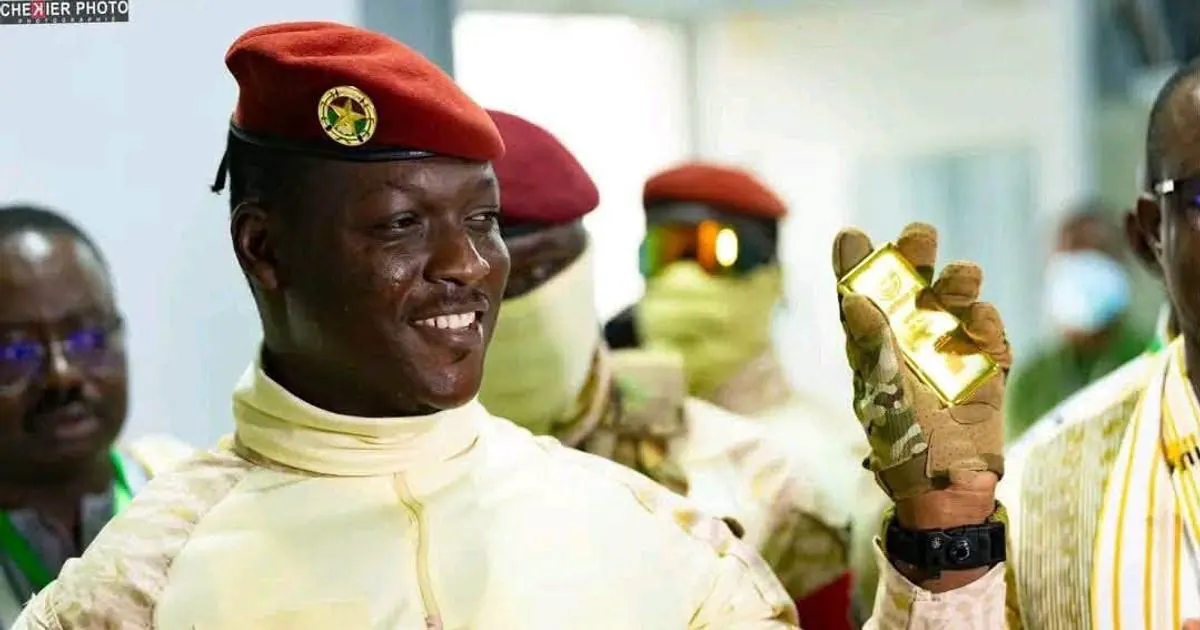
Burkina Faso has officially opened its first gold refinery in the capital city of Ouagadougou. The facility, known as Raffinor-BF, was inaugurated by President Ibrahim Traoré on September 28, 2026. The $19 million refinery is part of the government's efforts to process more of the country's mineral resources domestically and retain a larger share of the value generated by its gold industry. The project cost over 11 billion CFA francs and is expected to have a significant impact on the country's economy.
The refinery has an initial capacity to process 164 tonnes of gold annually, with the potential to increase to 515 tonnes in the future. This exceeds the country's current annual production of around 94 tonnes. The government plans to use the refinery to process gold from other countries in the region, potentially making Burkina Faso a major player in regional gold refining. The facility will refine, assay, certify, and store gold, allowing several stages of the value chain to take place within the country.
President Traoré emphasized the importance of developing the country's processing chain locally. He stated that the government wants to move beyond extracting raw materials for export and develop more of the processing chain locally. The refinery is part of a wider drive to strengthen economic self-reliance and increase national control over the country's mineral resources. The project was financed by the state, including through the National Precious Metals Company, in partnership with private-sector interests.
Construction of the facility began in 2023, and its development is seen as a significant step towards increasing local processing and retaining more value from gold production. The government has presented the project as part of a wider effort to reduce the need to send gold abroad for processing. This move is expected to help reduce the loss of revenue and the financing of armed groups operating in parts of the country.
The gold industry remains a crucial part of Burkina Faso's economy, and the ability to refine and certify gold domestically is a significant development for the sector. The government has sought greater state involvement in the mining industry and taken steps to improve oversight of gold production and trade. Authorities have previously raised concerns about gold leaving the country through informal and unauthorized channels.
Burkina Faso's move to establish a gold refinery is part of a growing trend among African gold-producing countries to increase local processing. Mali is also developing a gold refinery, while other major producers in West Africa have taken steps to strengthen state involvement in their gold sectors. The success of the refinery will depend on access to sufficient gold supplies and the development of markets for its refined output.
The new facility is expected to play a critical role in the country's efforts to build greater domestic capacity around one of its most important natural resources. The government's goal is to refine all its metals on site and have the entire value chain on site. The refinery's impact on the country's economy and gold industry will be closely watched in the coming months.
Key points
- The refinery has an initial capacity to process 164 tonnes of gold annually.
- The facility was financed by the state and private-sector interests.
- The government aims to refine all its metals on site and have the entire value chain on site.