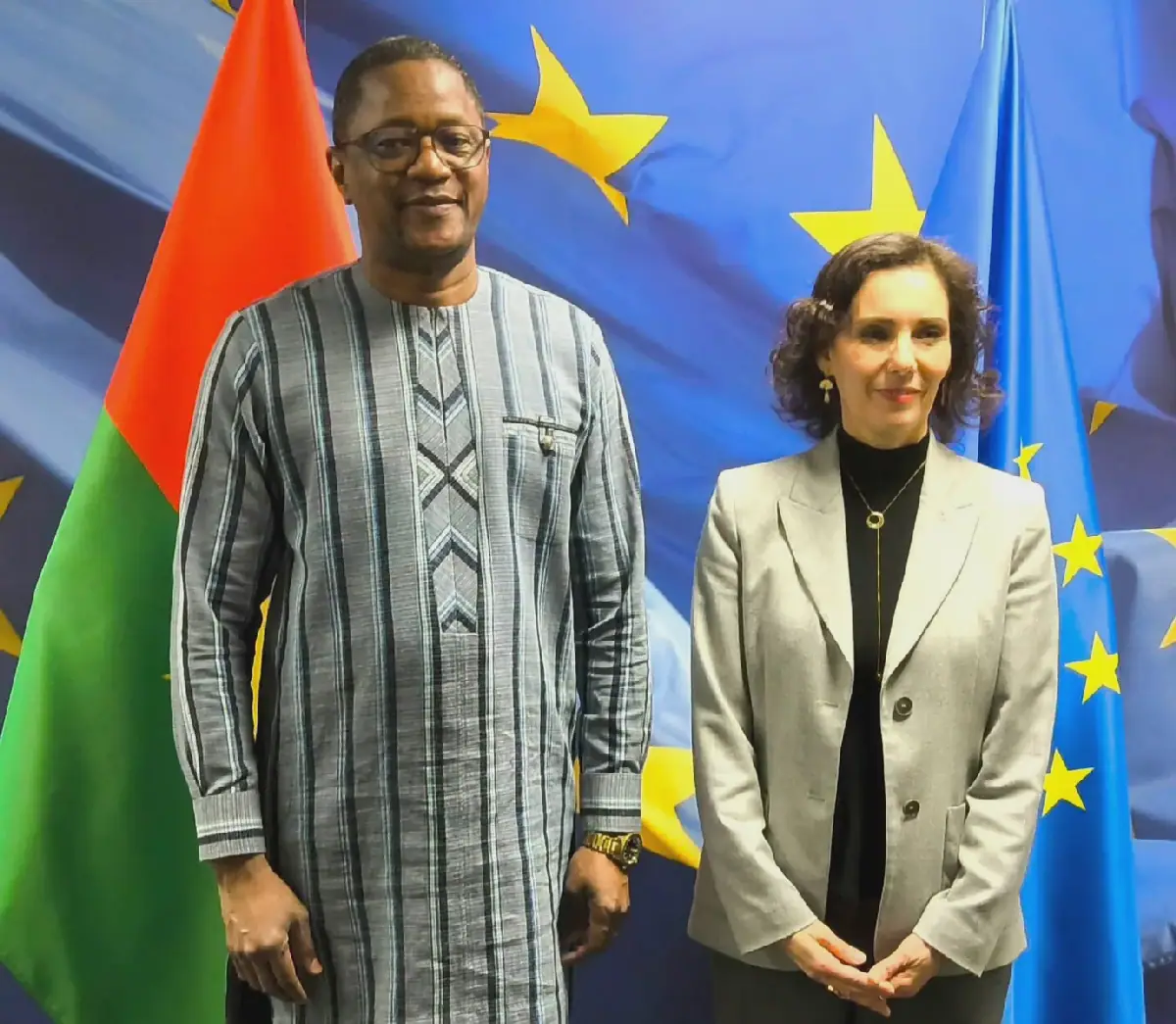
Burkina Faso's Foreign Minister, Karamoko Jean Marie TRAORE, recently visited Brussels for talks with European Union officials on humanitarian cooperation. During his visit, TRAORE met with Hadja LAHBIB, EU Commissioner for Equality, Crisis Preparedness, and Crisis Management. The two officials discussed ways to strengthen humanitarian partnerships between the EU and Burkina Faso. They focused on ensuring that humanitarian actors operate in a neutral and secure environment.
Commissioner LAHBIB expressed her commitment to continuing EU support for Burkina Faso and sought insight into the government's vision for humanitarian cooperation. TRAORE shared the government's new approach to humanitarian aid, emphasizing the need for sustainable projects that have a lasting impact on beneficiaries. He cited concerns about the unintended consequences of certain aid mechanisms, such as cash transfers. The minister stressed that Burkina Faso wants more than just humanitarian aid; it seeks partnerships that help build local capacities.
A key aspect of the discussions was the safety and accessibility of humanitarian actors in intervention zones. Both parties acknowledged the importance of information sharing to ensure that humanitarian workers understand their roles, limitations, and the country's regulations. TRAORE emphasized the need to prioritize local expertise in selecting humanitarian actors to avoid difficulties arising from unfamiliarity with the local context. This approach aims to enhance the effectiveness and security of humanitarian operations.
The Foreign Minister highlighted that Burkina Faso is committed to facilitating humanitarian access in secure areas and protecting humanitarian actors. However, he stressed that these actors must operate in accordance with national security requirements. The government seeks to balance humanitarian needs with national security concerns. This approach aims to ensure that humanitarian aid reaches those in need while minimizing risks to both aid workers and local populations.
Commissioner LAHBIB welcomed Burkina Faso's progress in reintegrating displaced persons into their local communities. The EU is committed to supporting Burkina Faso's efforts to address humanitarian challenges. The two officials discussed ways to enhance coordination and cooperation between EU humanitarian agencies and Burkinabè authorities. This cooperation aims to improve the delivery of humanitarian aid and build resilience in vulnerable communities.
The meeting also touched on the importance of adapting humanitarian responses to the specific needs and context of Burkina Faso. TRAORE emphasized that the government wants to move beyond traditional humanitarian aid and focus on sustainable development projects. This approach seeks to address the root causes of vulnerability and promote long-term recovery. The EU Commissioner acknowledged the importance of aligning humanitarian responses with national priorities and strategies.
The discussions between TRAORE and LAHBIB reflect the commitment of both the EU and Burkina Faso to strengthening humanitarian partnerships and improving the effectiveness of aid delivery. The two officials agreed on the need for enhanced cooperation, coordination, and communication to address humanitarian challenges in Burkina Faso. By working together, they aim to build a more sustainable and resilient humanitarian response that benefits vulnerable populations.
Key points
- Burkina Faso's Foreign Minister urges humanitarian partners to follow national regulations to ensure safe and effective aid delivery.