Mauritania's National Assembly is set to vote on the government's program, presented by Prime Minister Moukhtar Ould Ajay, which promises to boost economic growth and improve living standards. The program, which aims to increase economic growth to over 4%, reduce external debt, and protect purchasing power, has been met with skepticism by opposition parties. The vote is scheduled to take place on Monday, November 9, 2026, after a seven-hour and 20-minute debate.
The opposition parties, including the Harak and Sawab parties, have criticized the program for lacking concrete numbers and failing to address the country's pressing issues, such as poverty, unemployment, and inflation. The Sawab party described the program's vision for 2060 as "provocative" and out of touch with the country's current reality. The parties also questioned the government's ability to deliver on its promises, given the country's high inflation rate of 9.3% in September 2026.
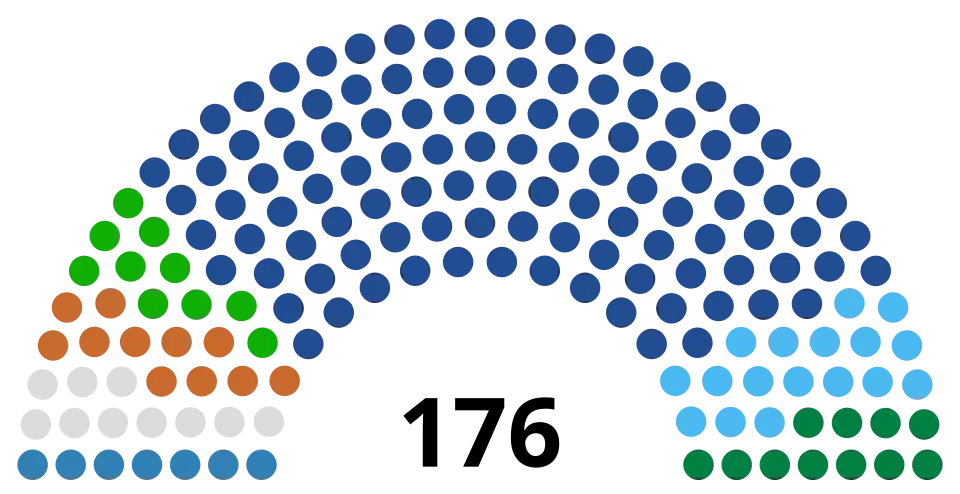
Prime Minister Ould Ajay's program promises to protect purchasing power, cap meat and wheat prices, and review fuel pricing. The program also aims to reform the judiciary, fight corruption, and attract investment. However, the opposition parties argue that these promises are too vague and lack concrete targets. The National Assembly, which comprises 176 members, will vote on the program after hearing from the prime minister and debating its contents.
The vote takes place amid growing economic pressures, with inflation rising to 9.3% in September 2026, driven by a 44.8% increase in fish prices and a 23.7% rise in meat prices. The Central Bank has also raised its benchmark interest rate to 7.25%. The government's program has been endorsed by the parties supporting President Mohamed Ould Cheikh El Ghazouani, who hold a majority of seats in the National Assembly.
President El Ghazouani reappointed Prime Minister Ould Ajay in October 2026, tasking him with forming a new government. The opposition parties have expressed concerns that the government's program does not address the country's pressing issues, such as poverty, unemployment, and inequality. The Sawab party's leader, Ahmed Haroun Sheikh Sidia, described the program as "ordinary" and lacking in concrete numbers.
The National Assembly's vote on the government's program is seen as a crucial test of the government's ability to deliver on its promises. The opposition parties have vowed to continue criticizing the program, arguing that it does not address the country's pressing issues. The government's ability to implement its program will be closely watched by Mauritanians, who are eager to see improvements in their living standards.
The outcome of the vote is expected to have significant implications for Mauritania's economic future. If the program is approved, the government will face pressure to deliver on its promises, including reducing poverty and unemployment. The opposition parties have vowed to hold the government accountable for its actions, and the National Assembly will play a crucial role in monitoring the government's progress.
Key points
- The Mauritanian government's program promises 4% economic growth and aims to reduce external debt and protect purchasing power.
- The opposition parties have criticized the program for lacking concrete numbers and failing to address pressing issues such as poverty and unemployment.
- The National Assembly's vote on the program is seen as a crucial test of the government's ability to deliver on its promises.