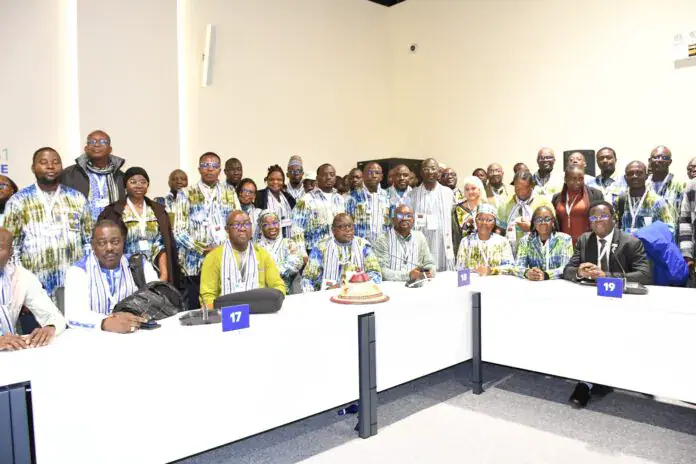
The 31st Conference of Parties (COP31) on climate change, held in Antalya, Turkey, has seen Burkina Faso reaffirm its commitment to addressing climate change. According to Alassane Guiré, director of cabinet of the minister of state in charge of agriculture, the country's priorities align with those of the African group. These priorities include financing for adaptation, the Global Goal on Adaptation (GGA), and the transfer of technologies. The country's position emphasizes the need for developed countries to fulfill their obligations and provide support to developing nations.
Financing remains a major point of contention among parties at COP31. Burkina Faso is advocating for the implementation of Article 9.1 of the Paris Agreement, which includes a clear baseline for measuring the tripling of adaptation financing. The country also seeks more predictable and accessible resources, simplified access procedures, and a greater share of grants, particularly for the Least Developed Countries (LDCs). This stance is crucial for Burkina Faso, as it aims to address the pressing issues of climate change.
In the area of adaptation, Burkina Faso supports the finalization of GGA indicators that reflect the realities of the Sahel region and the capacities of developing countries. The country opposes new reporting obligations without financial and technical support and ensures that these indicators are coherent with its National Adaptation Plan and Nationally Determined Contribution (NDC). Additionally, Burkina Faso seeks recognition of agro-sylvo-pastoral systems, livestock, and water management as priority areas for adaptation in agriculture and food security.
On Article 6 and carbon markets, Burkina Faso's delegation will defend the environmental integrity of credits and the equitable sharing of benefits, in line with the country's new law. They will also support financing for infrastructure and capacity building. Furthermore, the country advocates for a just transition mechanism that considers the informal economy, food security, access to energy, and African budgetary constraints. This mechanism was established at COP30 and aims to support countries in their transition to a low-carbon economy.
Burkina Faso also seeks direct and simplified access to the Loss and Damage Fund, as well as technology transfer and valorization of its achievements in land restoration and reforestation. The country aims to preserve the national character of its NDCs and defend its endogenous initiatives, while coordinating with countries of the Sahel Confederation, the African Group, LDCs, and the G77+China. This coordination is essential for Burkina Faso to effectively address climate change and promote sustainable development.
The Burkinabé delegation has not come to COP31 with theoretical commitments but with concrete actions. The country has recently adopted two new laws related to carbon initiatives and the ratification of the Biodiversity Beyond National Jurisdiction (BBNJ) Agreement. These laws demonstrate Burkina Faso's commitment to addressing climate change and promoting sustainable development. The country's delegation has been urged to promote its priorities and establish concrete partnerships, particularly through the Climate Implementation Bridge.
The ratification of the BBNJ Agreement allows Burkina Faso to affirm its place in the governance of global commons, in line with the theme of the Turkish presidency, "Oceans." The country's delegation has been encouraged to valorize these texts in bilateral meetings and negotiations, while respecting the national position and adopting exemplary conduct. Each delegate represents Burkina Faso and voices the concerns of producers, herders, and communities affected daily by climate change.
Key points
- Burkina Faso's priorities at COP31 include financing for adaptation and the transfer of technologies.
- The country advocates for a just transition mechanism that considers the informal economy and African budgetary constraints.
- Burkina Faso seeks direct access to the Loss and Damage Fund and the valorization of its achievements in land restoration and reforestation.