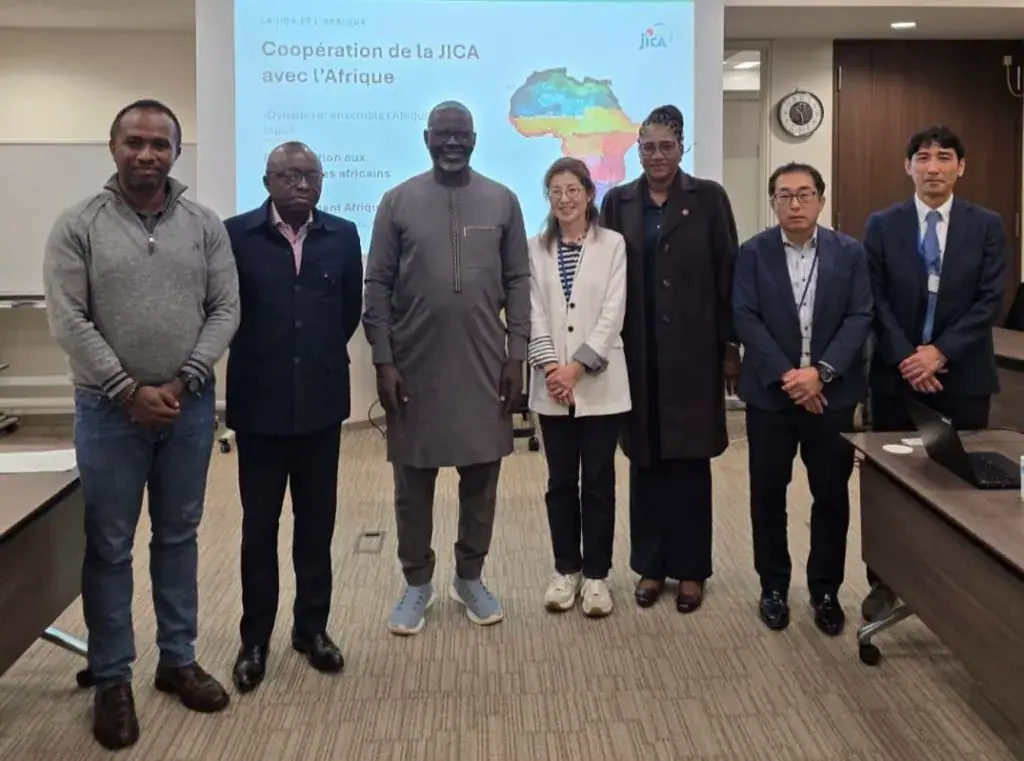
Burkina Faso and Japan are exploring new opportunities to strengthen their partnership in areas such as agriculture, education, infrastructure, vocational training, health, and climate resilience. This cooperation comes at a time of geopolitical reconfiguration and diversification of African partnerships. Through JICA, Japan can leverage its technological expertise, know-how, and training capacities to support Burkina Faso's national priorities.
The JICA has been instrumental in promoting cooperation between Japan and African countries, with 133.3 billion yen in programs across 49 countries on the continent in 2024. The agency supports continental initiatives such as the African Union's Agenda 2063, infrastructure development, economic integration through the African Continental Free Trade Area (AfCFTA), industrialization, and strengthening health systems.
In agriculture, JICA is supporting Burkina Faso through the Project to Strengthen Capacities for the Revitalization of Irrigated Perimeters (PReCaRI), which aims to modernize irrigation systems and improve the management of water resources. A new project worth 1.405 billion yen, announced in February 2026, will focus on strengthening equipment maintenance capacities and preserving the durability of hydro-agricultural infrastructure.
Education and vocational training are other areas where Japan's cooperation has made a significant impact. On May 19, 2026, the Burkinabé government, Japan, and UNICEF inaugurated eight new schools, including five general education colleges and three polyvalent colleges. This initiative is part of a program launched in 2022, which has enabled the construction and equipment of 26 establishments.
To improve the quality of education and align training with the needs of the economy, JICA could support the development of vocational training programs in areas such as agricultural mechanics, solar energy, industrial maintenance, and agro-food processing. Partnerships between Burkinabé technical institutions and Japanese institutes could also promote practical training, internships, and exchanges of expertise.
The Burkinabé government faces significant environmental challenges, including water scarcity, land degradation, and waste management. Japan has recognized expertise in disaster prevention, water resource management, and urban planning, which could be shared with Burkina Faso through JICA. Potential projects include rainwater harvesting in schools and health centers, organic waste composting, and soil restoration.
As Burkina Faso and Japan continue to strengthen their partnership, the focus will be on ensuring the sustainability of development projects and promoting economic growth. The JICA's approach, based on capacity transfer, training, technical assistance, and local capacity building, aligns with the priorities of the Burkinabé government and offers opportunities for mutually beneficial cooperation.
Key points
- JICA has supported 49 African countries with 133.3 billion yen in programs in 2024.
- A new 1.405 billion yen project will focus on strengthening equipment maintenance capacities and preserving the durability of hydro-agricultural infrastructure in Burkina Faso.
- Eight new schools, including five general education colleges and three polyvalent colleges, were inaugurated in Burkina Faso with the support of Japan and UNICEF.