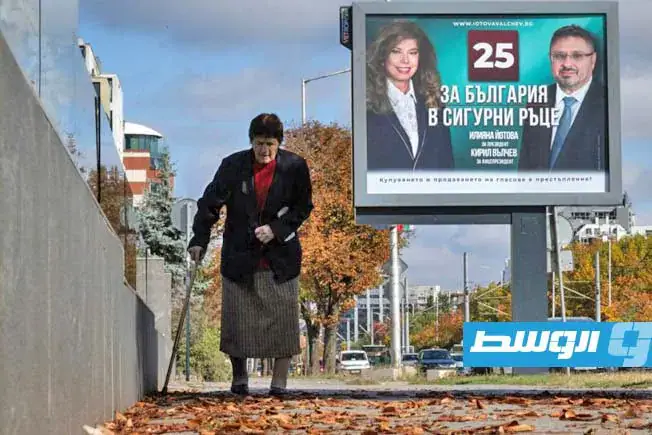
Bulgarians began voting on Sunday in a presidential election that has significant geopolitical implications. The incumbent President Rumen Radev, who advocates for dialogue with Moscow to end the war in Ukraine, is facing off against challenger Andrey Gyurov, a former interim prime minister supported by the pro-Western opposition. The election comes as the country is divided over its relationship with Russia.
The election is seen as a choice between two vastly different approaches to dealing with the war in Ukraine and future relations with the Kremlin. President Radev has called for negotiations to end the conflict, while Gyurov has emphasized the need for Russia to stop its aggression. The incumbent president has received 35% of the vote in the first round, compared to 32% for Gyurov.
The election campaign has been marked by concerns over security in the Black Sea region. Several commercial ships have been attacked by drones in recent weeks, resulting in the loss of around 30 lives. President Radev has been criticized for his response to the threats, with some analysts arguing that he has not done enough to address the issue.
During a recent televised debate, President Radev reiterated his call for negotiations to end the conflict in Ukraine. He argued that pumping more money into Ukraine and providing it with advanced weapons would only lead to more destruction and loss of life. His challenger, Andrey Gyurov, has taken a different approach, emphasizing the need for Russia to stop its aggression.
Bulgaria has historically had close ties with Russia, but the country remains deeply divided over its relationship with Moscow. Some Bulgarians, like Dimitar Rominov, a 43-year-old trader in Sofia, believe that the president does not have real powers, but his voice is heard. Rominov supports having different opinions within the country's leadership.
The country's prime minister, Rumen Radev, and President Radev have both expressed support for a ceasefire in Ukraine and negotiations to end the conflict. They argue that this is the only way to prevent further attacks on commercial ships in the Black Sea. The election outcome will likely have significant implications for Bulgaria's relations with Russia and the West.
The presidential election is being closely watched by international observers, who are concerned about the security implications of the conflict in Ukraine. The outcome of the election will likely have significant implications for the region and for Bulgaria's relations with its neighbors.
Key points
- The Bulgarian presidential election is a choice between two different approaches to dealing with the war in Ukraine and future relations with the Kremlin.
- The incumbent president, Rumen Radev, advocates for dialogue with Moscow to end the war in Ukraine.
- The election outcome will likely have significant implications for Bulgaria's relations with Russia and the West.