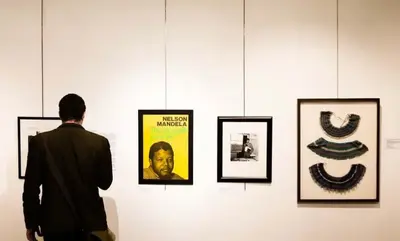
As South Africa celebrates its rich and diverse heritage, the theme "Reimagine our heritage institutions for a new era" invites broadening the conversation on heritage beyond preserving the past. Heritage is a living economic asset, and the creative economy sustains it by interpreting stories for new audiences and supporting livelihoods across the country. The creative economy is a strategic lever for economic growth, with Africa's creative economy estimated at $58-59 billion, accounting for under 3% of the global creative industry.
South Africa's cultural and creative industries contribute close to R300 billion to gross domestic product and support an estimated 1.4 million jobs. Their reach extends further through tourism, hospitality, transport, local trade, and the digital economy. A production that tours, a festival that fills accommodation, or a community screening that draws an audience creates work well beyond the stage or screen. However, the sector's economic value sits alongside deep financial fragility, with declining public funding, changes to funding focus, and delays in grant disbursements putting established festivals, independent artists, and small creative enterprises under immediate pressure.
The pressure exposes how many organisations depend on a narrow funding base, a structural weakness in the creative economy. Public funding remains essential, particularly where cultural value is high but commercial returns are uncertain. However, resilience requires a broader mix of grants, sponsorship, philanthropy, private investment, ticket or service income, and other earned revenue. It also requires support that helps creative practitioners build enterprises, gain market access, and move from intermittent assignments towards more durable income pathways.
Challenge funds, particularly those that deploy public funds such as the Jobs Fund, offer one practical approach to making the available capital work harder. The Jobs Fund's Festival Enterprise Catalyst and Spark Impact Programme provide examples of this approach. The Festival Enterprise Catalyst is a R20 million initiative that combines a R10 million Jobs Fund grant with R10 million in matched funding, supporting new productions, national touring, creative enterprises, and technical skills development across all nine provinces.
By 31 March 2026, the Festival Enterprise Catalyst had created 1,108 jobs against a target of 364, trained 357 people, and supported 208 touring productions against a target of 28. The model is also being tested in practice, with a voluntary pay-it-forward contribution replacing a ticket revenue-sharing mechanism after beneficiary feedback. This willingness to adapt matters, as sustainable funding models cannot be imposed as fixed formulas on a diverse sector.
The Spark Impact Programme, initiated by Sunshine Cinema, demonstrates a complementary pathway. It equips unemployed young people from rural and peri-urban communities with technical, entrepreneurial, and facilitation skills to earn income as freelance digital media entrepreneurs. The programme received a R9.16 million Jobs Fund grant blended with R5.49 million from philanthropic and private partners, creating 137 jobs, training 80 impact facilitators, and enabling participants to secure R1.79 million in self-employment contracts.
These examples suggest that different instruments should play different roles in supporting the creative economy, with foundational grants protecting cultural value and widening access, while catalytic finance helps proven ideas mobilise partners, diversify income, and scale job creation. By using public capital to crowd in other resources, supporting adaptable creative enterprises, and measuring the livelihoods generated, South Africa can protect the platforms that tell its stories while opening credible pathways into jobs.
Key points
- The creative economy is a strategic lever for economic growth, with Africa's creative economy estimated at $58-59 billion.
- Challenge funds can help make the available capital work harder in the creative economy.
- Sustainable funding models for the creative economy must be tested against the realities of creative work and refined without losing sight of employment outcomes.