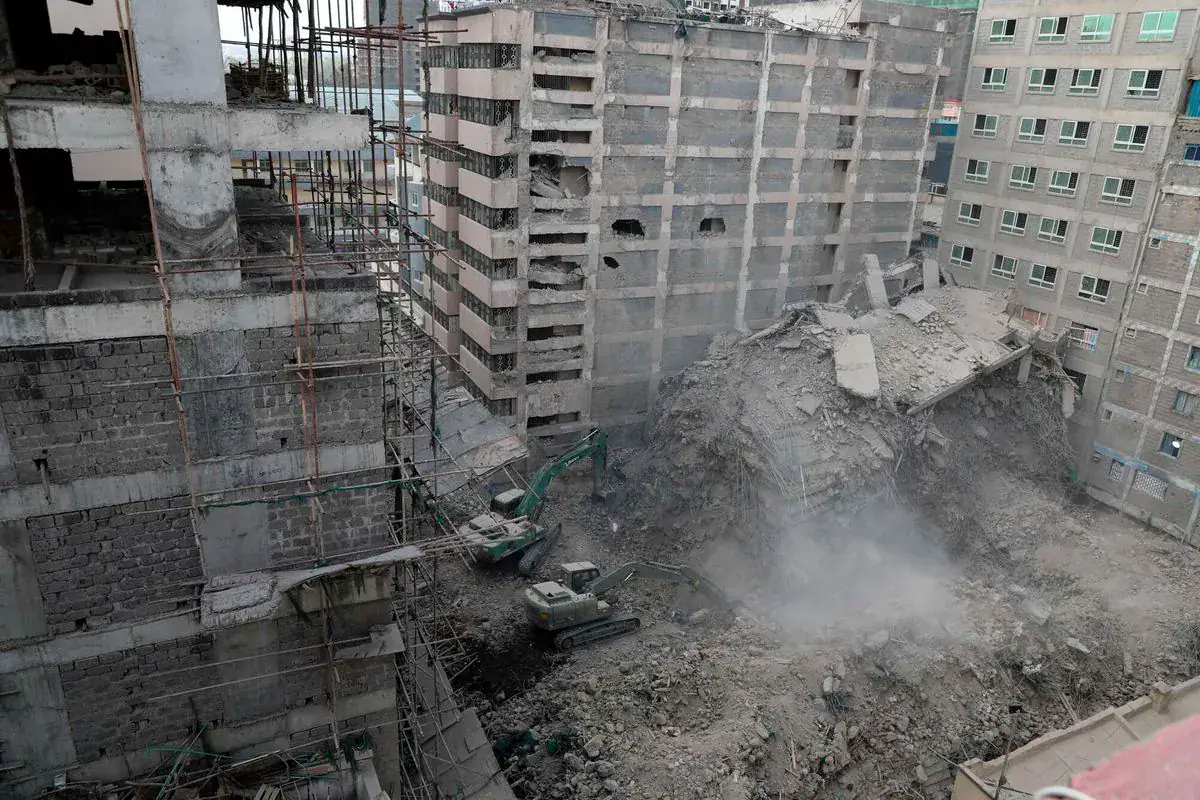
A recent building collapse in Nairobi's Eastleigh area has left families grieving and residents displaced, sparking questions about whether the tragedy could have been prevented. As investigations continue, Kenya must examine the systems through which buildings are planned, approved, constructed, and monitored. The conversation must include project governance, a critical but often overlooked dimension. Construction involves multiple stakeholders, including developers, financiers, architects, engineers, contractors, project managers, and regulators, each with defined roles.
Effective project management is essential to ensure safety throughout a project's lifecycle. Scope management, change control, quality assurance, and risk management are crucial safeguards for human life. However, even a project that begins with sound designs and necessary approvals can become dangerous when construction deviates from approved plans or commercial pressures override safety requirements. The January 2026 South C building collapse illustrates this challenge, with findings showing that four additional floors had been constructed beyond the approved 12-storey design.
The National Construction Authority (NCA) reported that the deviations in the South C building collapse raise fundamental questions about ensuring that what is built remains consistent with what was approved. The answer requires stronger coordination between regulators, county governments, and built-environment professionals. Clear accountability for decisions, reliable documentation of design changes, effective inspections, and consequences for violations are necessary.
To make construction safer, three reforms are proposed: monitoring what is built, managing risk continuously, and holding the entire delivery chain accountable. Kenya should strengthen end-to-end project compliance monitoring, with digital systems improving transparency and helping regulators identify discrepancies earlier. Every significant development should have a verifiable record of approved designs, authorised changes, inspection findings, corrective actions, and final occupancy clearance.
Risk management must become a continuous process rather than a document prepared to satisfy procedural requirements. Project teams should maintain active risk registers, establish clear escalation procedures, and act promptly when structural concerns or deviations from approved plans emerge. Serious safety concerns must trigger appropriate intervention, including suspension of work where required, until the risks are addressed.
Professional accountability must extend across the entire project delivery chain. Developers must prioritise safety alongside cost and timelines, while contractors must comply with approved designs. Consultants must fulfil their professional obligations, and regulators need the capacity and independence to enforce standards. Where negligence or misconduct is established, appropriate legal and professional consequences must follow.
The proposed measures should be supported by transparent reporting on inspections, violations, and enforcement outcomes. The public deserves evidence that safety standards are being implemented, not merely assurances. According to Maureen Ochang', President of the Project Management Institute (PMI) Kenya Chapter, these reforms can help prevent building collapses and ensure that construction projects are safe and compliant with regulations.
Key points
- Strengthening project governance and oversight is crucial to preventing building collapses in Kenya.
- Effective project management, risk management, and professional accountability are essential for ensuring safety in construction projects.
- Digital systems and transparent reporting can improve transparency and help regulators identify discrepancies earlier.