Nigeria has recently adopted a revised National Employment Policy aimed at promoting productive employment, youth empowerment, skills development, inclusion, and stronger employment institutions. The policy is part of the country's efforts to address the challenges in its labour market, including informality, skills mismatches, youth employment, and social protection. The International Labour Organisation's (ILO) concept of decent work emphasizes the need for jobs to be productive, provide adequate incomes, and respect fundamental rights at work.
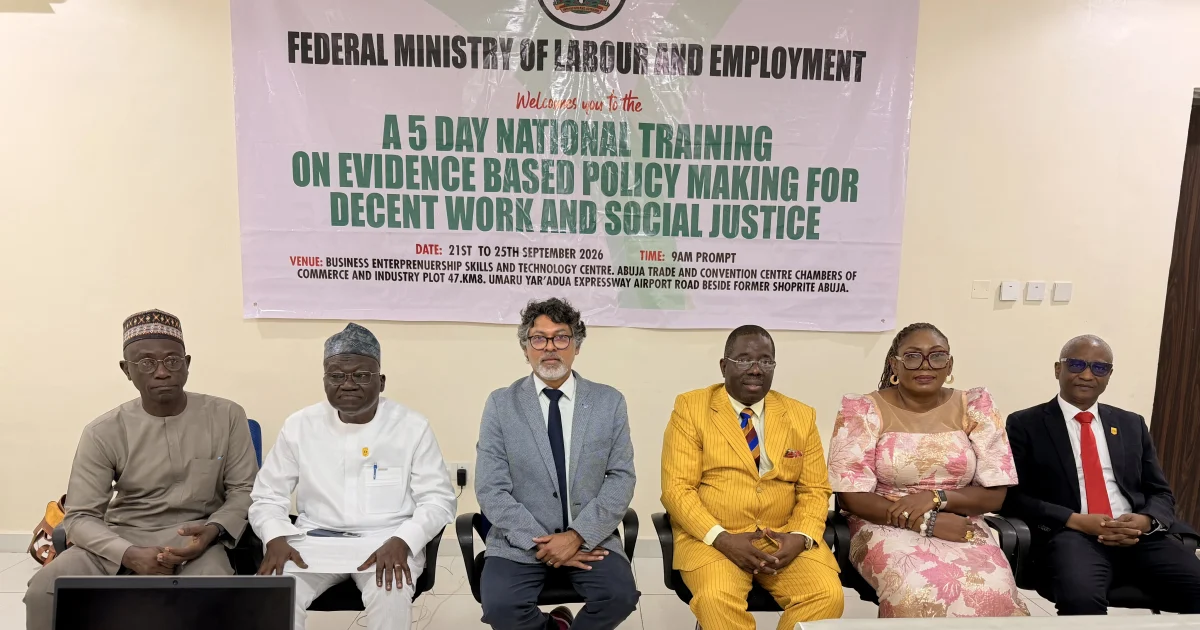
A five-day training programme was recently conducted in Abuja, bringing together Nigerian policymakers, employers, and workers to discuss evidence-based policymaking for decent work and social justice. The programme focused on enhancing the capacity of participants to formulate policy questions, find credible evidence, and communicate effectively with decision-makers. The training is part of a broader effort to support the implementation of Nigeria's Decent Work Country Programme, which aims to create jobs, promote rights at work, and provide social protection.
The training programme highlighted the importance of moving beyond traditional measures of capacity development, such as the number of people trained or policy briefs produced. Instead, the focus is on assessing the impact of the training on participants' ability to apply new knowledge and skills in their work. This includes evaluating whether they are using labour-market data more effectively, producing clearer policy briefs, and bringing together research and statistics with the experience of workers and employers.
One of the key challenges in capacity development is ensuring that gains are sustained over time. This requires assessing whether participants are sharing their skills with colleagues, training others, and integrating new methods into their institutional practice. In Nigeria, employment policy is not the responsibility of one ministry alone, and coordination across government and with employers and workers is essential. The National Employment Policy recognizes this need for coordination.
The ILO emphasizes the importance of social dialogue in evidence-based policymaking. This involves bringing together governments, workers, and employers to discuss policy choices and find workable solutions. Credible evidence can provide a stronger basis for understanding differences and making informed decisions. The use of artificial intelligence and access to information make these capabilities even more important in today's context.
The ultimate goal of capacity development is to contribute to better employment policies and more decent work. However, it is essential to be modest about the potential impact of a five-day training programme. While it may be possible to investigate whether the training contributed to a better policy brief or improved employment outcomes, it is often difficult to establish a direct causal link.
The training programme in Abuja is part of a broader effort to support Nigeria's efforts to promote decent work and social justice. The focus on evidence-based policymaking and capacity development reflects the country's commitment to addressing the challenges in its labour market. By enhancing the capacity of policymakers, employers, and workers, Nigeria can make progress towards its goal of creating more productive and decent jobs.
Key points
- Nigeria adopts new policies to enhance employment and social justice
- Training programme aims to enhance capacity for evidence-based policymaking
- Focus on sustaining gains and promoting social dialogue