Food security in Africa can no longer be just about producing enough food. The continent must ensure food is safe, available and affordable while building domestic capacity to produce, preserve, process and deliver it to consumers. This is crucial as population growth and rising incomes increase demand for staple crops like potatoes and onions. According to the UN, Kenya's population is projected to rise from 55.9 million in 2024 to 86.5 million by 2054.
Kenya's potato production illustrates the challenge and opportunity. In 2023, Kenya produced 2.31 million tonnes of Irish potatoes, valued at approximately KSh65.9 billion. However, with an estimated annual consumption of 40 kilograms per person, potential national requirements could approach 3.5 million tonnes by the mid-2050s. Rising incomes, urbanisation and expansion of fast-food and processing industries could push demand even higher.
The onion story in Kenya is equally instructive. In 2024, Kenya produced approximately 150,000 tonnes of bulb onions, but domestic demand already exceeds local supply, requiring imports from Tanzania and other neighbouring countries. This highlights the need for Africa to think beyond increasing acreage and instead use technology, including climate agriculture practices, to increase production.
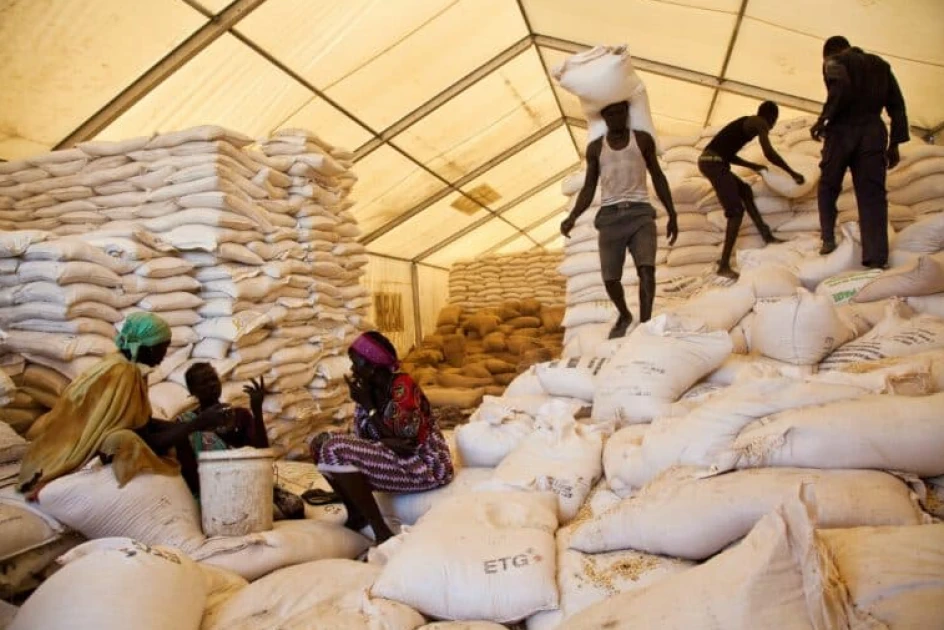
Post-harvest losses in Kenya are a significant challenge, with losses of up to 25 per cent occurring in some key staple value chains due to inadequate storage, poor cold-chain management and transport constraints. An integrated agricultural ecosystem involving planting-material producers, farmers, aggregators, storage operators, packers, processors and distributors can help address these issues.
Lessons from Poland show the power of such an integrated system. Companies like Mini Tubers Potato Growing and Agrosad combine farmer networks with production, cold storage, sorting, packaging, logistics and distribution. These models can be transferred to Kenya and Africa, enabling the continent to shift from isolated farms to coordinated farm-to-market systems.
Automation will be critical in this transition. Mechanised planting and harvesting, optical sorting systems and sensors can reduce labour bottlenecks and improve efficiency. Artificial intelligence, satellite imagery and digital weather platforms can help farmers determine when to plant, irrigate, fertilise and harvest.
To achieve food sovereignty, Africa must invest in disease-free seed, tissue culture, rapid multiplication, biotechnology and climate-resilient varieties. Governments, universities and industry should support certified seed, irrigation, mechanisation and processing equipment, particularly through cooperatives and organised farmer groups. Storage must be regarded as agricultural infrastructure, reducing post-harvest losses and protecting quality.
Key points
- Africa must build domestic capacity to produce, preserve, process and deliver food to achieve food sovereignty.
- Integrated farm-to-market systems and automation can improve efficiency and reduce post-harvest losses.
- Investing in disease-free seed and climate-resilient varieties is crucial for food sovereignty.