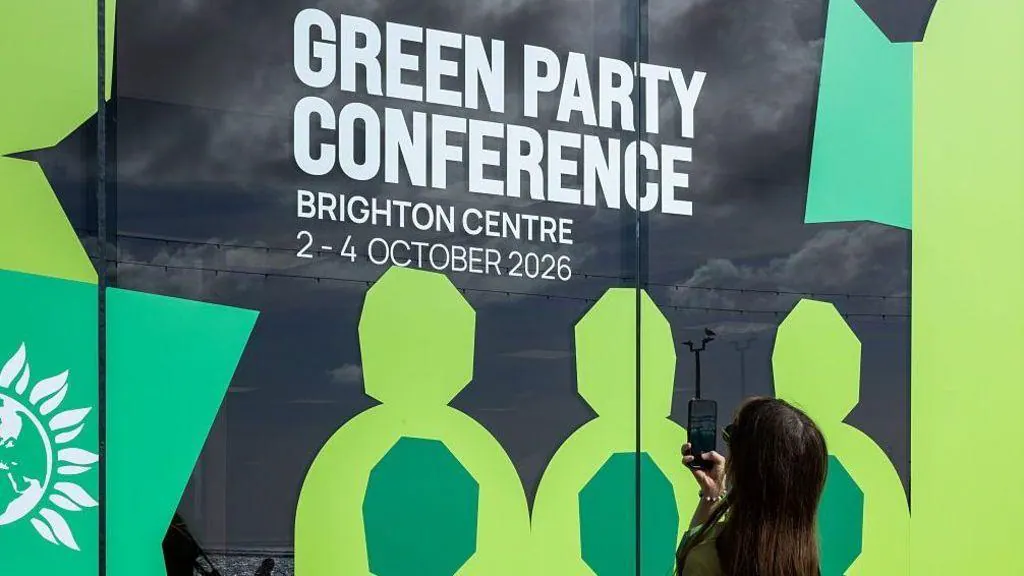
The British Green Party has adopted a contentious motion that labels Zionism as a racist ideology. This decision was made during the party's conference in Brighton, UK, on Sunday, with 1022 votes in favor and 813 against. The motion asserts that Zionism, as the foundational ideology of Israel, has created and perpetuates a system of apartheid in the region between the Jordan River and the Mediterranean Sea.
The adopted motion also emphasizes the Palestinian people's right to self-determination and liberation. It supports the establishment of a single, democratic Palestinian state on the entire territory of historic Palestine, with Jerusalem as its capital. This stance has been met with criticism from various Jewish groups, including the Board of Deputies of British Jews and the Jewish Leadership Council.
The motion's passage has sparked significant controversy, with critics arguing that it undermines the legitimacy of Israel and fuels anti-Semitism. The Board of Deputies of British Jews and the Jewish Leadership Council described the motion as an "attack on the Jewish community." They argue that Zionism is the opposite of racism, as it provided a homeland for Jews in their historical territory after centuries of persecution.
The decision has also drawn reactions from Israeli officials. The Israeli Foreign Ministry stated that the decision crosses the boundaries of legitimate political debate and is a "stain in the history of the United Kingdom." Israeli President Isaac Herzog described the Green Party's stance as a "shame," emphasizing that Zionism is the national liberation movement of the Jewish people and the basis for their right to a state and national homeland in Israel.
The Green Party's leader, Zack Polansky, a Jew, did not vote on the motion due to his engagement in the campaign for a by-election in North London. Polansky had previously stated that the party stands "united in calling for an end to the genocide, an end to the blockade, and the lifting of the ban on Palestine Action." The party's decision has been criticized by other UK political parties, including the Conservative Party.
The Green Party's adoption of this stance has significant implications for their policy and potential electoral impact. According to the party's rules, adopted motions become official policy, but they may not necessarily be included in the party's election manifesto for the next general election. The party's decision has sparked concerns among some Jewish communities and allies about the potential consequences for interfaith relations and perceptions of anti-Semitism.
Reactions from other UK political parties have been critical, with the Conservative Party labeling the Green Party as "inherently toxic." Labour Party leader Bridget Phillipson called the vote "crossing a line" and urged Polansky to clarify that this stance would not be the party's position in the future. The Liberal Democrats' Luke Taylor argued that the motion failed to address the increasing threats of Islamophobia and anti-Semitism in the UK.
Key points
- The British Green Party has become the first major European party to describe Zionism as a racist ideology.
- The party's decision has sparked controversy and criticism from Jewish groups and Israeli officials.
- The stance has significant implications for the party's policy and potential electoral impact.