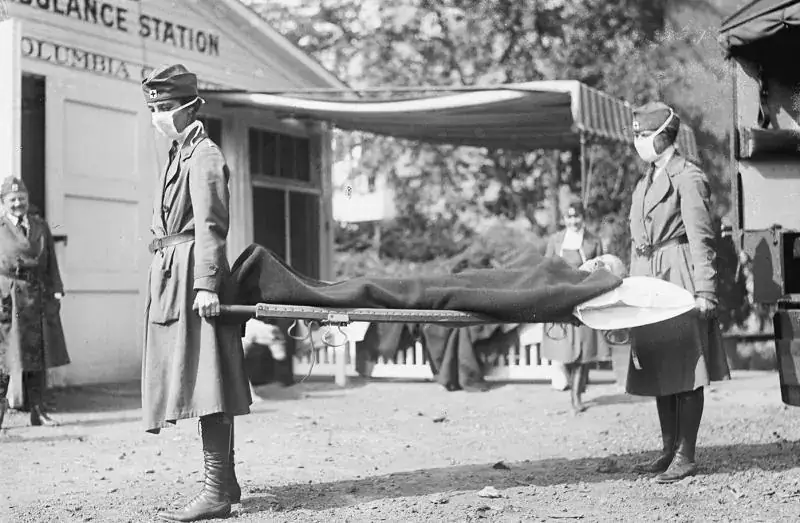
British essayist Laura Spinney, author of "Pale Rider: The Spanish Flu of 1918 and How It Changed the World," has written extensively on the 1918 Spanish flu pandemic. In her book, Spinney explores the devastating effects of the pandemic, which resulted in an estimated 50 to 100 million deaths worldwide between 1918 and 1920. This number is three to six times higher than the total number of deaths in World War I. Despite its significant impact, the pandemic remains relatively unknown in the collective memory of the 20th century.
Spinney attributes the lack of awareness about the pandemic to several factors, including underestimation of its severity and a lack of diagnostic tests at the time. The symptoms of severe cases of the Spanish flu were similar to those of typhus or cholera, making it difficult to diagnose. Additionally, the populations most affected by the pandemic were often the most impoverished and had limited access to healthcare and media representation. Spinney also notes that the pandemic's narrative is difficult to tell, as it lacks a clear beginning, middle, and end.
The essayist believes that the pandemic's impact was felt differently across the world, with some regions being more severely affected than others. For example, India lost an estimated 18 million people between 1918 and 1919, more than the total number of Indian deaths in World War I. The pandemic also had a significant impact on the Brazilian population, who had limited trust in Western medicine and responded to the disease with religious fervor. In South Africa, the pandemic exacerbated existing tensions between black and white populations, contributing to the implementation of apartheid laws in the 1920s.
One of the most enduring misconceptions about the pandemic is its name - the "Spanish flu." Spinney notes that this name is a result of the pandemic being first reported in Spain, a neutral country during World War I, while other countries censored news of the outbreak. The name "Spanish flu" has stuck, despite the fact that the pandemic's true origins are still unclear. Spinney's research aims to correct the historical record and provide a more nuanced understanding of the pandemic's global impact.
Spinney's work highlights the importance of understanding the historical context of pandemics and their ongoing impact on society. By studying past pandemics, researchers can gain valuable insights into the social, economic, and cultural factors that contribute to their spread and severity. This knowledge can inform public health policy and help mitigate the effects of future pandemics. As the world continues to grapple with COVID-19, Spinney's work serves as a timely reminder of the importance of learning from the past.
The COVID-19 pandemic has brought new attention to the Spanish flu pandemic, with many drawing parallels between the two crises. Spinney notes that while there are similarities between the two pandemics, there are also significant differences. By studying both pandemics, researchers can gain a deeper understanding of the complex factors that contribute to the spread of infectious diseases and develop more effective strategies for mitigating their impact.
As the world continues to navigate the challenges of COVID-19, Spinney's work serves as a valuable reminder of the importance of understanding the historical context of pandemics. By learning from the past, we can better prepare for the future and work towards creating a more resilient and equitable global health system. Spinney's research has contributed significantly to our understanding of the Spanish flu pandemic and its ongoing relevance to contemporary public health challenges.
Key points
- The Spanish flu pandemic resulted in an estimated 50 to 100 million deaths worldwide between 1918 and 1920.
- The pandemic's impact was felt differently across the world, with some regions being more severely affected than others.
- Understanding the historical context of pandemics is crucial for informing public health policy and mitigating the effects of future crises.